
The State of the Nation's Housing 2026
The Joint Center for Housing Studies released its annual State of the Nation’s Housing 2026 report, a flagship analysis that has guided policymakers and industry leaders since 1988. Managed by Harvard’s Chris Herbert, the briefing highlighted three headline findings: weakening demand, persistent supply shortages, and expanding public‑sector actions. Demand has softened sharply as job creation fell from 1.5 million in 2024 to just over 100 000 in 2025 and consumer sentiment dropped 20 points to a five‑decade low. Home prices remain roughly five times median household income, pushing median mortgage payments above $3,000 and keeping existing‑home sales at 30‑year lows. Meanwhile, new‑home completions have held steady at about 56 000 units per month, but inventory of unsold homes grew from 70 000 to 127 000, widening the supply‑demand gap. Dan McHugh noted that vacancy rates, once at historic lows, have risen modestly, yet gains are uneven—Austin’s rental vacancies jumped five points while Chicago’s barely moved. The report cites a stark affordability gap: 11 million extremely low‑income renters face only 4 million affordable units, a shortfall of seven million. Federal measures such as increased Low‑Income Housing Tax Credit allocations and the 21st Century Road to Housing Act are complemented by a wave of state‑level regulatory reforms and innovative financing models. The data signal that while overall unit supply may be approaching balance, the market remains critically undersupplied at the low‑ and moderate‑income tiers. Policymakers, developers, and investors must prioritize affordable‑housing pipelines and targeted subsidies to avert a deepening cost‑burden crisis that could suppress household formation and broader economic growth.
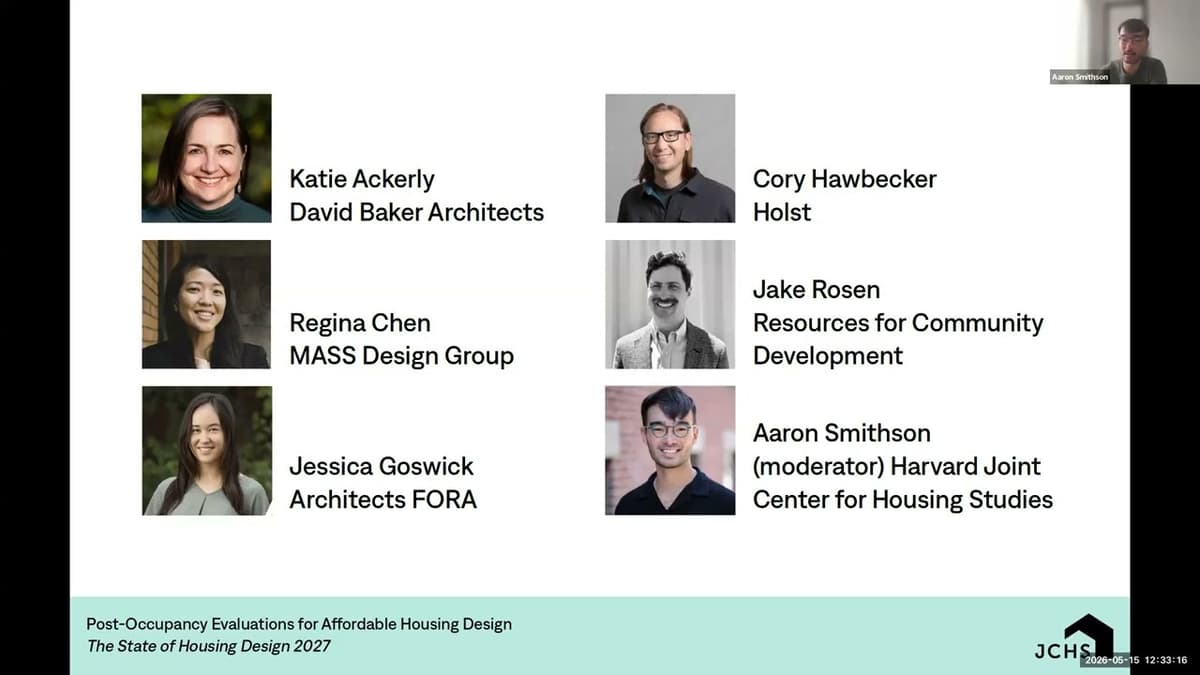
Post-Occupancy Evaluations for Affordable Housing Design
The Harvard Joint Center for Housing Studies hosted a round‑table on post‑occupancy evaluations (POEs) for affordable housing, a key component of its upcoming State of Housing Design 2027 book. Panelists from architecture firms and nonprofit developers shared findings from recent...
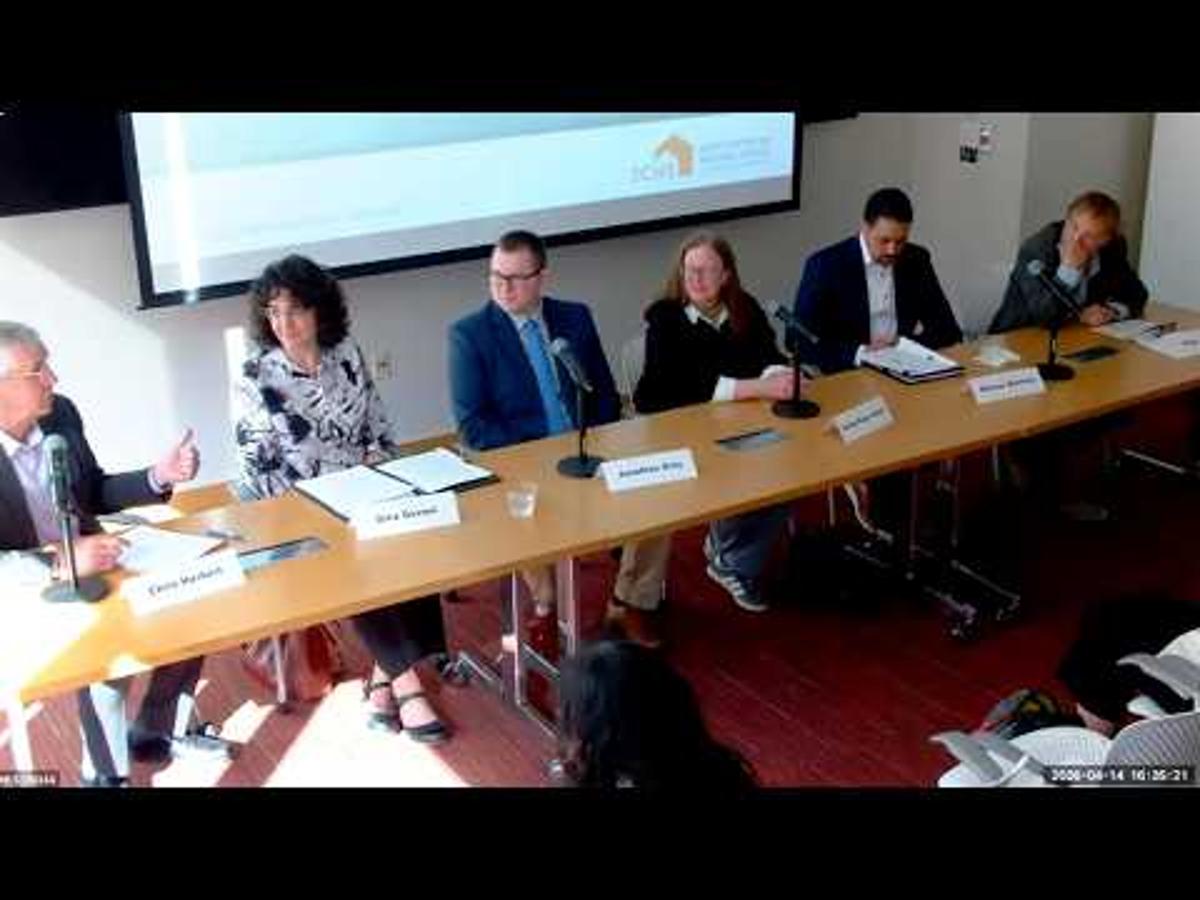
Beyond Urban Renewal: Retooling Redevelopment Authorities to Create Social Housing in Massachusetts
The Rapaort Institute for Greater Boston unveiled a new report urging Massachusetts to transform its existing redevelopment authorities into engines for social housing. The briefing, anchored by Cambridge Mayor Samul Sadiki, highlighted the state’s chronic shortage of affordable units...

Measuring the Impact of State Pro-Housing Policies: Empirical Traps to Avoid
The webinar, led by Harvard’s Joint Center for Housing Studies and Arnold Ventures’ Jenny Schutz, examined how states are rapidly embracing pro‑housing policies and the methodological pitfalls that hinder accurate impact measurement. Over the past five to six years, more...
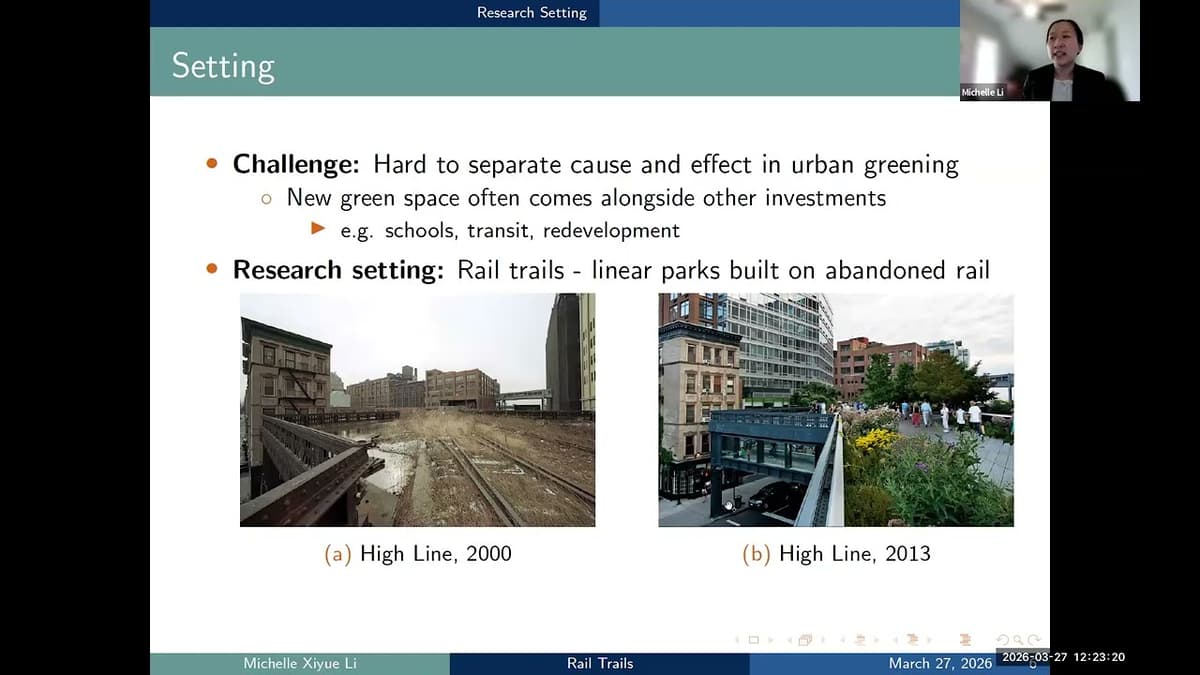
Of Tracks and Trails: How Accessible Green Spaces Reshape Communities
The webinar presented new research on how converting abandoned rail lines into public rail trails reshapes surrounding housing markets and demographic composition. Using a detailed event‑study design that exploits staggered trail openings in Boston and a national panel of census...
America's Rental Housing 2026
The Joint Center for Housing Studies at Harvard released its 2026 edition of America’s Rental Housing report, the eleventh in a series tracking the nation’s rental market. The briefing highlighted a turning point: after years of rapid growth, apartment‑house demand...
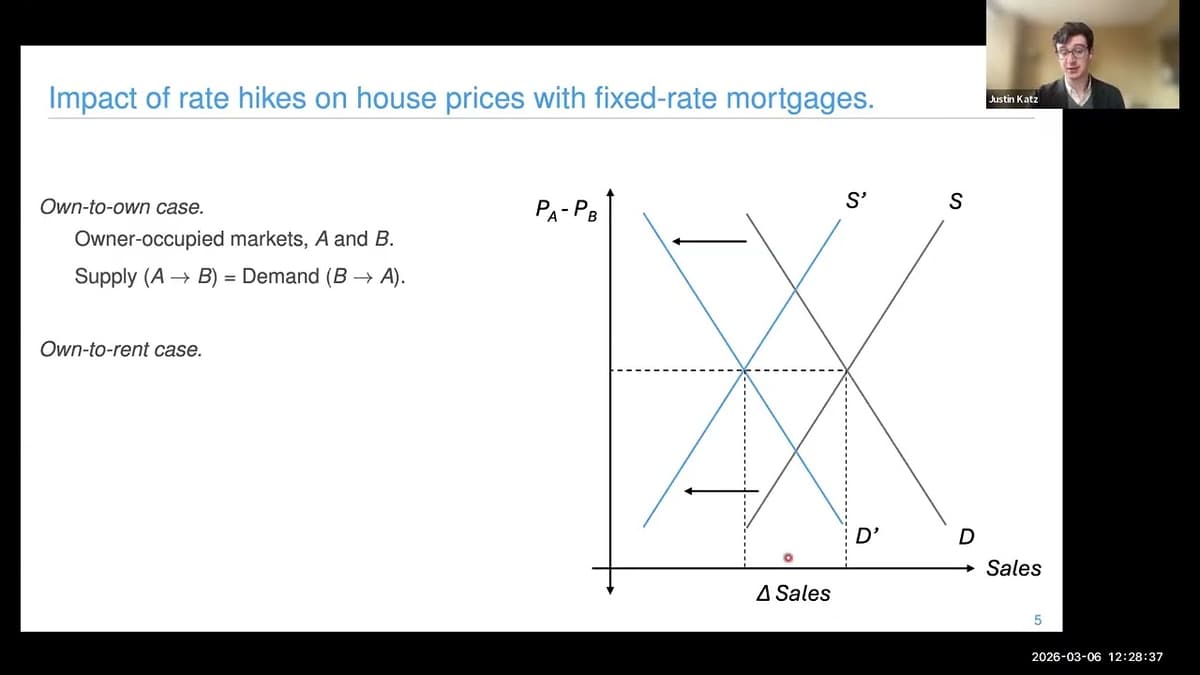
Did Mortgage Rate Locks Lead to Rising House Prices?
The Joint Center webcast examined whether mortgage rate‑lock incentives helped fuel the sharp rise in U.S. home prices amid the pandemic. As the Fed pushed 30‑year rates from about 2.5% to near 8%, analysts expected a steep price decline,...
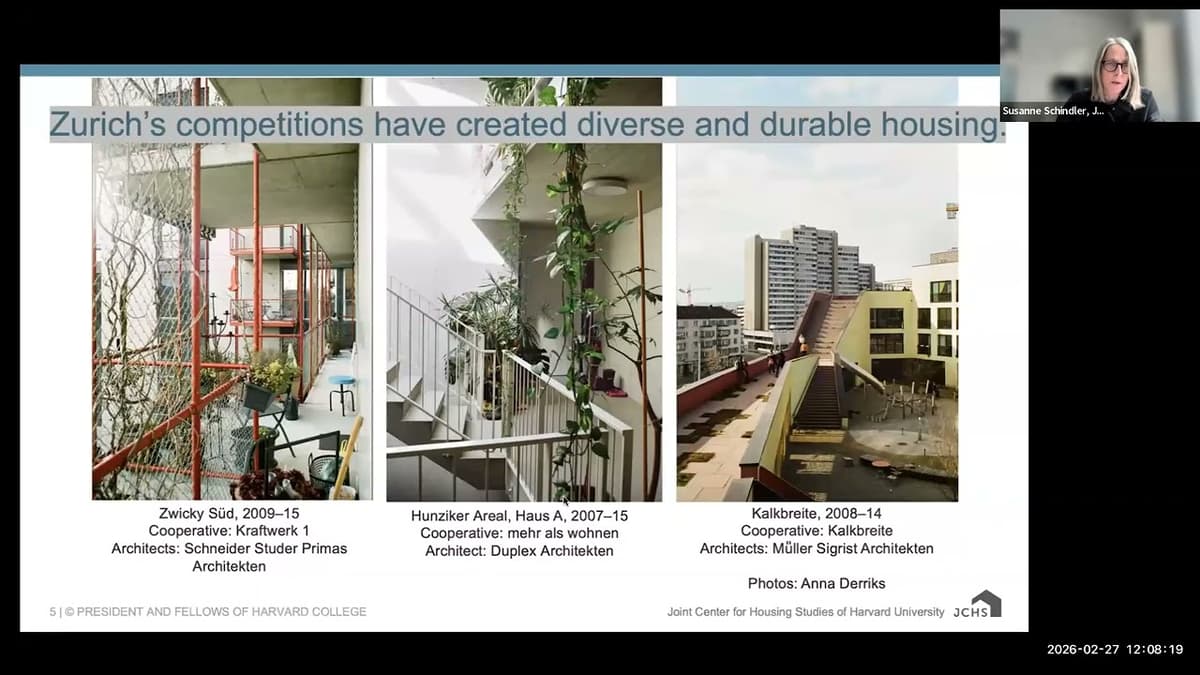
Using Design Competitions to Improve the Quality of Housing: A Roundtable Discussion
The roundtable, hosted by the Joint Center, examined how design competitions can improve the quality of housing built on publicly owned land. Speakers highlighted the Zurich model, where a two‑stage competition—first for the land lease concept and then an...
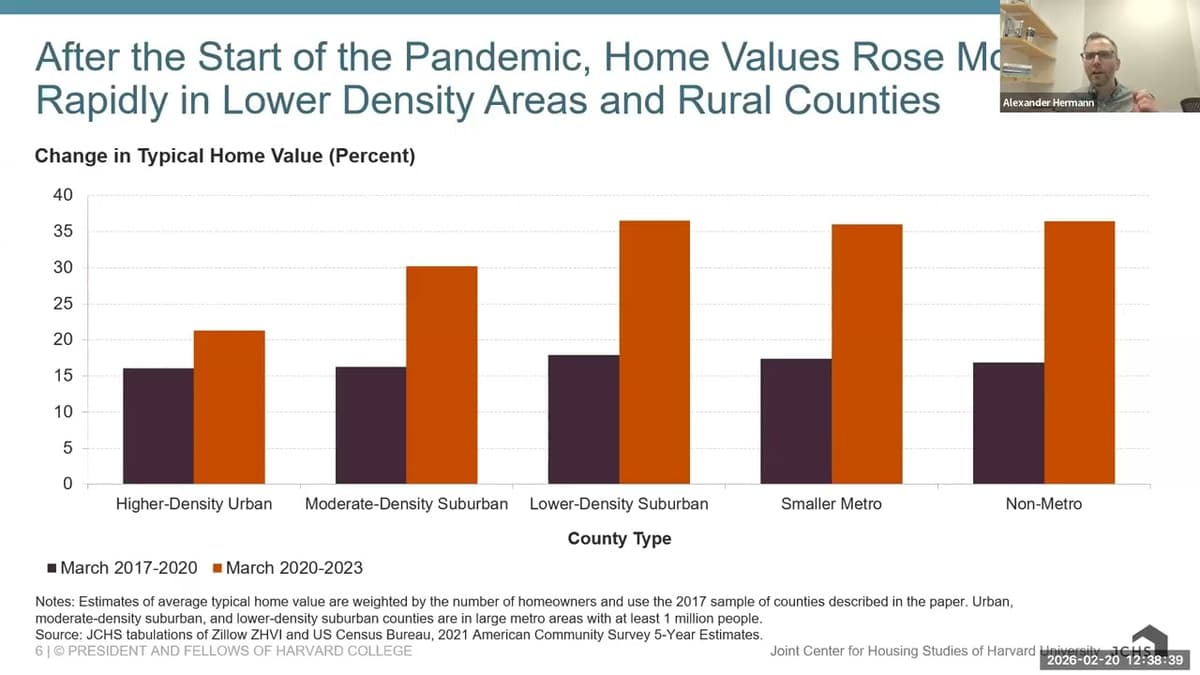
Understanding the Rapid Rise in Rural Home Prices
The Joint Center’s recent webinar dissected the unprecedented surge in rural home prices that unfolded during and after the COVID‑19 pandemic. Researchers Alex Hermann and Peyton Whitney presented findings from a new working paper, highlighting how remote‑work‑enabled migration reshaped housing...