Recent Posts
Video•Feb 26, 2026
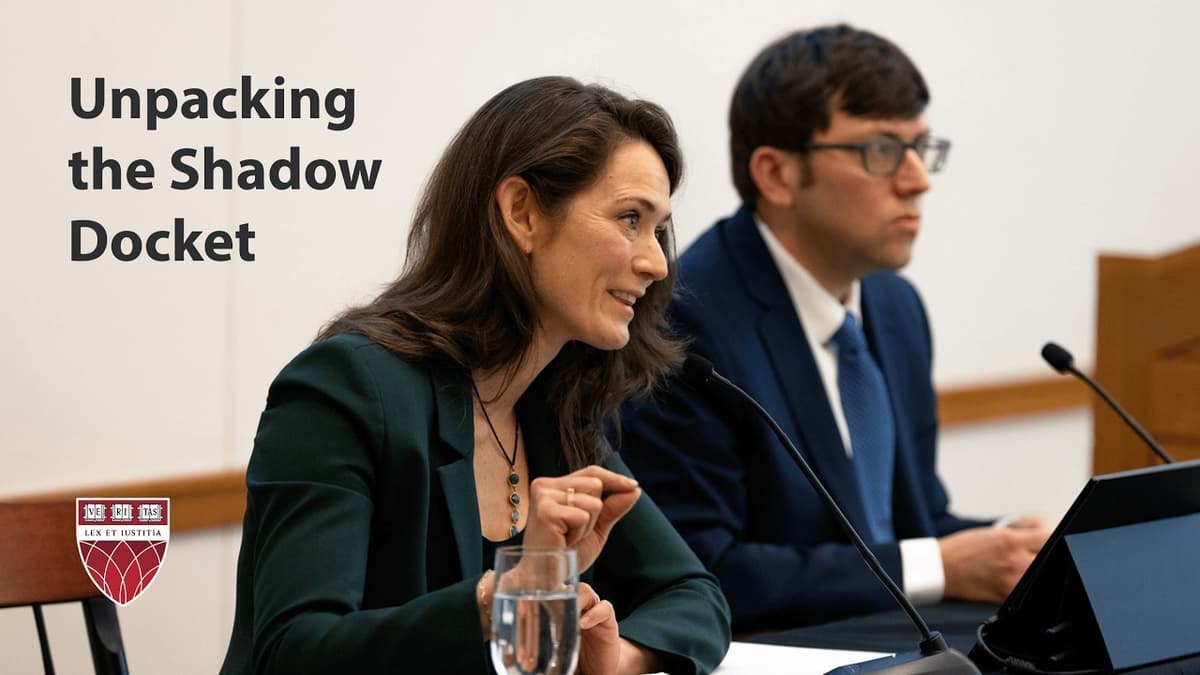
Harvard Law School Rappaport Forum: The Supreme Court's Emergency Orders
The Harvard Law School Rappaport Forum examined the Supreme Court’s growing reliance on emergency, or “shadow docket,” orders—a procedural track that bypasses full briefing and oral argument. Panelists highlighted how, since the second Trump term, the Court has issued a surge of emergency relief, granting 31 applications in the 2024 term and 24 of 35 requests in 2025 alone, a stark contrast to the eight such requests across the Bush and Obama years. Data presented showed the administration’s unprecedented use of the docket, with a win rate exceeding 70 percent, and illustrated the substantive impact of these terse orders: they have halted NIH diversity grants, authorized expansive ICE raids, cut billions in foreign aid, and reshaped agency authority without detailed opinions. The discussion underscored that the Court often provides no reasoning, and when it does, it sometimes constructs an alternate factual narrative, as Justice Kavanaugh did in the Vasquez Perdomo ICE case. Notable remarks included Justice Gorsuch’s rebuke of lower‑court judges for “defying” Supreme Court direction and Justice Kavanaugh’s factual reinterpretation that ignored a district court’s 52‑page evidentiary record. The panel also cited the NIH grant case where Justice Gorsuch accused a district judge of overstepping, illustrating a new willingness of the Court to criticize and overturn factual findings from trial courts. The implications are profound: the shadow docket is reshaping policy on immigration, education, and foreign assistance while eroding traditional judicial deference to lower courts. Critics warn this trend threatens the rule of law and the separation of powers, prompting calls for greater transparency and procedural safeguards around emergency orders.
By Harvard Law School

Video•Feb 24, 2026
Reclassifying Cannabis? Implications for Recreational/Medical Marijuana Use, Research, Drug Policy
The Harvard‑hosted webinar examined the federal effort to move cannabis from Schedule I to Schedule III under the Controlled Substances Act. Panelists traced the historical attempts—legislative bills, lawsuits, and recent executive actions—highlighting President Trump’s 2025 executive order and Attorney General Merrick...
By Harvard Law School
Video•Feb 12, 2026
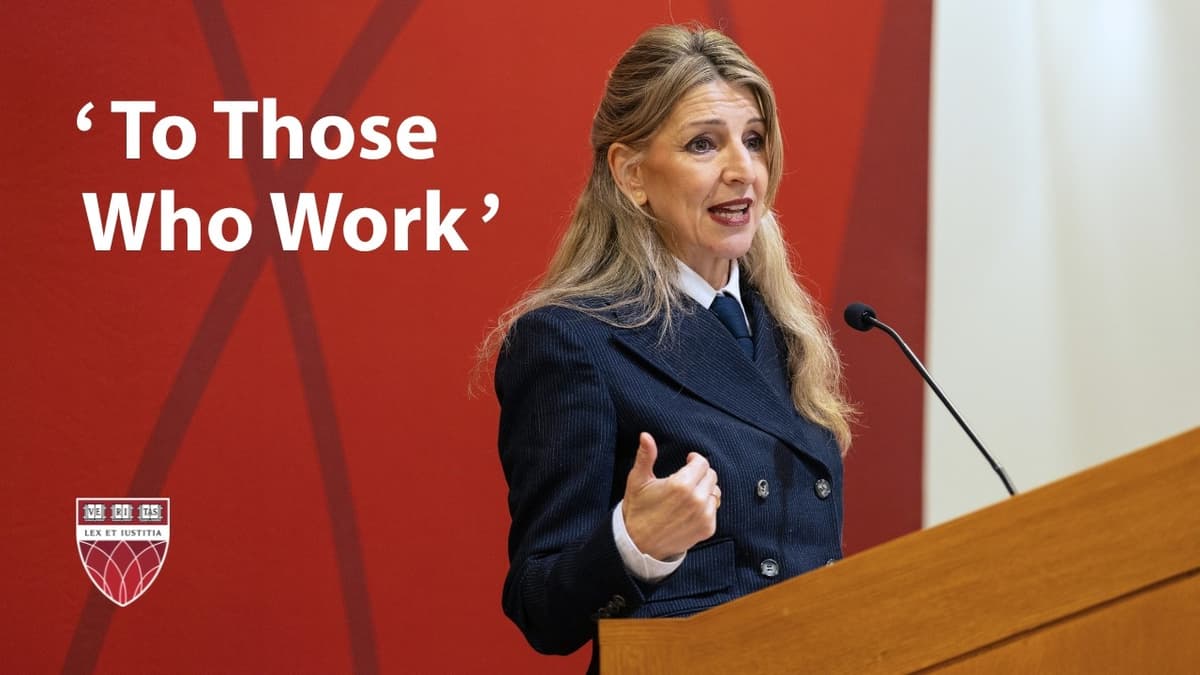
A Democracy Needs Empowered Workers to Thrive: Spain's Labor Minister Yolanda Díaz Pérez
The Harvard Law School’s John Dunlop Memorial Forum featured Spain’s Vice‑Prime Minister and Labor Minister Yolanda Díaz Pérez, who outlined her government’s agenda to strengthen workers’ rights and embed democratic participation within firms. Díaz highlighted the “lay‑rider” legislation that reclassifies gig‑platform workers...
By Harvard Law School