
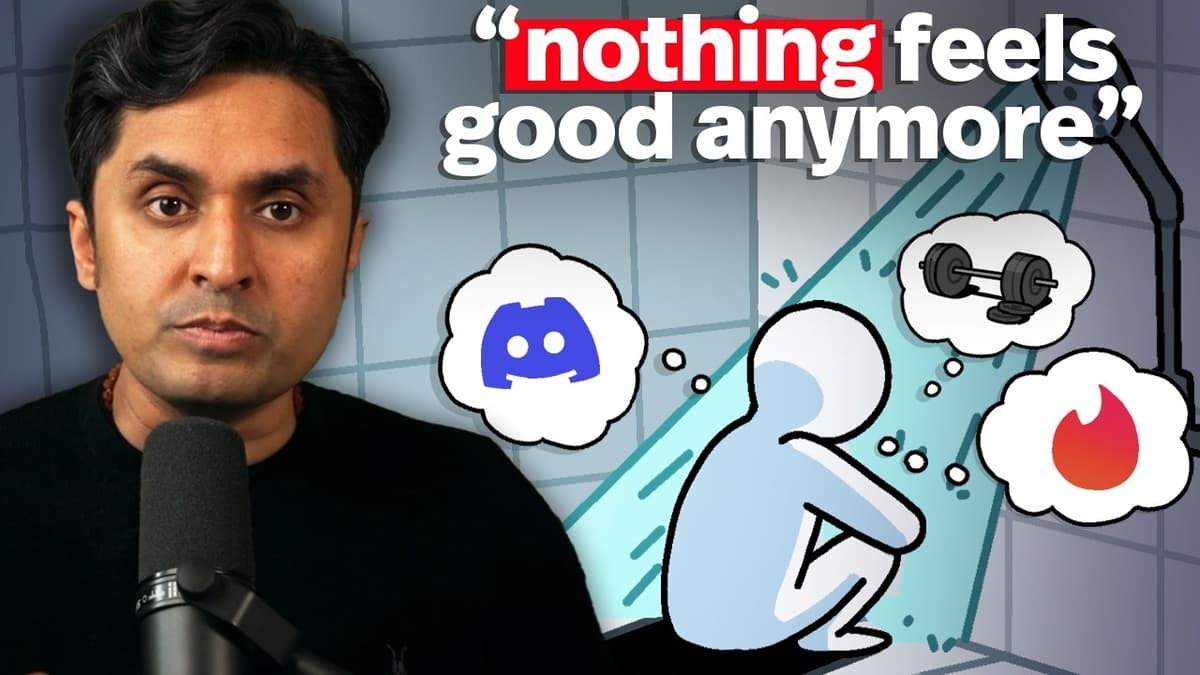
Why Your Favorite Stuff Isn’t Hitting Anymore
Dr. Aluk Kenoja’s stream weaves together psychology, physiology, and personal coaching insights, beginning with a nuanced distinction between courage—overcoming fear—and fearlessness, which merely suppresses it. He illustrates how simple adjustments, such as using a cushion and positioning the knees lower than the hips, can transform uncomfortable slouching into natural upright posture, underscoring the body’s adaptability when furniture aligns with human mechanics. The conversation then shifts to “urge surfing,” a technique that encourages individuals to ride cravings—whether for food, pornography, or other addictions—until they naturally subside, rather than attempting immediate suppression. Kenoja links this to broader patterns of avoidance, arguing that actions driven by fleeting emotions create self‑fulfilling prophecies, while a stable self‑identity reshapes interpersonal dynamics and outcomes. He also outlines practical sleep hygiene: early‑day productivity, one hour of unstructured mental time, balanced carbohydrate intake before bed, and device‑free evenings. Kenoja highlights data from his Healthy Gamer coaching program, noting 29,700 participants across 130 countries and modest yet meaningful improvements over six years. He emphasizes that the program’s success stems not from direct behavioral mandates but from helping clients understand the roots of their actions, allowing unwanted behaviors to dissolve. The talk concludes with a warning about rising societal numbness—fuelled by technology, potent substances, and overstimulation—and the psychiatric field’s difficulty treating negative symptoms compared to more tractable positive ones. For viewers, the takeaways translate into actionable steps: practice posture hacks, employ urge‑surfing to manage cravings, invest in identity work to break avoidance cycles, and adopt evidence‑based sleep routines. Mental‑health professionals can glean insights on coaching models that prioritize self‑understanding over prescriptive behavior change, a potentially scalable approach in a market increasingly concerned with chronic numbness and disengagement.
Why Young Men Are Being Screwed Over @Hubermanlab
The video on Huberman Lab examines the growing socioeconomic lag of young men in the United States, highlighting shifts in education, marriage timing, and mental-health outcomes. Data points include men now representing only 41% of college graduates, median marriage age climbing...
What’s Holding You Back in Life
The video argues that the primary barrier to personal and professional growth is an over‑reliance on contentment. It posits that high‑performing individuals distinguish themselves by remaining uncomfortable with “enough” and constantly pursuing the next challenge. The speaker outlines two pathways that...
Why You Don't Have The Life You Want
The video argues that many people mistakenly believe life owes them, when in fact personal agency and the willingness to seek support are essential for achieving the life they desire. The speaker, a therapist, emphasizes that you can ask for...
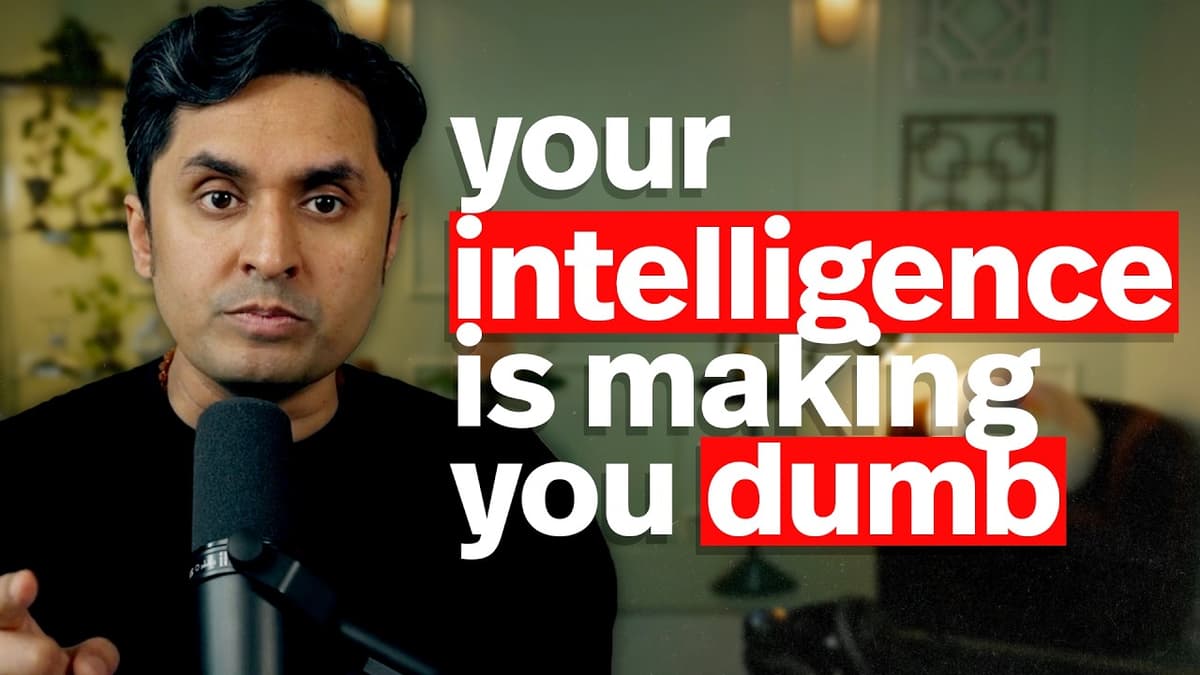
Why Smart People Struggle to “Be Normal”
The video argues that high IQ does not guarantee effective decision‑making; many bright individuals become “stupid intelligent” when they misuse their cognitive strengths. It outlines three cognitive traps—over‑applying abstract reasoning to social contexts, mindlessness caused by predictive shortcuts, and the tendency...
The Emotional Skill That Changes Everything @Hubermanlab
The video emphasizes an often‑overlooked emotional skill: deliberately cultivating the opposite feeling to one’s current state. Andrew Huberman explains that resilient people toggle between positive and negative emotions to maintain balance and make better choices. He illustrates how recalling three years...

The Biggest Failure of Our Society
The video argues that the greatest societal shortcoming is the failure to teach people how to deliberately draw conclusions from their experiences, leaving them to rely on automatic, unconscious judgments. It explains that the mind instantly creates a narrative after any...
The Secret of Top Performers
The video argues that the distinguishing factor among high‑achievers—from med students to investment bankers—is deliberate career planning. The speaker contends that lack of a roadmap is why many feel stuck in dead‑end jobs. He outlines a simple framework: define the next...
Why You Struggle to Act
The video argues that most people who struggle to act are battling external cues rather than internal willpower. It emphasizes that the physical and digital environments we inhabit shape our behavior more than we realize. Research shows that simple changes—like swapping...