
Recent Posts
Video•Jan 22, 2026
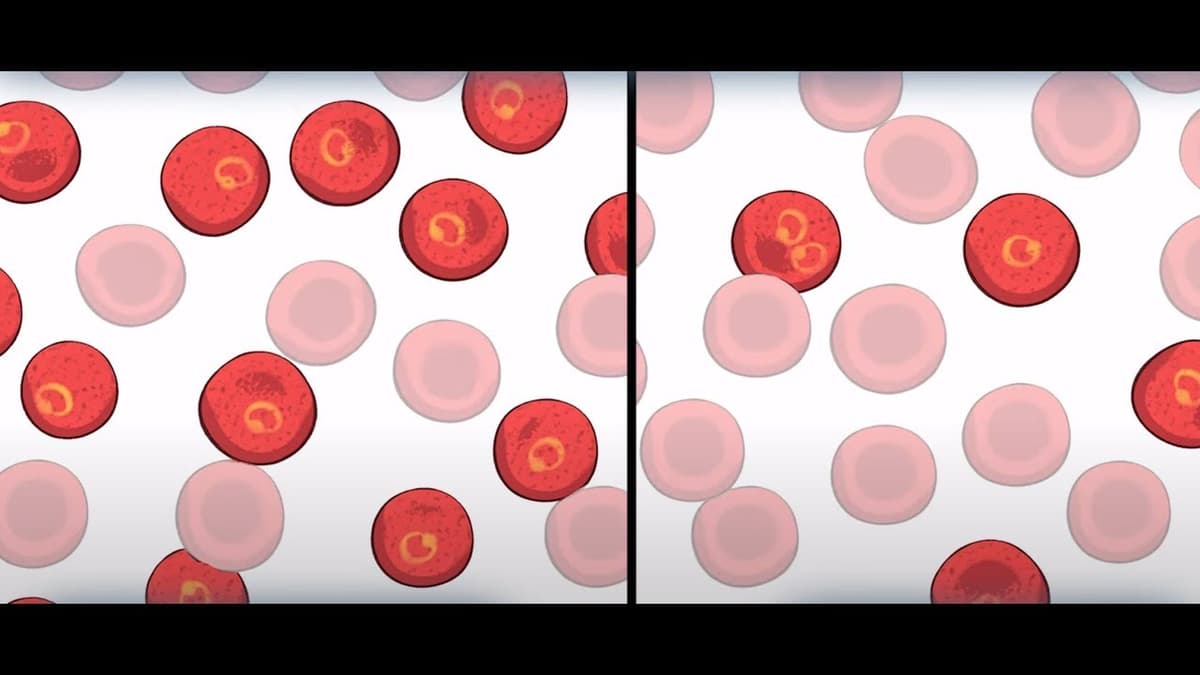
Sickle Cell: Natural Selection in Humans | HHMI BioInteractive Video
The HHMI BioInteractive video uses Morgan Grace’s personal story to illustrate why a seemingly harmful genetic mutation—sickle cell disease—remains common in certain human populations. It explains the molecular basis of the disorder, how a single‑base change in the hemoglobin gene reshapes red blood cells, and why the resulting pain crises can be life‑limiting. The core scientific narrative follows Kenyan medical student Tony Allison’s 1950s fieldwork, which revealed a striking geographic gradient: sickle‑cell trait frequencies exceeded 20 % in malaria‑rich lowlands and fell below 1 % in highland regions. By inducing low‑oxygen conditions in blood samples, Allison distinguished heterozygotes from non‑carriers and demonstrated that children with the trait harbored significantly fewer malaria parasites, providing the first clear example of heterozygote advantage driving natural selection. Personal testimonies punctuate the data: Morgan describes hospitalizations that forced her to abandon dancing, while Dr. Natasha Archer explains how the sickled cells impede the malaria parasite’s access to hemoglobin. Allison’s own recollection of contracting malaria on a coastal vacation underscores the intuitive link between disease exposure and genetic protection. The story underscores how evolutionary pressures shape human genetics and informs modern medicine. Recognizing the protective role of sickle‑cell trait has spurred research into other red‑cell disorders with similar malaria resistance, guiding vaccine development, gene‑editing strategies, and public‑health policies aimed at regions where malaria persists.
By HHMI BioInteractive
Video•Dec 18, 2025
Working with Self-Check Models
In this tutorial, educator Emit walks viewers through the self‑check functionality of Model Builder, a web‑based platform that lets students construct causal, conceptual, or stock‑and‑flow models. The feature works like a jigsaw puzzle: a pre‑designed model is disassembled into component...
By HHMI BioInteractive
Video•Dec 18, 2025
Comparing Model Types
In this instructional video, Casey, an educator who leverages the BioInteractive Model Builder, walks viewers through the three distinct model types the platform can generate—conceptual, causal, and stock‑and‑flow—and explains when each is most appropriate for higher‑education biology courses. The tutorial defines...
By HHMI BioInteractive