

Success Pathways for Scaling Biofortified Crops
The Harvest Plus webinar titled “Success Pathways for Scaling Biofortified Crops” brought together regional experts to discuss how nutrient‑dense staple varieties move from research labs to farmers’ fields. Moderator Brenda Mareri outlined the organization’s two‑pronged model—Harvest Plus’s science engine and Harvest Plus Solutions’ market‑oriented scaling unit—setting the stage for a deep dive into the practical challenges of delivering micronutrient‑rich crops at scale. Speakers highlighted that more than two billion people suffer from hidden hunger, with rising food‑price volatility pushing households toward cheap, ultra‑processed foods. Biofortification, which enriches staples with iron, zinc or vitamin A through conventional breeding or precision genetics, offers a low‑marginal‑cost solution: over 400 varieties have been released worldwide, delivering an estimated $17 in social benefits for every dollar invested and costing roughly $15‑$20 per disability‑adjusted life year averted. David Spearman warned that scaling success hinges on accurate data. In Uganda, adoption models overstated orange‑flesh sweet‑potato reach by 14‑fold and high‑iron beans by four‑fold, underscoring the need for rigorous impact measurement. He also mapped four scaling pathways—primary production, on‑farm consumption, semi‑processed market channels, and tertiary income streams—while cautioning against using biofortified crops in unhealthy ultra‑processed snacks. The discussion concluded that effective scaling demands yield‑stable, nutrition‑rich varieties, robust monitoring systems, and coordinated incentives across seed companies, governments, and consumers. Investing in behavior‑change communication, digital services, and market‑based premiums will be critical to ensure that biofortified crops reach the most vulnerable while preserving their nutritional intent.

A Narrow Strait, Global Consequences: Hormuz Strait and Fertilizer Markets
Speakers warned that disruptions in the Strait of Hormuz have sharply tightened already-fragile fertilizer markets by severing critical shipping routes and raising insurance and energy costs. The Middle East normally channels large shares of global fertilizer inputs—about 35% of seaborne...
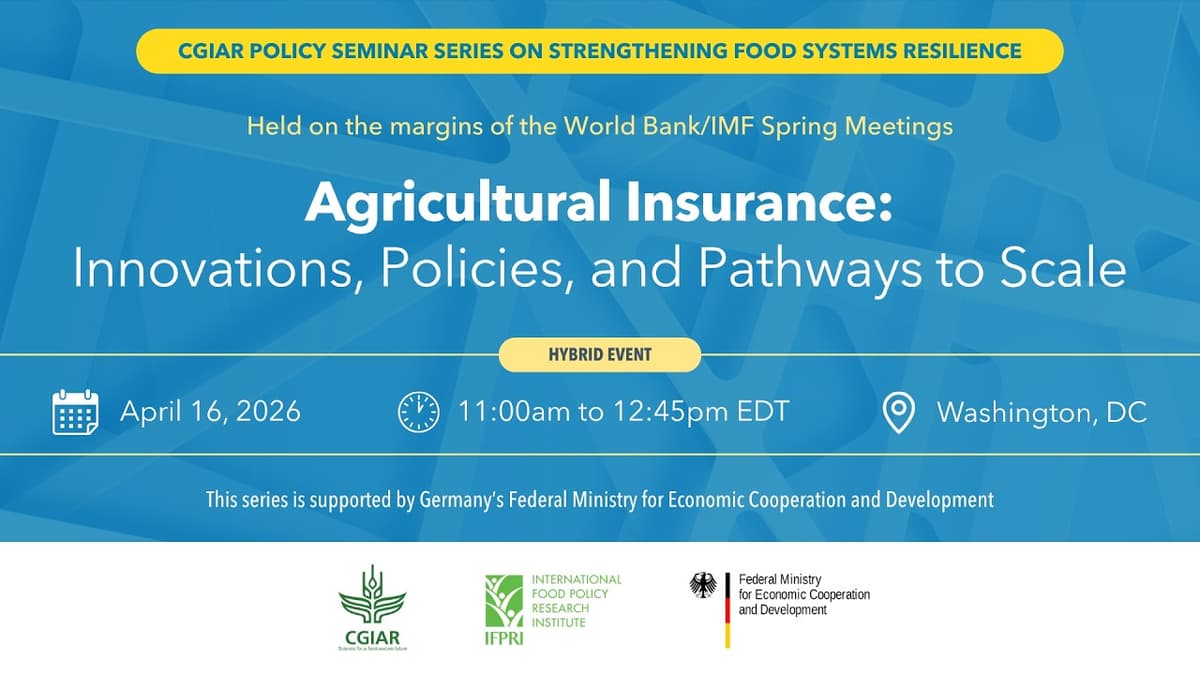
Agricultural Insurance: Innovations, Policies, and Pathways to Scale
IFPRI and Germany’s BMZ convened experts in Washington to assess why agricultural insurance—despite decades of attention—has struggled to scale and how new technologies and product designs could change that. Speakers highlighted innovations such as satellite and picture-based monitoring, index insurance,...