Video•Feb 5, 2026
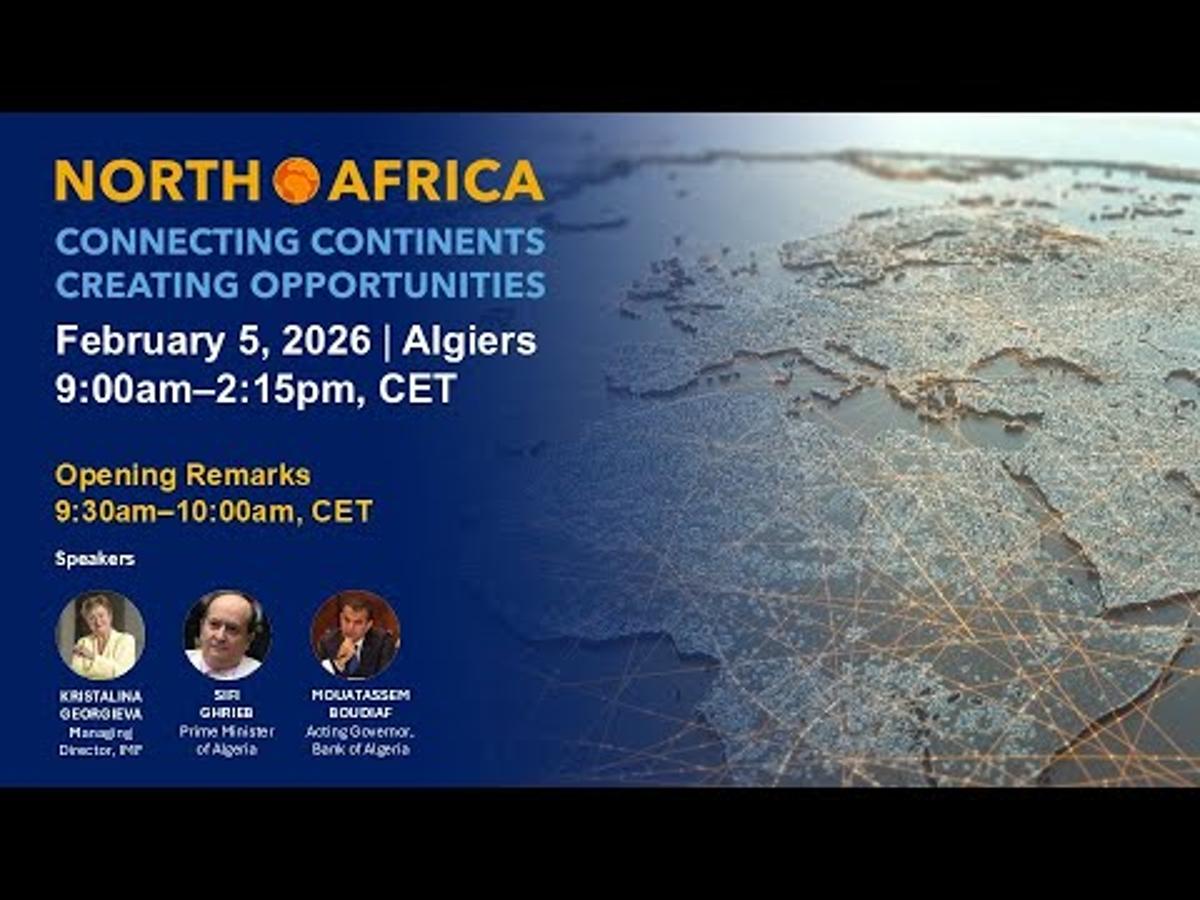
North Africa: Connecting Continents, Creating Opportunities
The high‑level conference in Algiers framed North Africa as a strategic conduit between Europe’s industrial demand and Sub‑Saharan Africa’s demographic dynamism. Speakers highlighted the region’s current trade skew—over 60% of exports flow to Europe while intra‑African exchange remains under 5%—and argued that this imbalance signals untapped potential rather than structural weakness.
Data from the International Monetary Fund suggest that modest near‑shoring by Europe combined with targeted reforms could lift North Africa’s GDP by roughly 2% and raise exports by 5% in the medium term; more ambitious logistics and human‑capital upgrades could double those gains. Energy was presented as the linchpin: Algeria’s existing hydrocarbon infrastructure, coupled with vast solar resources, positions it to become a hub for renewable electricity, cross‑border grids, and green‑hydrogen, feeding Europe’s transition and expanding power access in Sub‑Saharan markets.
The Prime Minister cited Algeria’s dual‑energy strategy as a concrete illustration, while IMF Managing Director Cristallina emphasized the need to cut average 7% import tariffs, modernize ports, and streamline customs to unlock a projected 7% GDP boost and $67 billion in export value. An Arab proverb—“One hand doesn’t clap”— underscored the conference’s call for coordinated policy, financing, and private‑sector engagement.
If policymakers act, the region could evolve into a resilient supply‑chain corridor, attracting European capital, fostering technology transfer, and delivering sustainable growth across three continents. Investors and multinational firms stand to benefit from new logistics corridors, renewable‑energy projects, and a more predictable business environment, while Europe gains supply‑chain security and Sub‑Saharan Africa accesses broader markets.
By International Monetary Fund (IMF)