
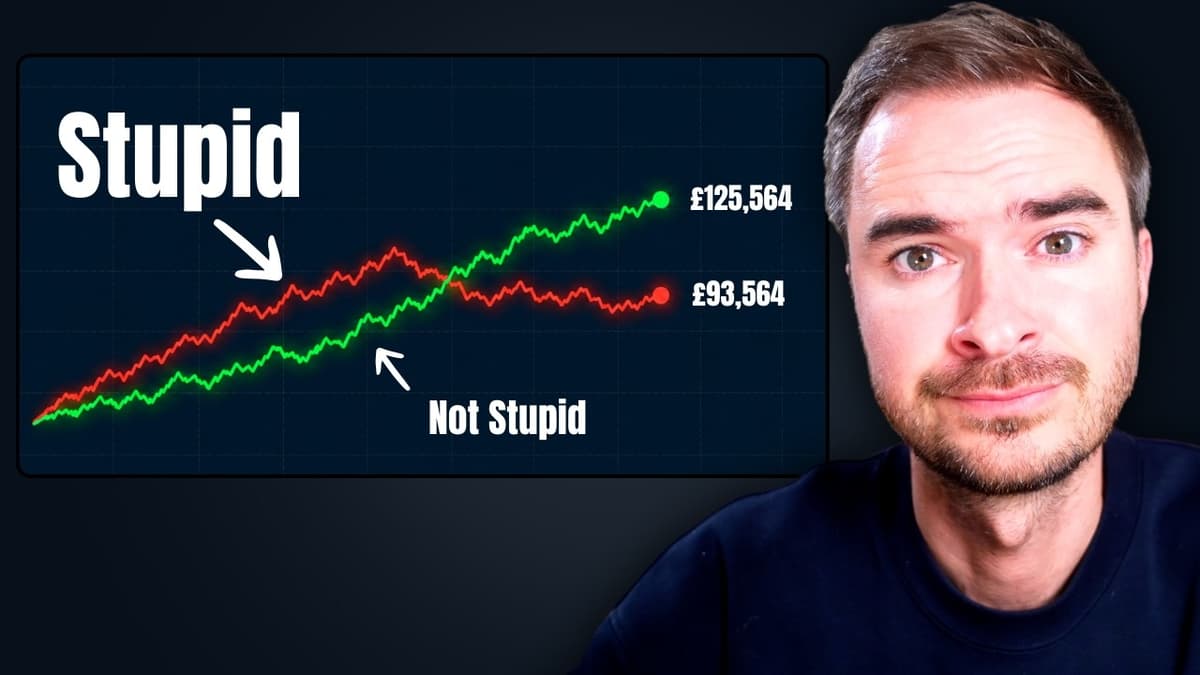
The Stupid Mistake Costing Smart People £10,000s
The video warns that even highly educated investors can make costly, avoidable errors, illustrated by Simon—a successful professional who panicked during market turbulence and feared a £10,000‑plus loss. The presenter cites Charlie Munger’s “being consistently not stupid” mantra and Adam Robinson’s seven “stupid zone” factors—outside competence, stress, urgency, information overload, outcome fixation, groupthink, and authority pressure. Real‑world anecdotes, from a flat‑packed cargo bike to the 1977 Tenerife air‑traffic disaster, show how these factors converge to produce disastrous decisions. Key quotes include Munger’s advice and Robinson’s definition of stupidity as overlooking obvious information. Simon’s portfolio of four workplace pensions, a SIP and ISAs, riddled with forgotten positions, exemplifies how complexity and emotional pressure cloud judgment. The takeaway for investors is to redesign the decision environment: consolidate accounts, automate contributions, document investment rationales, increase cash buffers, and consider low‑maintenance passive funds. Simplifying the financial architecture reduces cognitive load, keeping “stupid” mistakes out of the way and protecting long‑term wealth.

Which Should You Spend First in Retirement?
The video tackles how recent pension and inheritance‑tax reforms in the UK upend traditional retirement‑income planning. With Rachel Reeves’ October 2024 announcements, retirees must reassess whether to tap tax‑free cash, ISAs, or the taxable portion of defined‑contribution pensions first. The presenter...

The Shocking Maths of Working (Just) One More Year
The video walks viewers through a real‑world case study of Dan and Freya, a late‑50s couple evaluating whether to retire now or defer by a year. Using financial‑planning software, the adviser shows that postponing retirement would leave them roughly £200,000...