

Joan Tafoya, Former Director at Meta, Intel & Sandia: Why Swarming Every Problem Slows Teams
Joan Tafoya, a veteran of Intel, Sandia National Labs and Meta, explains why teams that try to tackle every issue together end up slower and less effective. She frames the discussion around coaching, alignment, and disciplined problem‑solving, drawing on decades of experience in high‑tech and research environments. Tafoya stresses that effective coaching means moving from personal execution to empowering others, clarifying success criteria, and asking the right questions. She recounts burning out on an Intel fab line until she began vocalizing her thought process and delegating decisions. At Sandia she built credibility with PhD‑level scientists by listening, reflecting their concerns, and pinpointing knowledge gaps. Her prioritization rubric at Meta asks: are we best suited, does the problem have broader impact, and can we secure quick wins? Concrete examples illustrate her points: a silent exercise at Sandia where each participant writes a problem statement before group discussion, a before‑action review for large initiatives, and the strategic use of contrarians who are briefed beforehand to provoke constructive debate. These practices turned chaotic “swarm” dynamics into focused, outcome‑driven efforts. The takeaway for leaders is clear: stop defaulting to “everyone works on everything.” Build trust through coaching, align on problem definitions, filter work by suitability and impact, and structure ideation with clear statements and success metrics. Doing so accelerates delivery, preserves talent, and reduces the burnout that comes from constant firefighting.

The Word Eric Harding Banned From Every Problem Statement on His Team
The People Solve Problems podcast features Eric Harding, Vice President of HR Operations and Systems at Republic Services, who reveals his signature rule: the word “manual” is banned from every problem statement on his team. He explains that this simple...

Laudy Allan, SVP Global Operations, Crayola: Stop Solving the Wrong Problem
Lahy Allan, SVP of Global Operations at Crayola, outlines a disciplined approach to problem solving that prioritizes involving the people closest to the issue early, clarifying the problem and its business impact, and using structured methodologies (A3, Six Sigma) to...
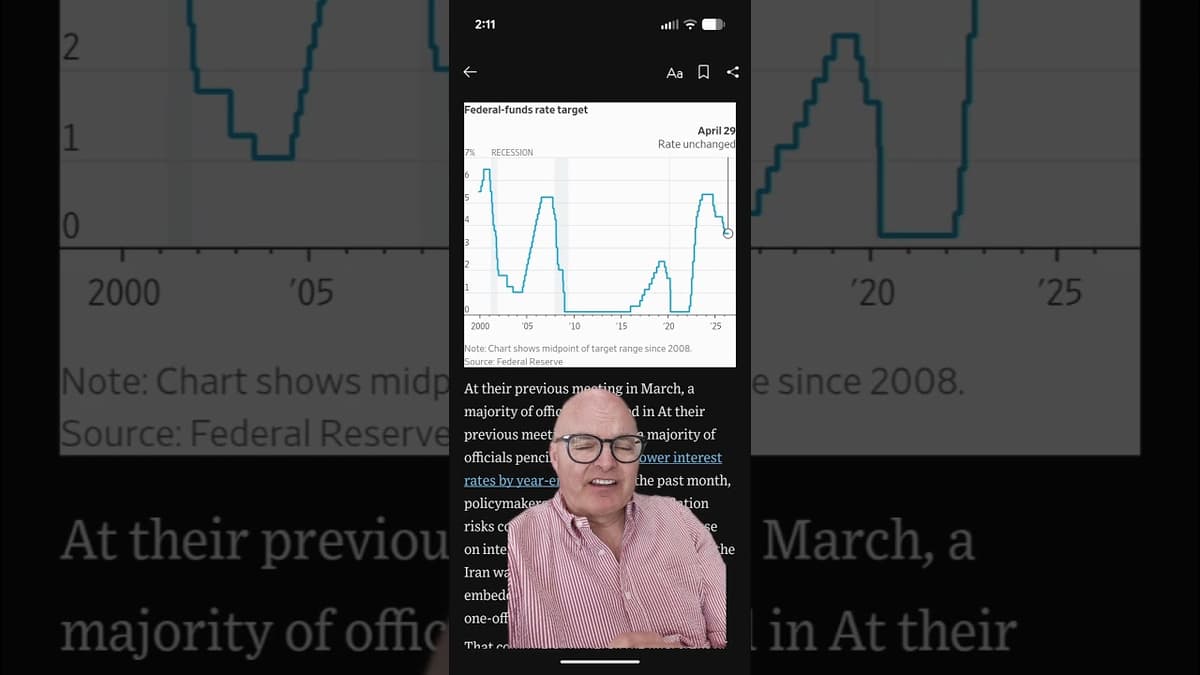
The Fed Held Steady, but What's Next for Inflation and Interest Rates?
The Federal Reserve left policy rates unchanged, as market expectations anticipated, but the post‑meeting vote revealed a split: three governors advocated a rate increase at the next meeting, while one pushed for a cut. The disagreement centers on how the...
A Missing Key to Strategy From Apollo 13
The video draws on a pivotal moment in “Apollo 13,” where Tom Hanks asks his crew, “Gentlemen, what are your intentions?” to illustrate that any strategy, however sound, collapses without shared conviction. It argues that when a primary plan fails, organizations must...

What Does Headcount Reduction Mean at the IRS?
The video examines the U.S. Internal Revenue Service’s ongoing headcount reduction and its projected fiscal consequences. Over the next decade, the agency expects to trim personnel costs by roughly $40 billion, but the accompanying decline in audit capacity could erode tax...
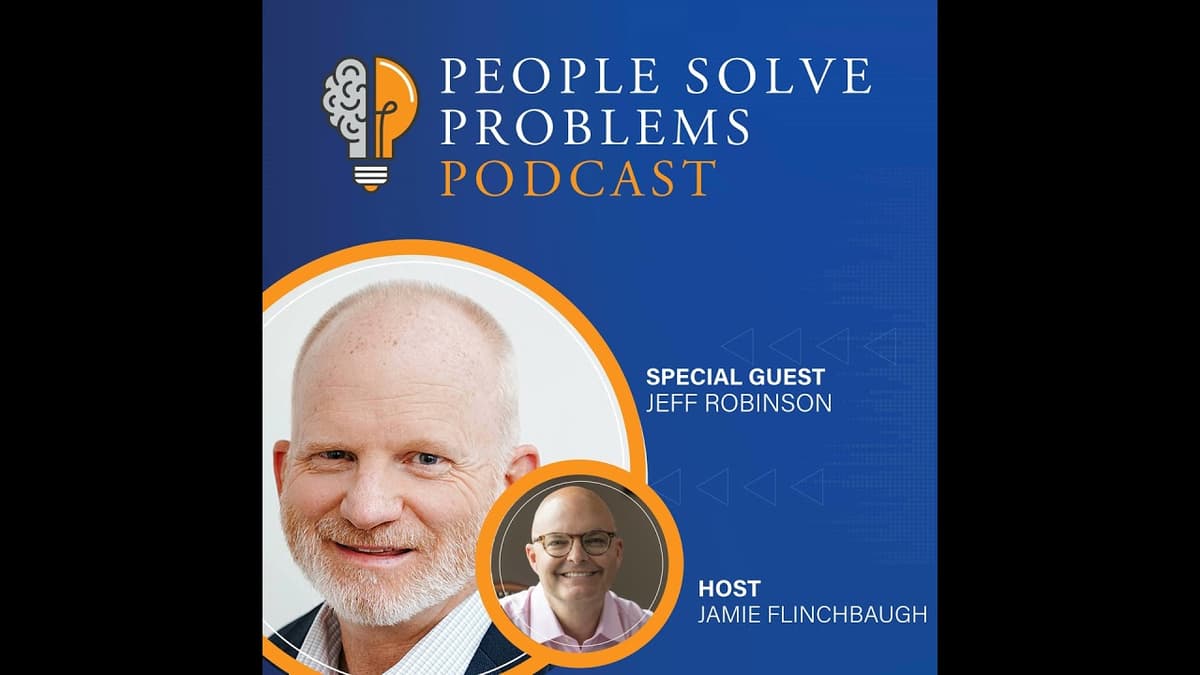
Jeff Robinson, Executive Leadership Coach, Foundational Leadership: The Confidence Gap
Jeff Robinson, an executive leadership coach with 25 years of experience, explains that confidence is rooted in a track record of handling challenges rather than sheer knowledge. His new book, Leadership SUCCESS, offers a framework for mid‑to‑senior leaders to identify confidence gaps,...

Jeff Robinson, Executive Leadership Coach, Foundational Leadership: The Confidence Gap
In this People Solve Problems episode, executive leadership coach Jeff Robinson unpacks what he calls the "confidence gap"—the difference between a leader’s perceived competence and their internal belief that they can handle any challenge. Robinson argues that confidence is less...

Grace Bourke, Consulting Director, Baker Tilly: The Problem Isn't the Technology
Grace Bourke, consulting director at Baker Tilly, frames technology rollouts in health care as a symptom of deeper process failures. She argues that organizations rush to buy new systems—EHRs, ERP, AI call‑scheduling tools—without first articulating the specific problem they aim to...

What Will Drive a Recession?
The video examines whether a recession is imminent, arguing that traditional economic models focusing on price movements are insufficient. It posits that consumer psychology and sentiment are the primary engines that could push the economy into contraction. The speaker explains that...

There's a Gap About AI Usage Between Execs and Employees, and It's Going to Cause Problems
The video highlights a stark disconnect between senior leadership and frontline workers over artificial‑intelligence adoption. While 86% of executives argue AI should be mandatory, fewer than half of middle managers and only 40% of employees see it as a necessary,...