
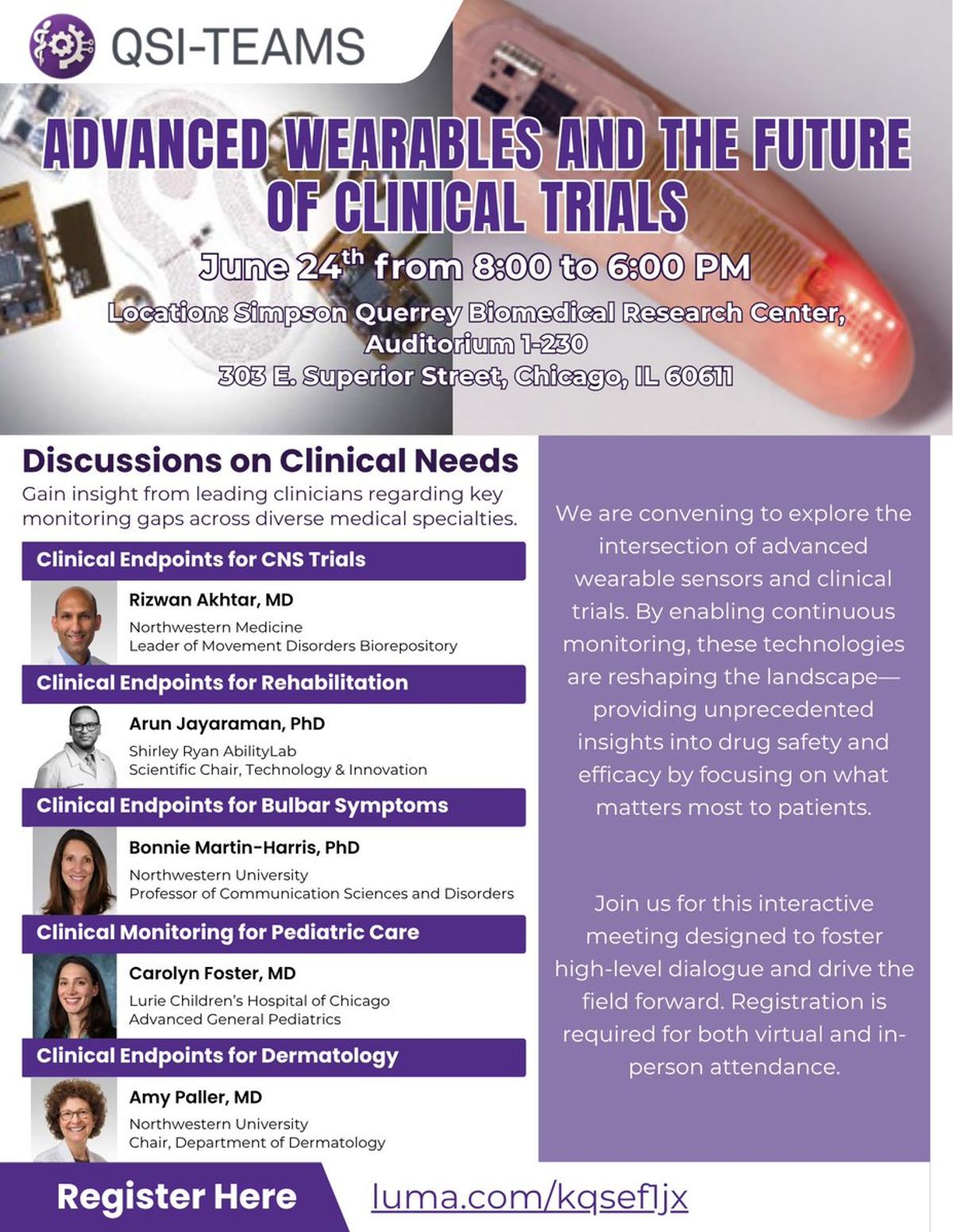
Wearables Transform Clinical Trials with Continuous Real‑World Data
Delighted to share details on an exciting forum that we are hosting here at the Querrey Simpson Institute for Bioelectronics at @NorthwesternU — Advanced Wearable Sensors and the Future of Clinical Trials — on June 24, 2026, at the Simpson Querrey Biomedical Research Center in downtown Chicago. The premise is straightforward, though the implications are profound: continuous, real-world monitoring enabled by advanced wearable sensors is fundamentally changing how we evaluate drug safety, efficacy, and patient experience in clinical research. The shift is from episodic snapshots in a clinic to rich, longitudinal streams of data collected where patients actually live their lives. We have assembled an outstanding group of leaders — across academia, industry, and clinical practice — to examine where the science stands, where the unmet needs are greatest, and how to accelerate the translation of these technologies into validated digital endpoints that regulators, clinicians, and patients can trust. The agenda spans the full spectrum. Morning sessions will feature engineering innovations in acousto-mechanic sensing, skin flux measurement, next-generation cardiac and sweat sensing — technologies emerging from our labs and others at the frontier of the field. Frontline clinicians will then speak directly to unmet monitoring needs in CNS disease, rehabilitation, swallowing / speech, pediatric care, and dermatology. Industry leaders from @abbvie, @sanofi, Maruho, and Wake Forest will share candid perspectives on what it takes to bring these tools into pharma-grade clinical development. And we are especially pleased to welcome Elizabeth Kunkoski from the FDA to share the regulatory perspective on digital health technologies in trials — a voice that matters enormously as the field matures. A special note of gratitude to Kimberly Querrey, whose generosity and vision made QSIB possible and who will open the forum with overview remarks and comments on our newest institute, the Querrey-Simpson Institute for Translational Engineering for Advanced Medical Systems (QSI-TEAMS). Registration is required. Please join us — and please share widely with colleagues working at this exciting intersection of technology and medicine. Link to register: https://t.co/LOcbMj6XLU #WearableSensors #ClinicalTrials #DigitalHealth #Bioelectronics #Northwestern #QSIB #MedTech #HealthcareInnovation
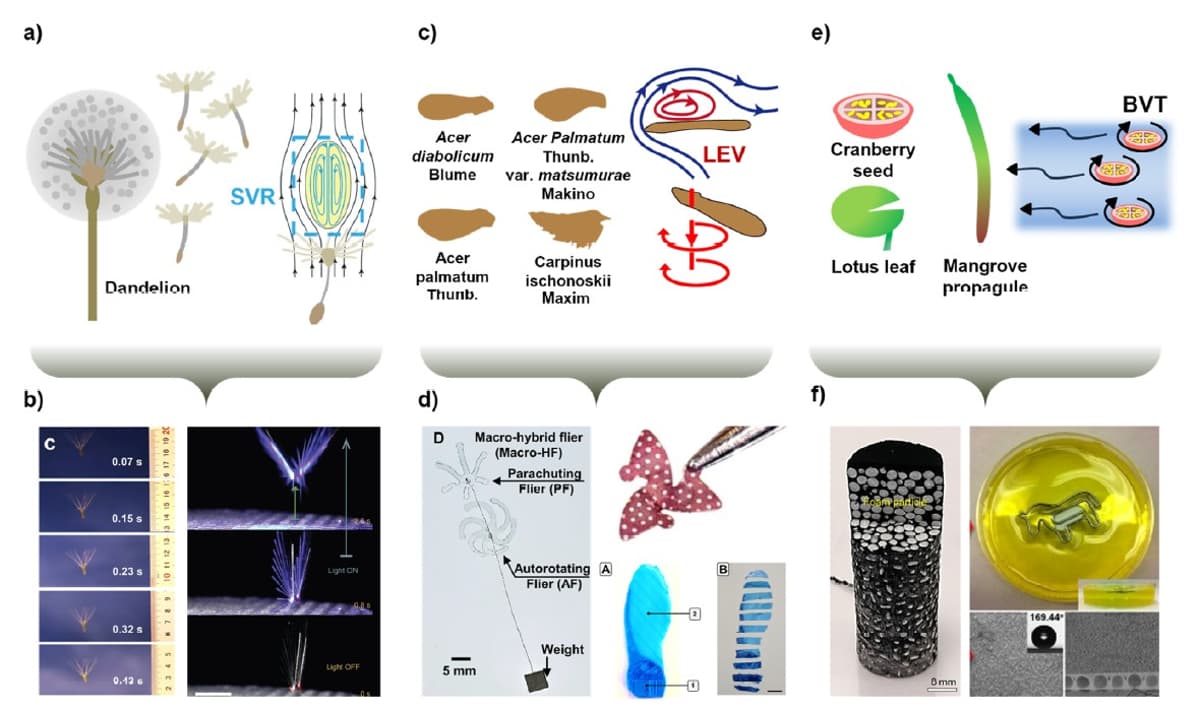
Physics‑Driven Resorbable Sensors Enable Flow‑Following Environmental Monitoring
As a follow-up to our recent Comment article in Nature Communications (https://t.co/iw17gRHNBJ) and our original paper in Nature (https://t.co/CPajKHsld5) on environmental monitoring using tiny, eco-resorbable wind/water dispersed wireless sensors, we just published a Perspective piece in the new journal APL...

Mechanical Forces: Emerging Tools for Diagnosis and Therapy
Mechanical forces play essential roles in biology. Measuring and controlling these forces represent emerging strategies for disease diagnosis and therapeutic intervention, to complement more traditional approaches. This review article, published today in Nature Reviews Bioengineering (https://t.co/byKGFuVFLH), summarizes the status of...
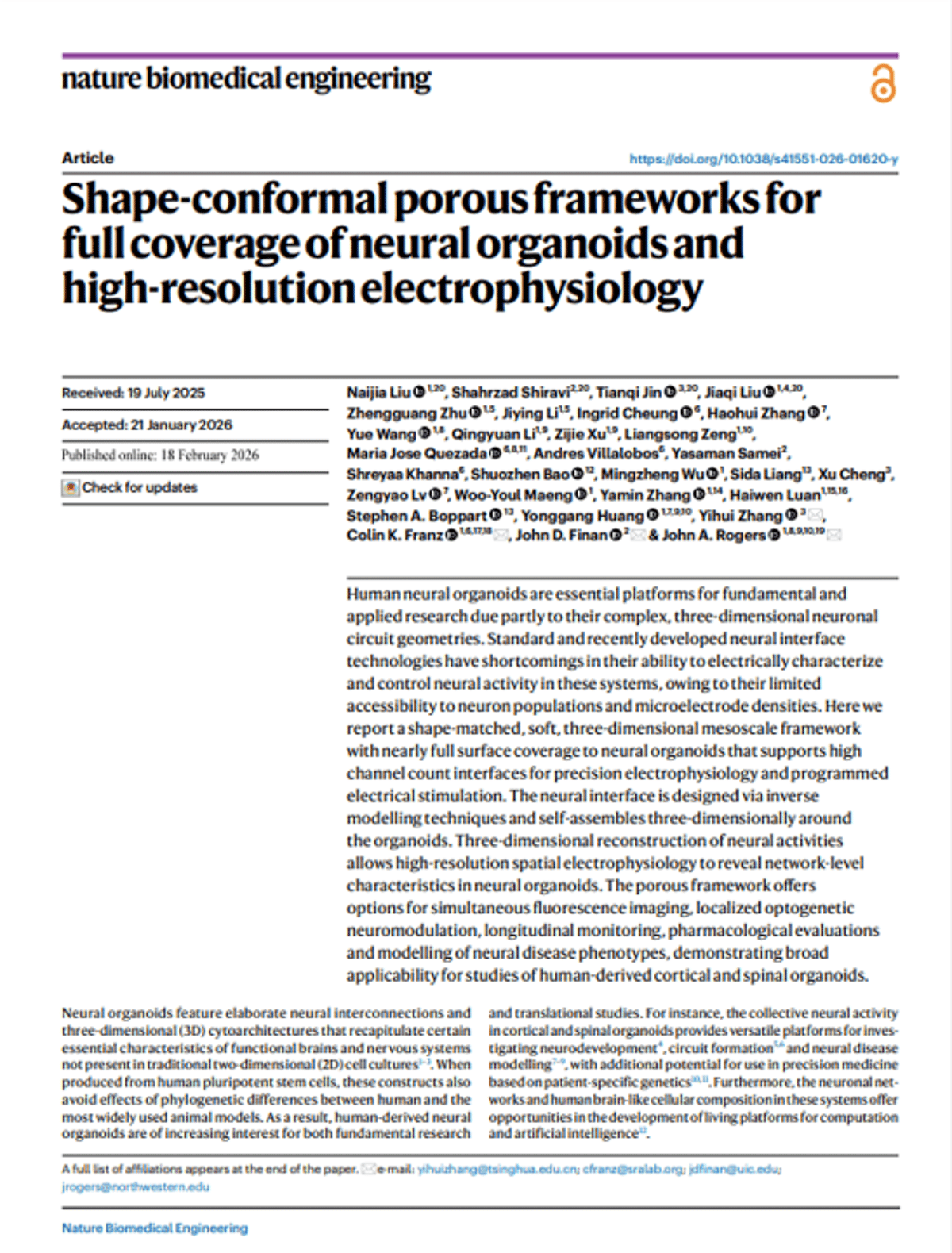
Shape‑conformal 3D Frameworks Enable Full‑surface Neural Organoid Electrophysiology
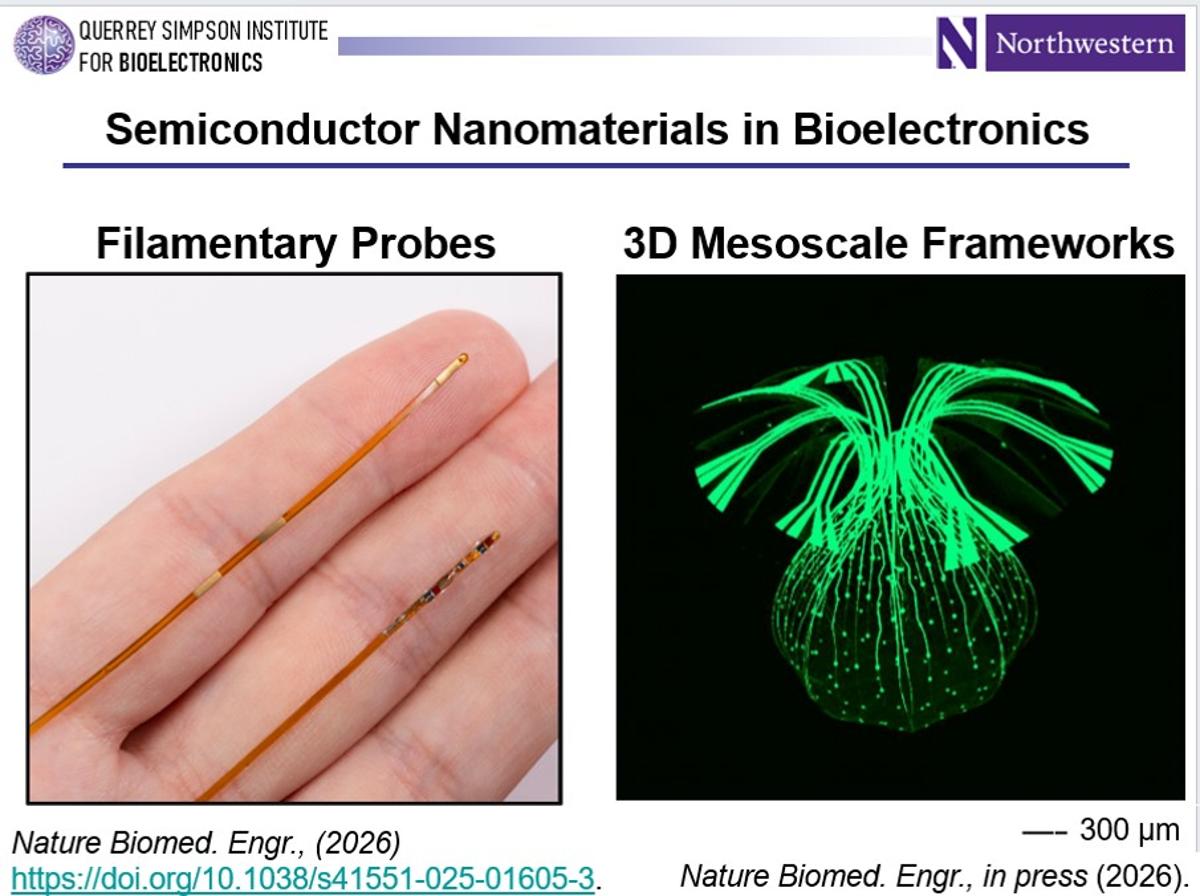
If you’re interested in organoid biology and/or 3D bioelectronics, then check out our paper published today in Nature Biomedical Engineering, titled ‘Shape-conformal porous frameworks for full coverage of neural organoids and high-resolution electrophysiology,’ at https://t.co/Y7MzvRQKTm. This work introduces a technology...
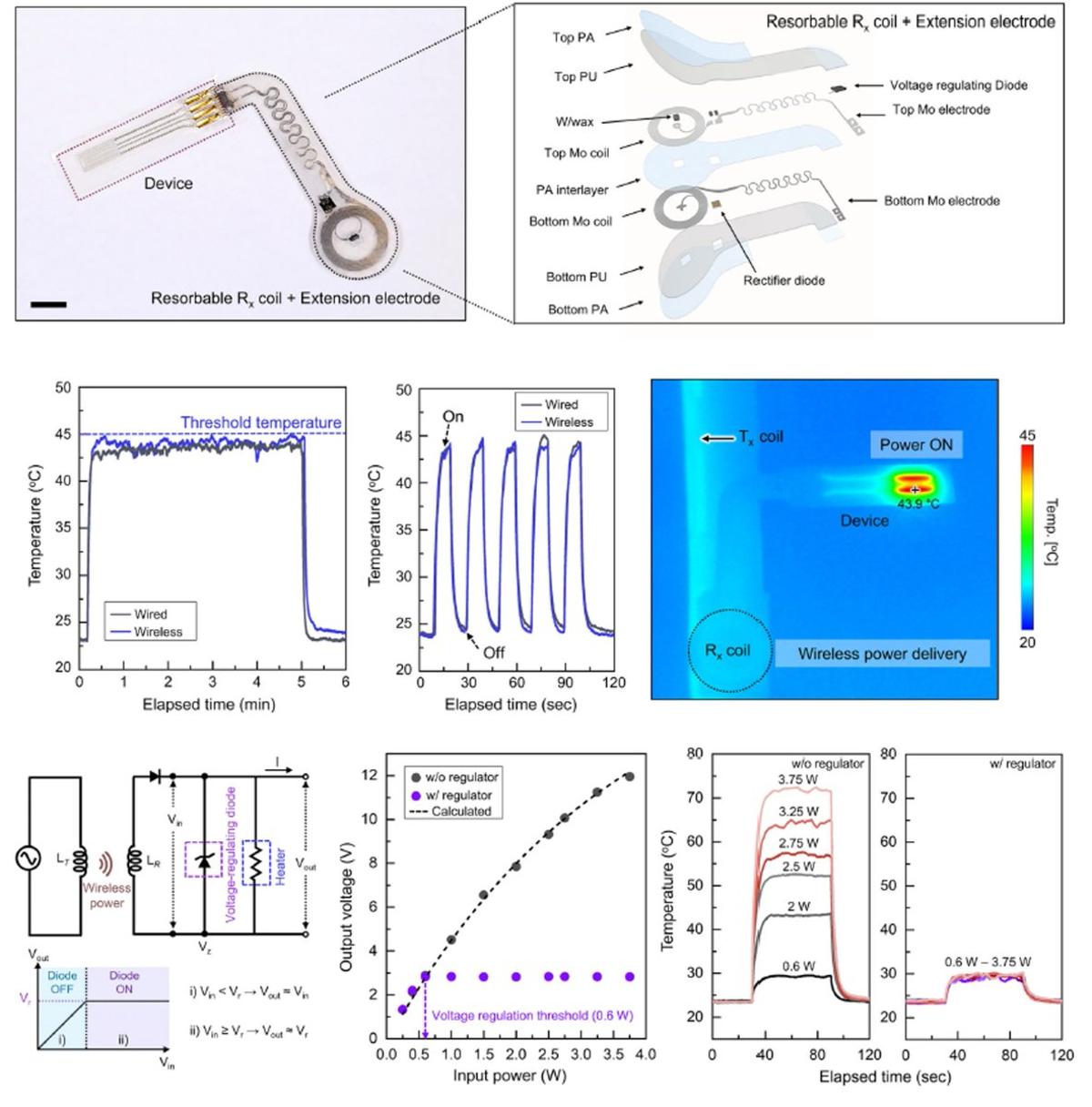
Bioresorbable Implant Uses Heat to Block Pain
Our latest paper appeared today as a cover (inside front) feature article in Advanced Functional Materials, titled “A Bioresorbable Neural Interface for On-Demand Thermal Pain Block.” The focus is on a bioresorbable, implantable form of neural electronics that supports precisely...
Editor Shares Insights at Nanotech Conference Plenary
Wrapping up two days at the 10th biennial International Conference on Nanoscience and Nanotechnology here in Sydney, Australia. Highly engaging event, where my participation involved serving on a panel discussion with other journal editors and delivering a plenary presentation on our...