
Recent Posts
Social•Feb 20, 2026
War Risk Premium Adds Only $10 to Oil Prices
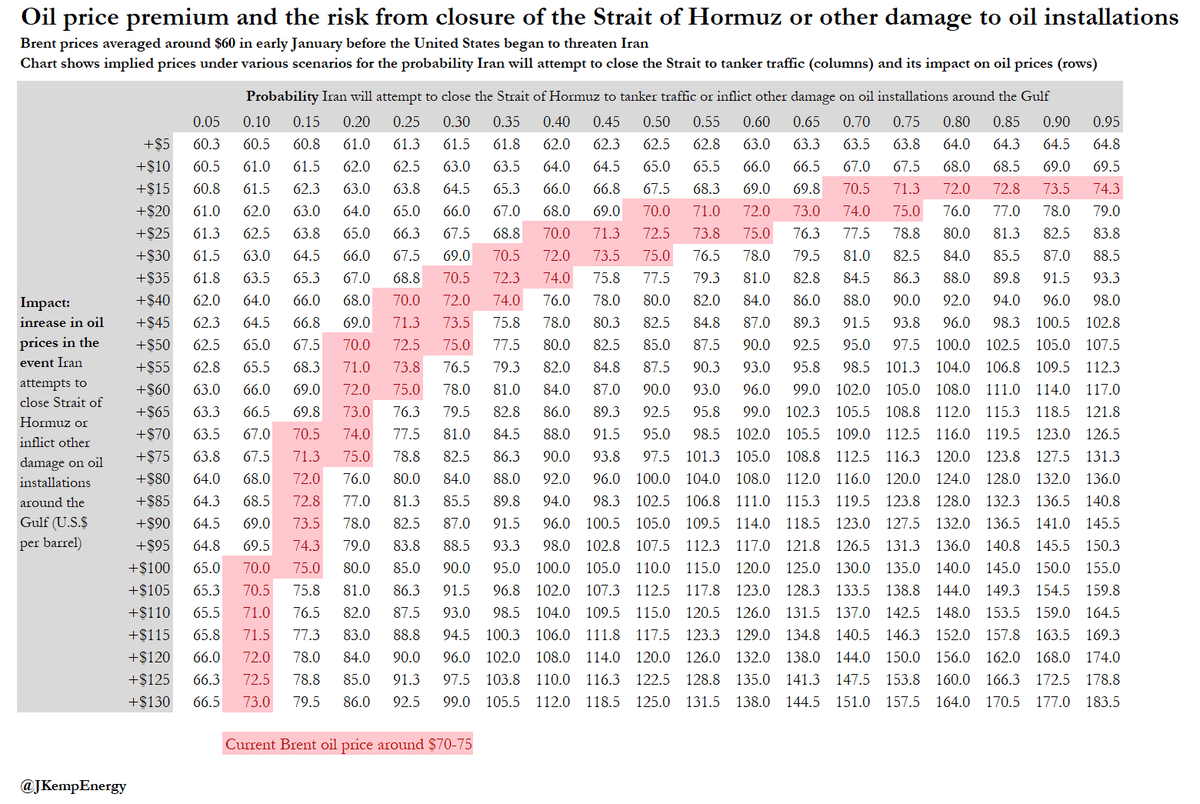
U.S./Iran: Oil Prices and the War Risk Premium Oil traders currently assign a low probability to a war between the United States and Iran that results in significant and sustained disruption to exports from Iran and other countries in the Persian Gulf. Front-month Brent futures were trading around $60 per barrel in January before the United States started to mass warships and aircraft in the Middle East and the Indian Ocean and ramped up threats against Iran. Since then, front-month futures prices have risen to just over $70, suggesting the war risk premium is approximately $10. The relatively small increase so far implies either traders believe the probability of disruption is low or the impact would be minor (or some combination of both). The chart below shows various combinations of probability and impact consistent with the current observed price of between $70 and $75. If traders assume the impact in the event of a full-scale war would be large (adding more than $50 per barrel) then the expected probability is low (65%) then the assumed impact is relatively modest (adding $20 or less). There are various explanations for the relatively small war premium currently embedded in oil prices - which are not exclusive: a)The United States and Iran reach a last-minute agreement averting war. b)The United States and Iran fight a limited war of short duration avoiding damage to oil infrastructure. c)The United States initiates a major conflict but spares Iran’s export installations and tanker traffic. d)Iran’s response is limited to avoid escalation and avoids damaging third-country export installations and tanker traffic. e)Iran attempts to escalate by hitting oil third-country oil installations and tanker traffic, but the threat is effectively suppressed by U.S. missile defences, air superiority and warships ensuring oil exports continue. f)Iran is able to close the Strait of Hormuz to tanker traffic briefly, but the waterway is quickly re-opened by the United States using air power to suppress shore-based threats and naval escorts to convoy tankers safely. g)The United States and Iran fight an unrestricted war, resulting in a sharp drop in oil flows from the Gulf, but the duration is short, measured in days or a few weeks, resulting in a minor loss of oil exports overall. h)The United States and Iran fight an unrestricted war resulting in Iran’s capitulation, regime change, or a rapid ceasefire if the costs prove intolerably high for either government. i)The United States and other members of the International Energy Agency release oil from the Strategic Petroleum Reserve (SPR) and other strategic stocks to offset any interruption of exports from the Gulf. j)China releases crude from its own strategic reserves to limit the impact of shortages and price rises on its domestic refiners and consumers.
By John Kemp
Social•Feb 20, 2026
US Gas Dips Below $3 as Supplies Stay Ample
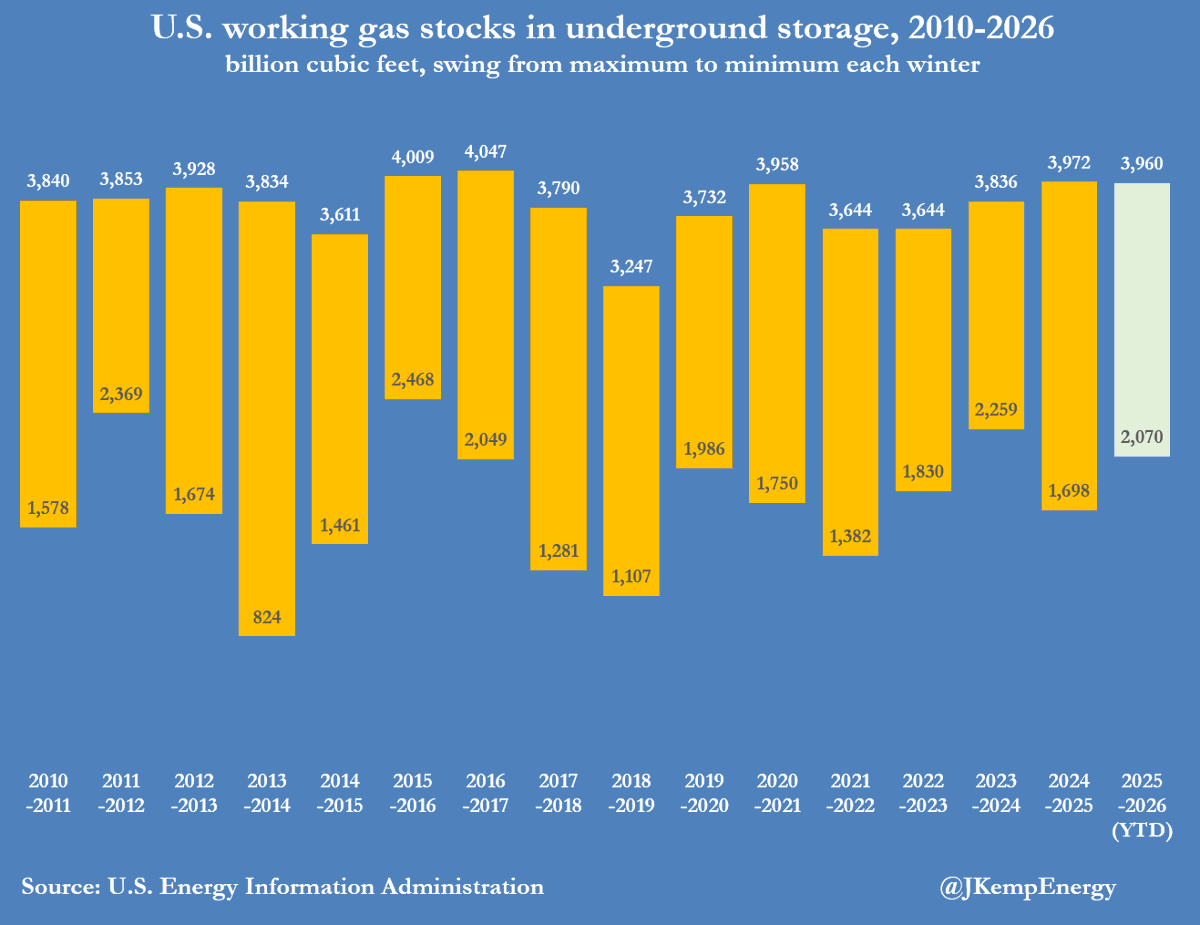
U.S. gas prices retreat on comfortable stocks Front-month U.S. gas futures prices have slipped below $3 per million British thermal units for the first time in four months as traders become convinced gas will remain plentiful despite record exports. So far, this...
By John Kemp
Social•Feb 20, 2026
US EV Charging Ports Jump 10%, Fast Chargers Rise 25%
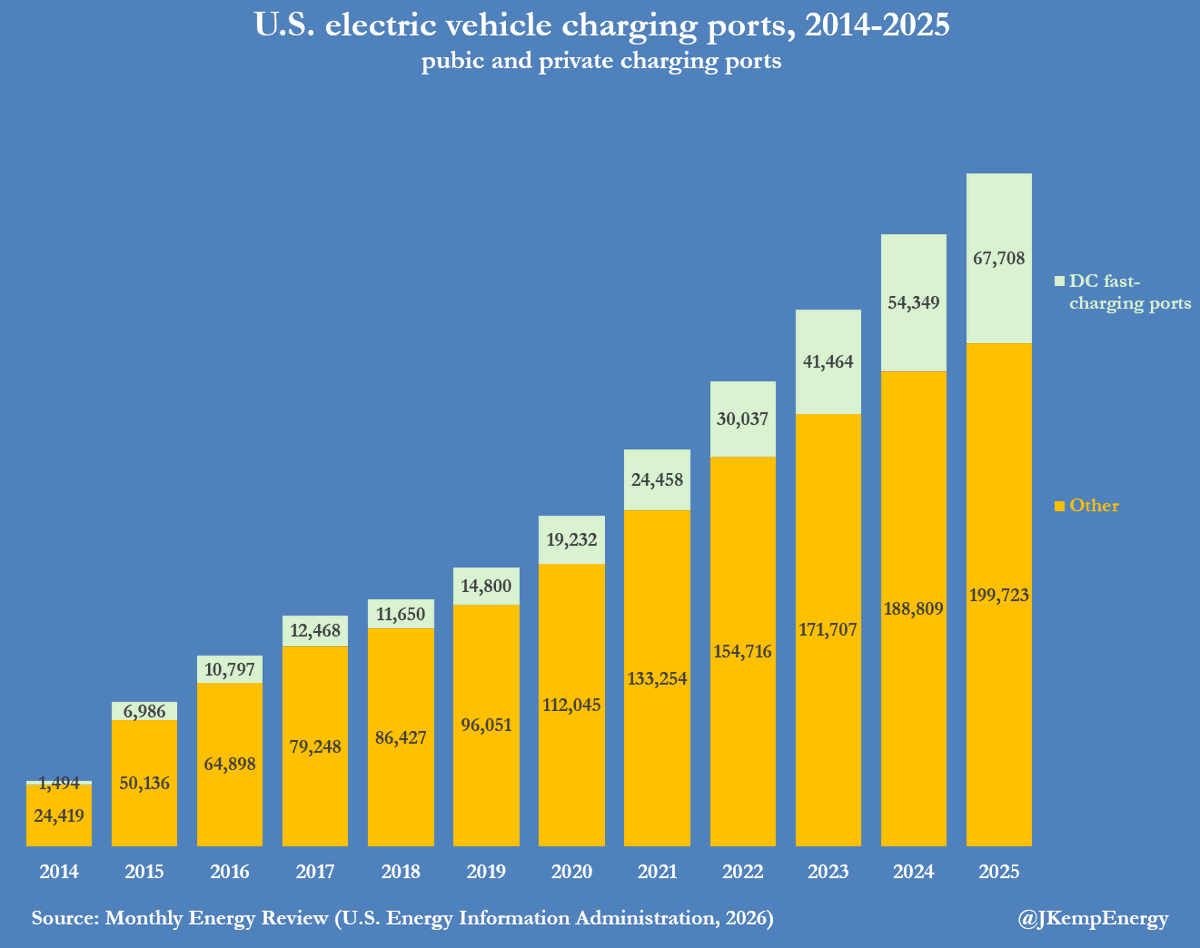
U.S. ELECTRIC VEHICLE charging ports increased by more than 24,000 (10%) in 2025. More than half of the new ports were direct current fast-charging ports, which increased by more than 13,000 (25%): https://t.co/zEkOinhmj8
By John Kemp
Social•Feb 19, 2026
EU Gas Storage at 32%—Second Lowest Since 2011
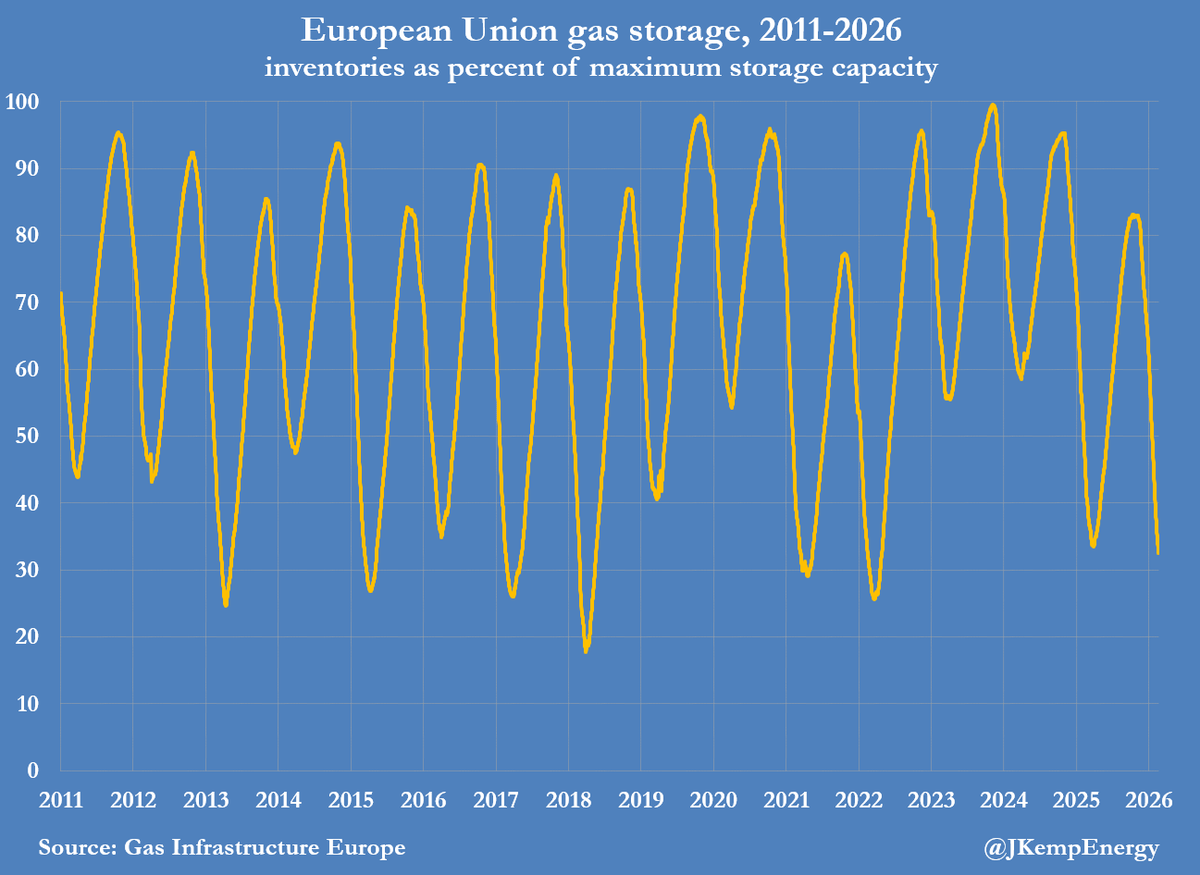
EU GAS STORAGE facilities are now less than one-third full, with more than a month of the winter heating season probably still ahead. Storage facilities were on average 32.5% full on February 17, the second lowest seasonal fill in records...
By John Kemp
Social•Feb 18, 2026
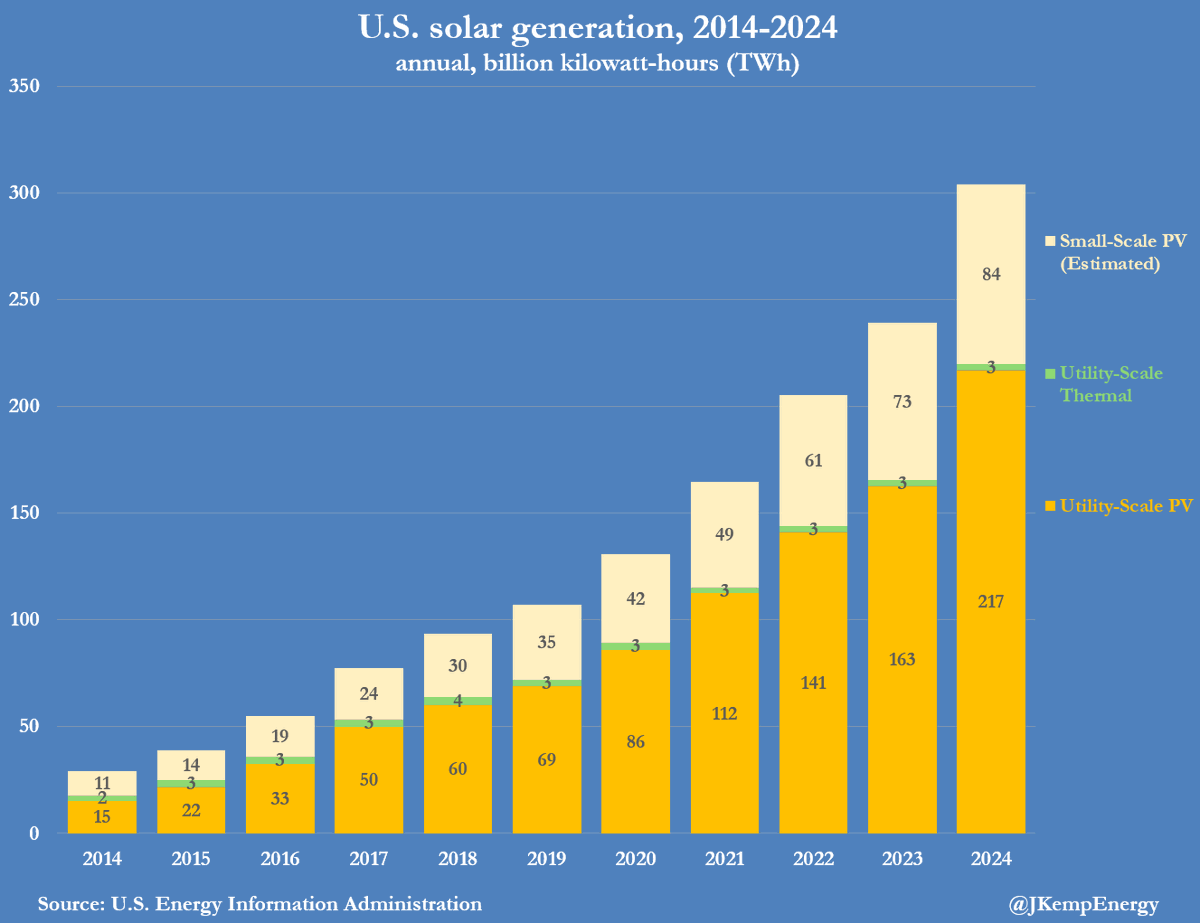
U.S. Solar Power Hits Record 304 TWh, Ten‑Fold Growth
U.S. SOLAR GENERATION increased to a record 304 billion kilowatt-hours (kWh) or 304 terawatt-hours (TWh) in 2024. Solar generation had increased ten-fold over the previous ten years from 29 billion kWh in 2014. Data prepared by the U.S. Energy Information...
By John Kemp

Social•Feb 18, 2026
U.S. Oil Production Holds Steady Despite Falling Prices
U.S. OIL PRODUCTION has defied expectations for a rapid and significant slowdown in response to lower prices: https://t.co/fMfoyip69Z
By John Kemp
Social•Feb 16, 2026
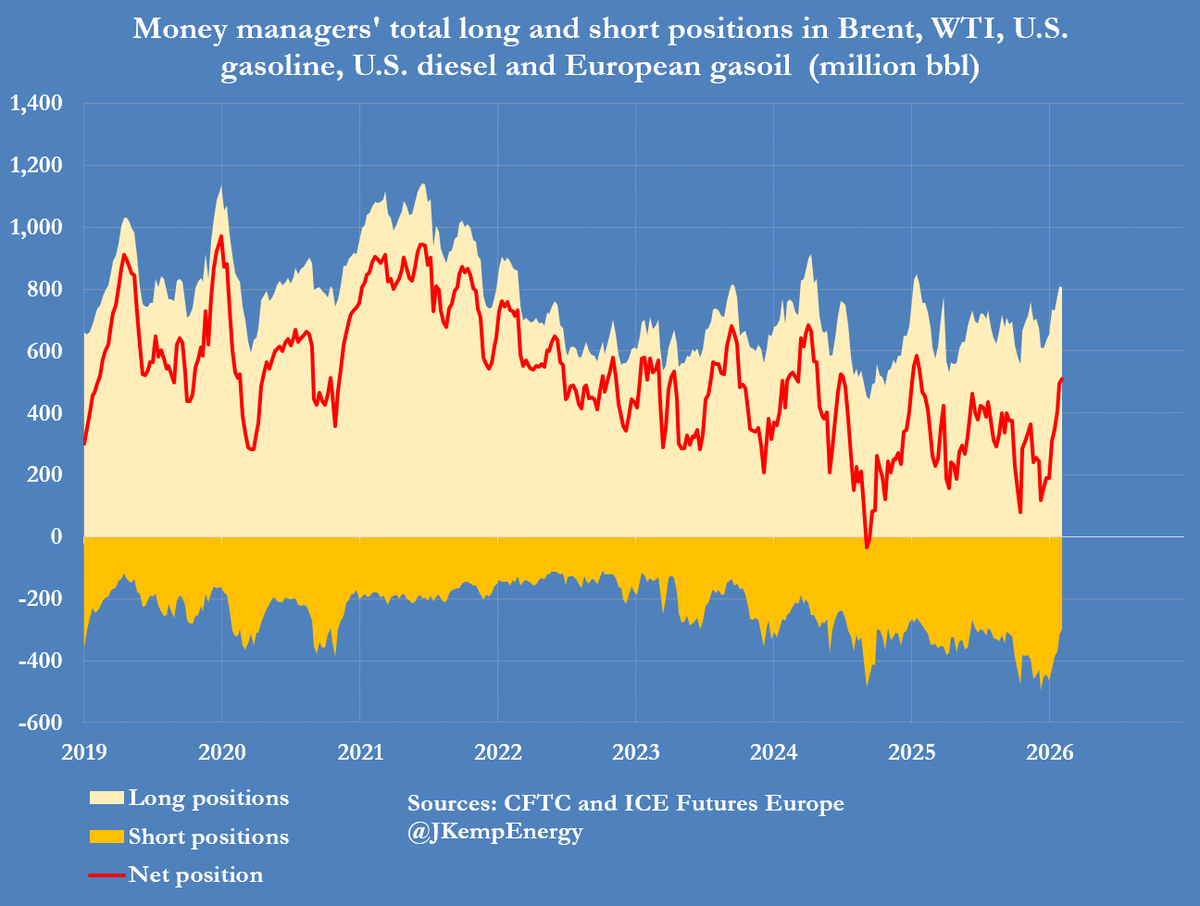
Investors Bet on Oil Amid Growing Supply Threats
Oil investors bullish on proliferating supply threats Investors are increasingly bullish about the outlook for oil prices as potential risks to production and tanker traffic multiply - including threats of U.S. military action against Iran and stricter sanctions enforcement. Hedge funds and...
By John Kemp
Social•Feb 16, 2026
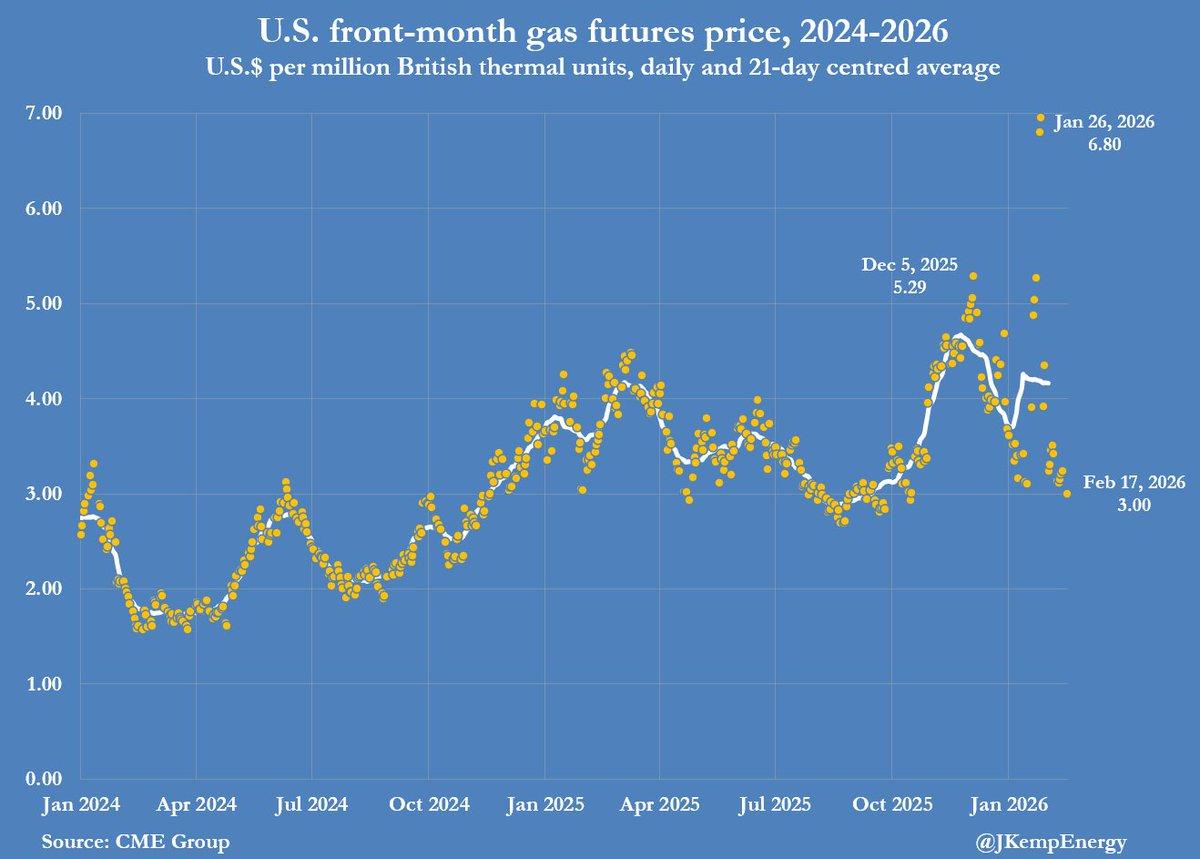
U.S. Gas Futures Hit Four‑month Low at $3/MMBtu
U.S. GAS futures prices have retreated to the lowest for almost four months after spiking during Winter Storm Fern. Front-month futures have fallen back to just $3 per million British thermal units (the lowest since mid-October). The front month has...
By John Kemp
Social•Feb 13, 2026
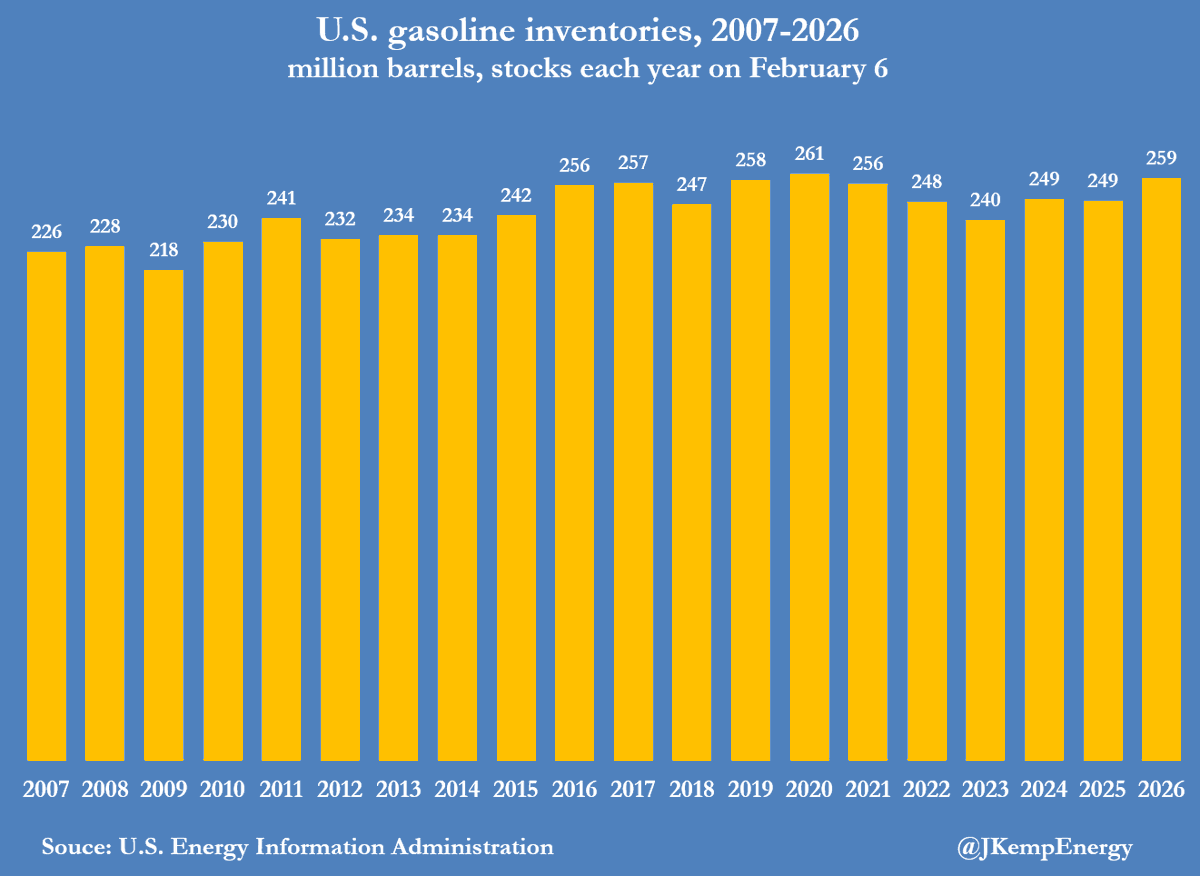
US Gasoline Inventories Hit Near-Record, Squeezing Margins
U.S. GASOLINE STOCKS are well above normal for the time of year, weighing on refining margins. Inventories totalled 259 million barrels on February 6, the second highest on record for the time of year, exceeded only before the pandemic in...
By John Kemp
Social•Feb 12, 2026
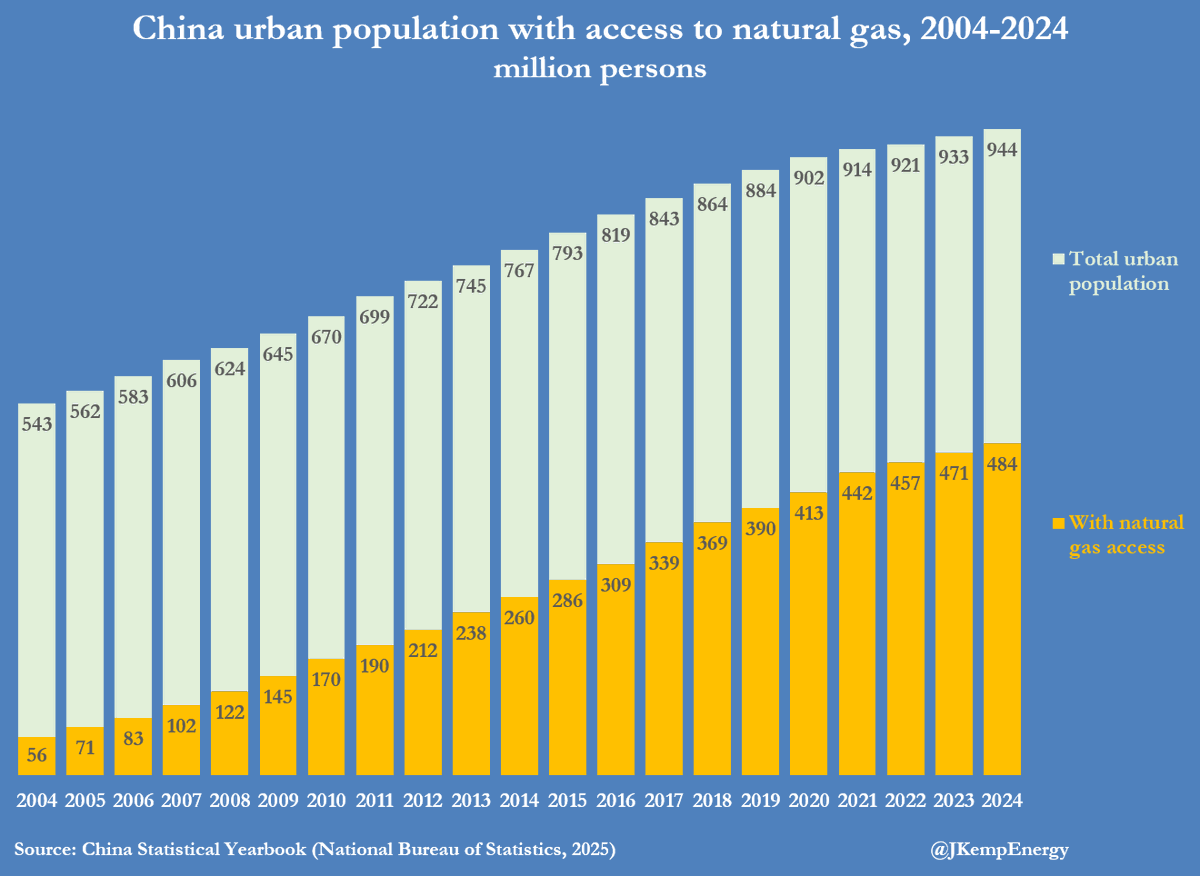
China’s Urban Gas Network Reaches 484 Million Residents
China’s residential gas revolution China has connected more than 300 million people living in urban households to the natural gas network since 2010, according to data published late last year by the National Bureau of Statistics (NBS). The number of urban...
By John Kemp
Social•Feb 12, 2026
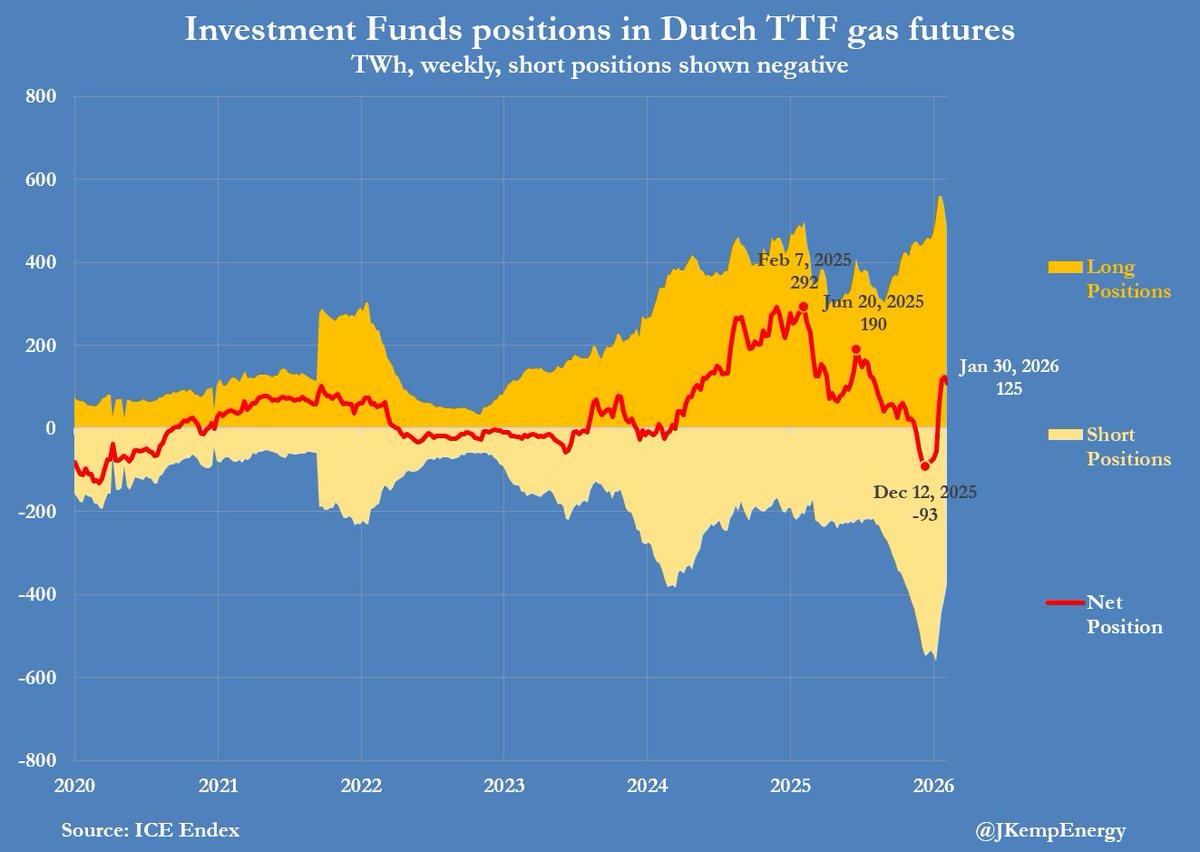
Investors Dump TTF Gas Futures as Prices Slip
INVESTMENT MANAGERS sold futures and options on the Dutch TTF European gas benchmark for the first time in eight weeks as prices retreated despite inventories well below average for the time of year. Funds sold the equivalent of 15 terawatt-hours...
By John Kemp
Social•Feb 11, 2026
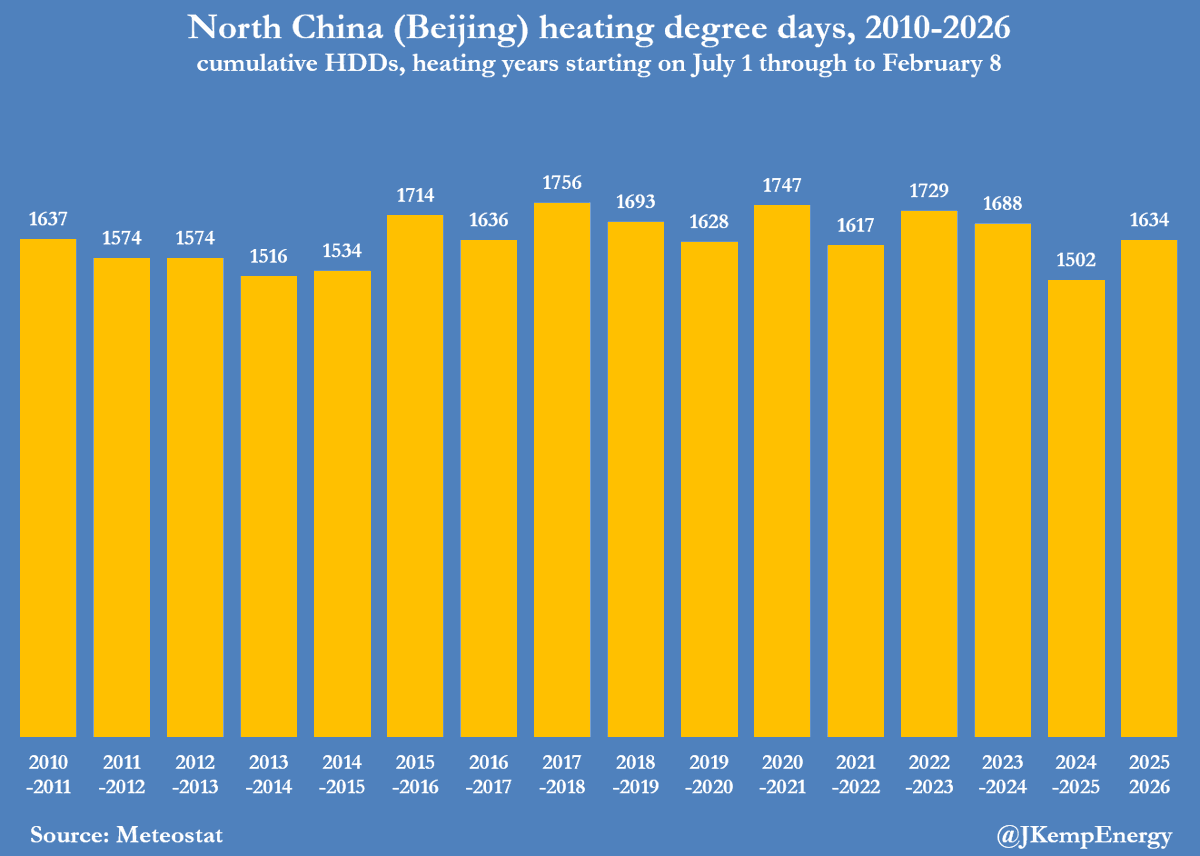
Mild Chinese Winter Cuts Heating Demand by up to 6%
CHINA’s winter has been relatively mild so far, limiting gas consumption and imports. Heating demand in the North China metro-region including Beijing, Tianjin and Hebei (home to 109 million people and accounting for 9% of GDP) has been about 2%...
By John Kemp