

Video•Feb 26, 2026
3 Things to Know About Moderna’s mRNA Flu Vaccine and Its FDA Application
The video examines the FDA’s sudden reversal on Moderna’s mRNA influenza vaccine, shifting from an initial refusal to a green light for a fast‑track review aimed at adults aged 65 and older. The agency had already examined the application, but public backlash prompted a rapid policy change, positioning the vaccine for potential rollout by the next flu season. Key points include the volatile regulatory environment that discourages biotech firms from investing in mRNA flu research, as shifting rules increase risk. Additionally, the federal government has slashed hundreds of millions in mRNA vaccine funding, further constraining development pipelines. The fast‑track designation specifically targets seniors, reflecting a strategic focus on high‑risk populations. The presenter notes that the FDA’s initial refusal was met with intense criticism, leading to a swift reversal despite the agency having previously cleared the submission. The ultimate goal is to have an mRNA flu shot available for older adults by the upcoming flu season, but the back‑and‑forth decision underscores systemic uncertainty. These dynamics could delay market entry, erode investor confidence, and amplify public skepticism toward mRNA technologies, potentially hindering broader adoption of next‑generation vaccines.
By Johns Hopkins Bloomberg School of Public Health
Video•Feb 26, 2026
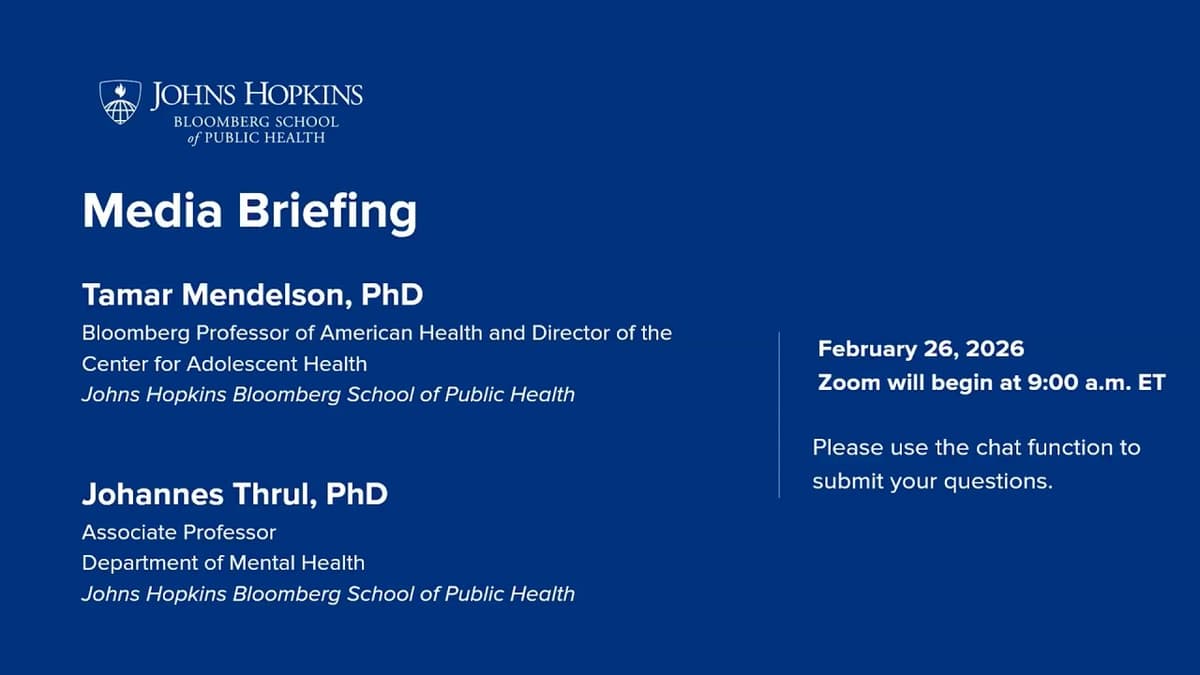
Media Briefing: Social Media & Mental Health
The Johns Hopkins Bloomberg School of Public Health hosted a media briefing on the evolving relationship between digital media, especially social media, and mental health. Moderated by Ellen Wilson, professors Tamar Mendelson and Johannes Thrul presented the latest research on...
By Johns Hopkins Bloomberg School of Public Health