
Recent Posts
Video•Feb 27, 2026
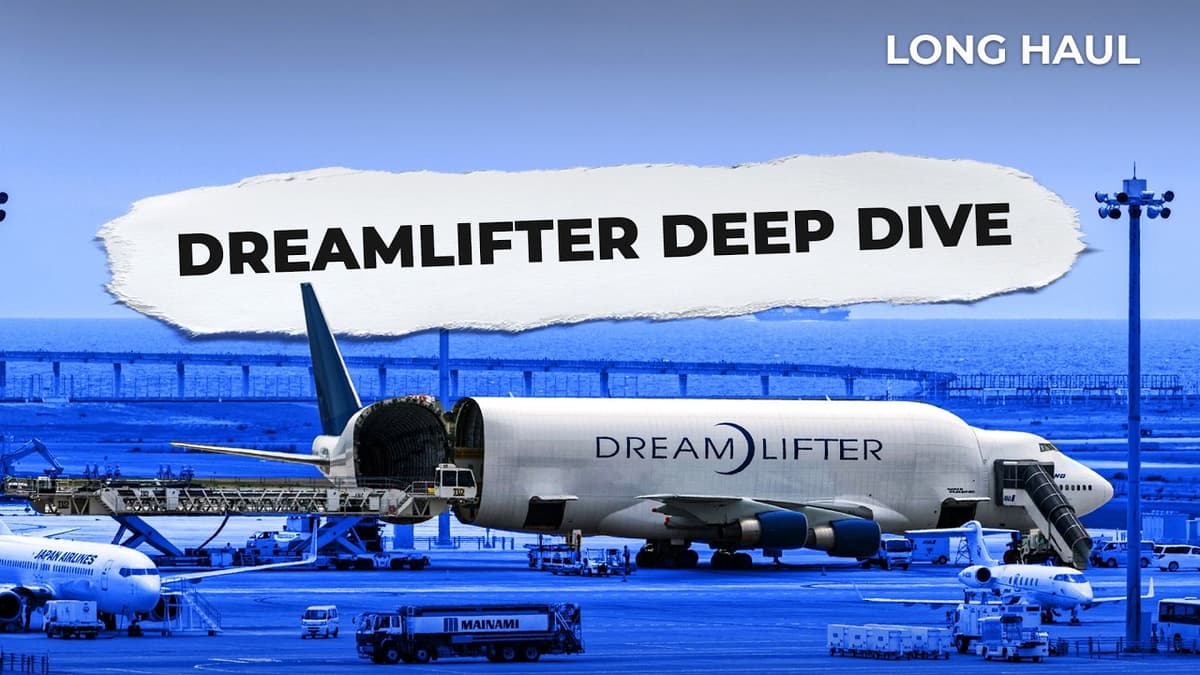
How Many Boeing Dreamlifters Still Fly Today?
The video explains how Boeing created the 747‑400‑based Dreamlifter to solve the logistical nightmare of moving oversized 787 components across continents, and confirms that only four of these specialized freighters are still in service today. Boeing’s 787 program adopted a globally distributed manufacturing model, sourcing wings in Japan, fuselage sections in Italy and the U.S., and composites elsewhere. To avoid weeks‑long sea shipments, the company converted four retired 747‑400s in 2003, adding a massive bulged fuselage and a swing‑tail that opens the entire rear section, delivering roughly 65,000 ft³ of cargo space and a 113‑tonne payload capacity for large but lightweight parts. The Dreamlifter’s operational history includes a 2013 incident where one aircraft landed at the wrong Kansas airfield, underscoring its reliance on long runways. Today Atlas Air flies the fleet, shuttling parts between key hubs such as Charleston (U.S.), Nagoya (Japan), and Wichita (U.S.). Airbus’s BelugaXL, based on an A330‑200, provides a parallel solution, illustrating that outsized cargo aircraft are essential to modern aerospace supply chains. With only four machines, the Dreamlifter remains a critical link in the 787 supply chain, dramatically reducing lead times and enabling Boeing to respond quickly to production bottlenecks. Its continued relevance signals that future aircraft programs may need similar bespoke logistics platforms to sustain increasingly globalized manufacturing networks.
By Long Haul by Simple Flying
Video•Feb 21, 2026
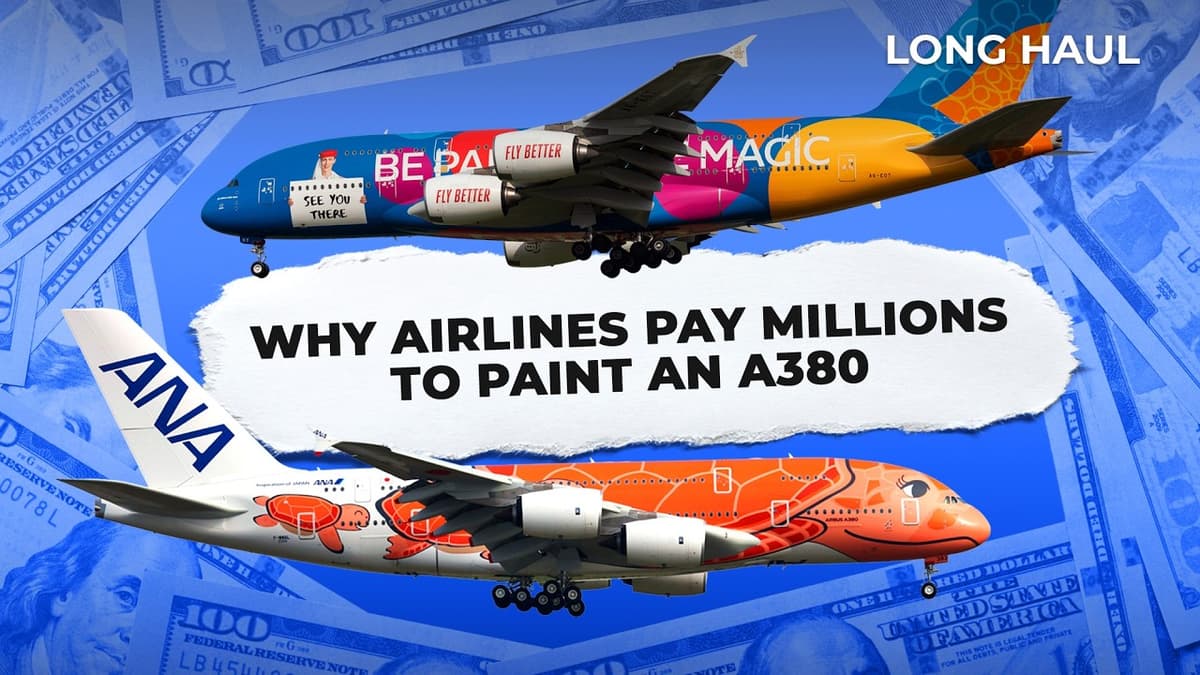
Why Painting an A380 Costs Millions
The video examines why repainting the Airbus A380, the world’s largest passenger jet, can cost up to half a million dollars, turning a cosmetic refresh into a major maintenance project. A standard “Eurowhite” scheme runs $200‑$300 k, while intricate murals exceed $400‑$500 k....
By Long Haul by Simple Flying

Video•Feb 18, 2026
The Airbus A321XLR Could Change Air Travel Forever
The video examines how Airbus’s A321XLR reshapes commercial aviation by extending the proven A321 platform into true long‑range territory. With a certified range of roughly 4,700 nautical miles, the narrow‑body jet can fly nonstop for ten to eleven hours—distances once...
By Long Haul by Simple Flying
Video•Feb 12, 2026
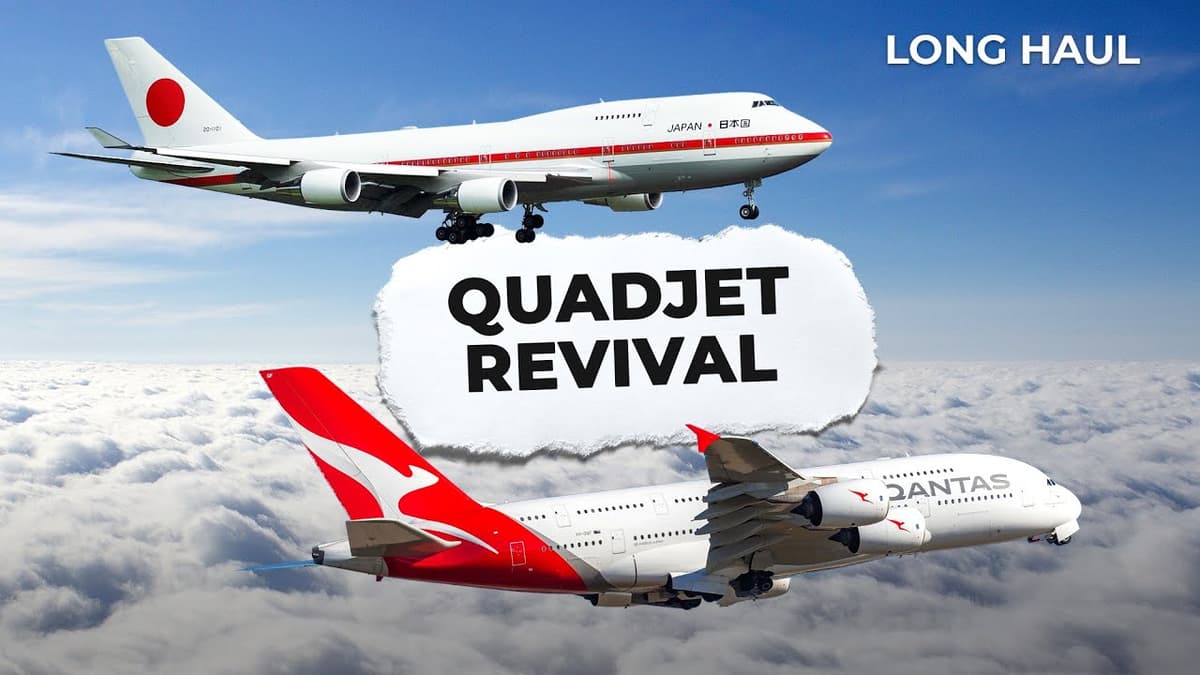
Why Airlines Might Bring Back 4-Engine Aircraft
The video examines whether four‑engine aircraft—once the workhorses of long‑haul travel—could re‑emerge in a market dominated by high‑bypass twinjets. It argues that while the era of the Boeing 747 and Airbus A380 as mainstream passenger carriers appears closed, specific operational...
By Long Haul by Simple Flying
Video•Feb 9, 2026
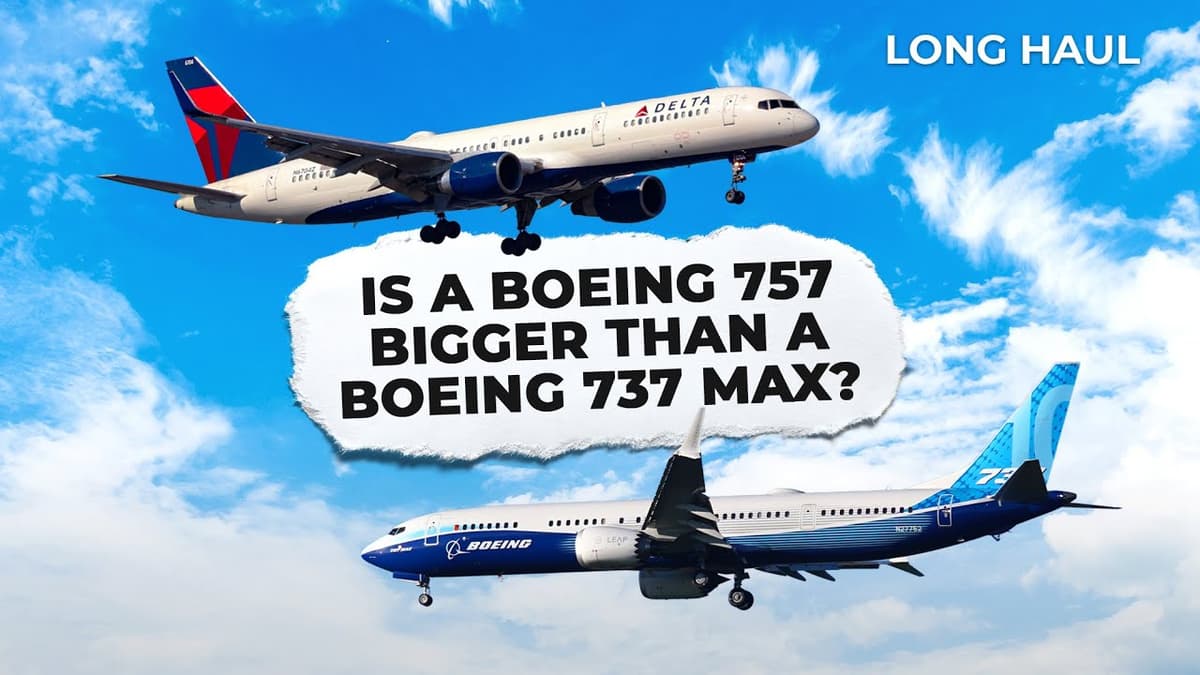
Boeing 757 vs 737 MAX: Which One Is REALLY Bigger?
The video pits Boeing’s aging 757 against the newest 737 MAX family, asking which aircraft truly eclipses the other in size, capacity and performance. It highlights the 757‑200’s 155‑foot length and 255,000‑pound MTOW versus the MAX 10’s sub‑144‑foot fuselage and 203,000‑pound take‑off...
By Long Haul by Simple Flying

Video•Feb 6, 2026
Long-Haul Comfort: The 10 Best Airlines For Economy Class Travel
Condé Nast Traveler evaluated long‑haul economy cabins, ranking ten carriers based on seat dimensions, recline, and onboard amenities. The list highlights how modest differences—extra inches of pitch or wider seats—can transform a cramped coach experience into a tolerable one for trans‑oceanic journeys. JetBlue’s...
By Long Haul by Simple Flying
Video•Feb 2, 2026
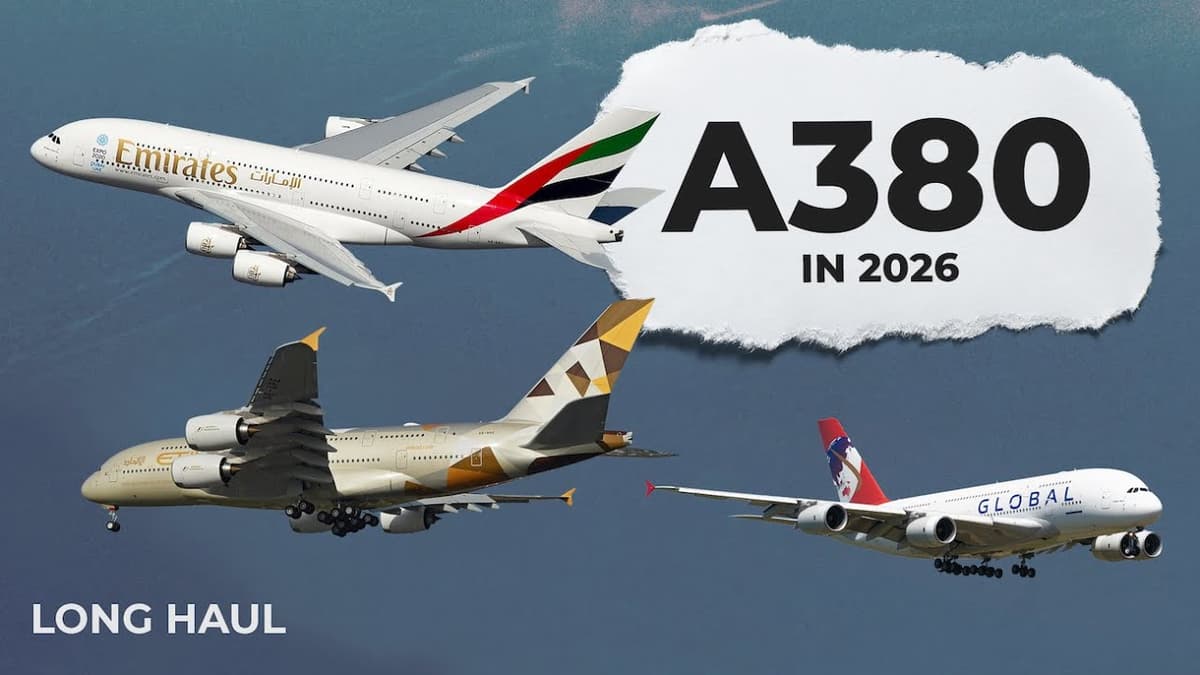
Reactivations, Retirements, Retrofits: The State Of The Airbus A380 In 2026
The video reviews the health of Airbus’s double‑deck superjumbo as of early 2026, four years after the last A380 left the production line. It examines how the pandemic‑driven grounding wave has given way to a mixed picture of reactivations, retirements...
By Long Haul by Simple Flying