

Nina Miolane | The Shape of Intelligence
The video presents recent findings that the collective firing patterns of 150 recorded neurons can be represented as a point in a 150‑dimensional space, revealing a toroidal geometry that appears to be a fundamental shape of neural computation. Researchers showed that both biological brains and deep‑learning models, despite vastly different training times—millions of years of evolution versus minutes of gradient descent—converge on the same torus structure. The pattern persists across network initializations, architectural variations, and across species from rodents to primates. As the speaker notes, “you crack open the artificial neural network and you print the activity… you do get that torus.” The torus has been documented in mice, rats, to a lesser extent in monkeys and humans, suggesting a reproducible signature of high‑dimensional neural dynamics. If neural computation obeys universal geometric constraints, AI designers could exploit toroidal representations to build more efficient, robust models, while neuroscientists gain a quantitative bridge linking brain activity to machine learning theory.
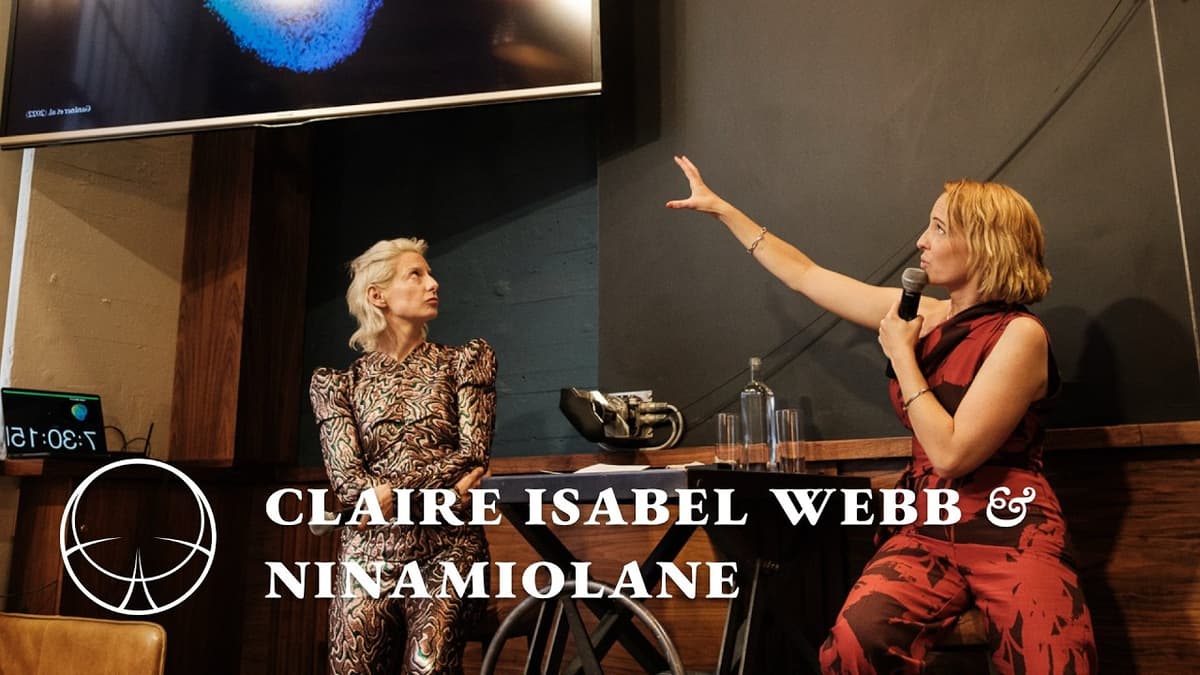
Claire Isabel Webb & Nina Miolane | The Geometry of Consciousness
The talk by Claire Webb and Nina Miolane introduced a "mathematical theory of intelligence," arguing that both brains and machines obey common geometric principles. They highlighted how modern imaging now records hundreds of thousands to a million neurons in vivo,...
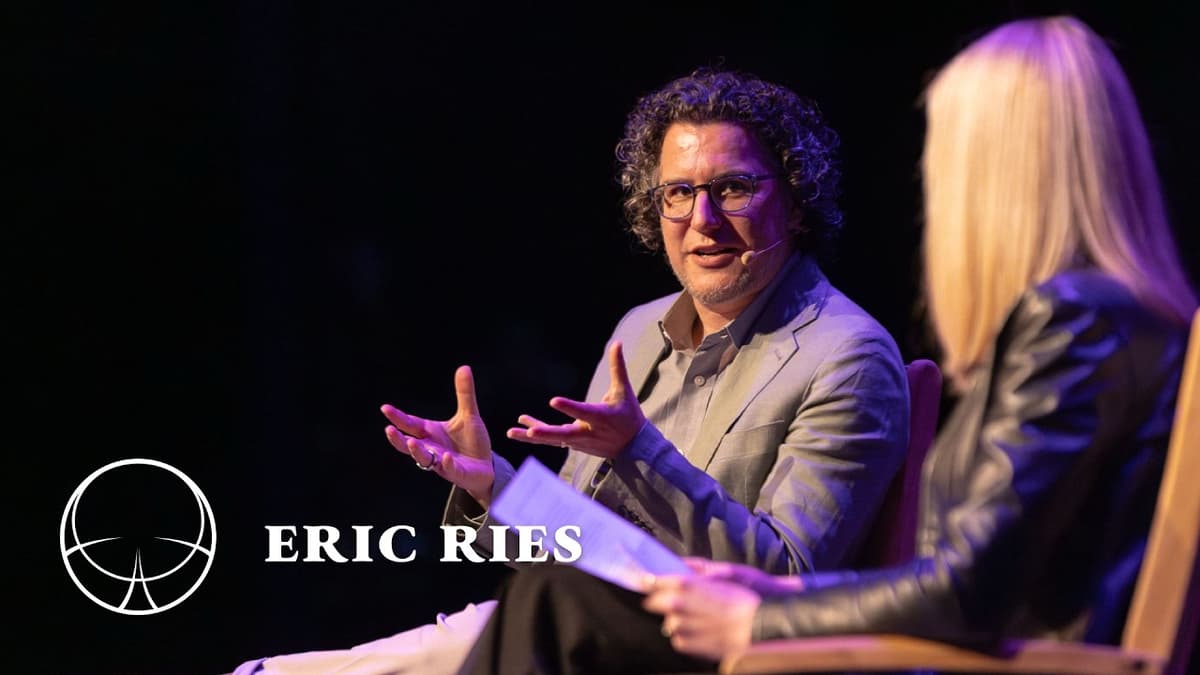
Eric Ries | Incorruptible by Design
Eric Ries’s talk centers on his new book, Incorruptible by Design, which argues that today’s financial system exerts a force—"financial gravity"—that draws organizations toward a uniform, decayed state. He describes how vibrant startups often end up indistinguishable, bureaucratic entities, likening...
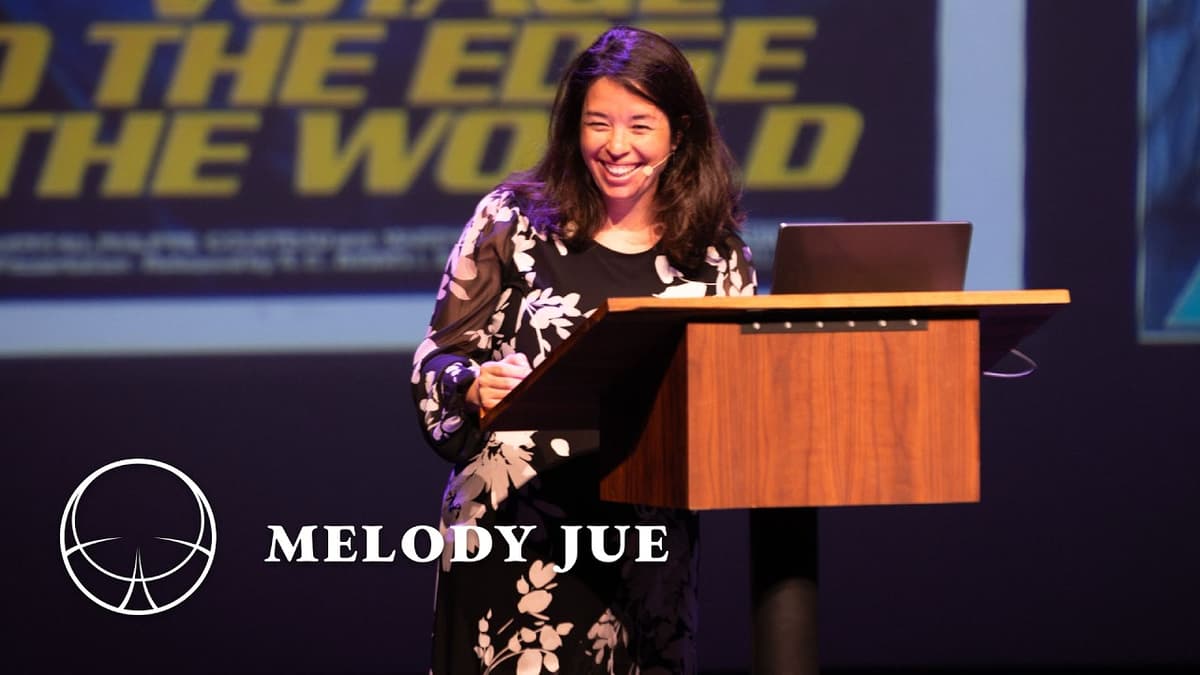
Melody Jue | Ocean Memory
Professor Melody Jue’s presentation at The Long Now explored the concept of “ocean memory,” arguing that the sea should be read not merely as a physical system but as a repository of layered, non‑linear memories that bridge science, humanities, and...

Centuries of the Bristlecone by Jonathon Keats
Jonathon Keats’s video introduces “bristlecone time,” an alternative chronometer that gauges years by the growth rings of the world’s longest‑lived trees, contrasting sharply with the atom‑based Coordinated Universal Time that dominates modern life. He traces humanity’s shift from seasonal cues—bird migrations,...

Indy Johar | Freedom of Partial Knowing
Indy Johar’s short talk, titled “Freedom of Partial Knowing,” argues that the only authentic certainty we possess is the acknowledgment that our knowledge is always incomplete. He frames this admission as a liberating foundation for how we engage with a...