
They Lost on Price by $15M and Still Won the Deal. Here's How.
The video opens by critiquing current AI usage in M&A, introduces Dealroom's MCP that links AI tools like Claude or ChatGPT directly to live deal data, eliminating manual copy‑paste. It then shifts to Dealmax, a conference where practitioners share memorable transactions. Key insights include the inefficiency of the “download‑analyze‑upload” loop, which the MCP solves by auto‑writing findings back to the deal room. The stories illustrate that technical tools are only half the battle; emotional dynamics and unexpected operational events can dominate outcomes. Brent Baxter recounts a family‑owned business where partners fought physically yet still closed, while Sam Delastine describes a fastener deal turned advantageous after an Alaska Airlines door blew off. Notable quotes: “The hardest part isn’t data rooms, it’s managing emotions,” says Baxter, and Delastine notes, “We knew the fastener wasn’t at fault, turning a crisis into a competitive edge.” Dealmax statistics underscore the networking power: over 3,500 attendees schedule more than 26,000 one‑on‑one meetings, split evenly among private equity, banks, and M&A service providers. The implications are clear: seamless AI‑dealroom integration can shave days off due diligence, but human judgment—especially in high‑emotion, family‑owned deals—remains indispensable. Moreover, events like Dealmax provide the relational capital that accelerates deal flow and creates “relevant connections” across the M&A ecosystem.
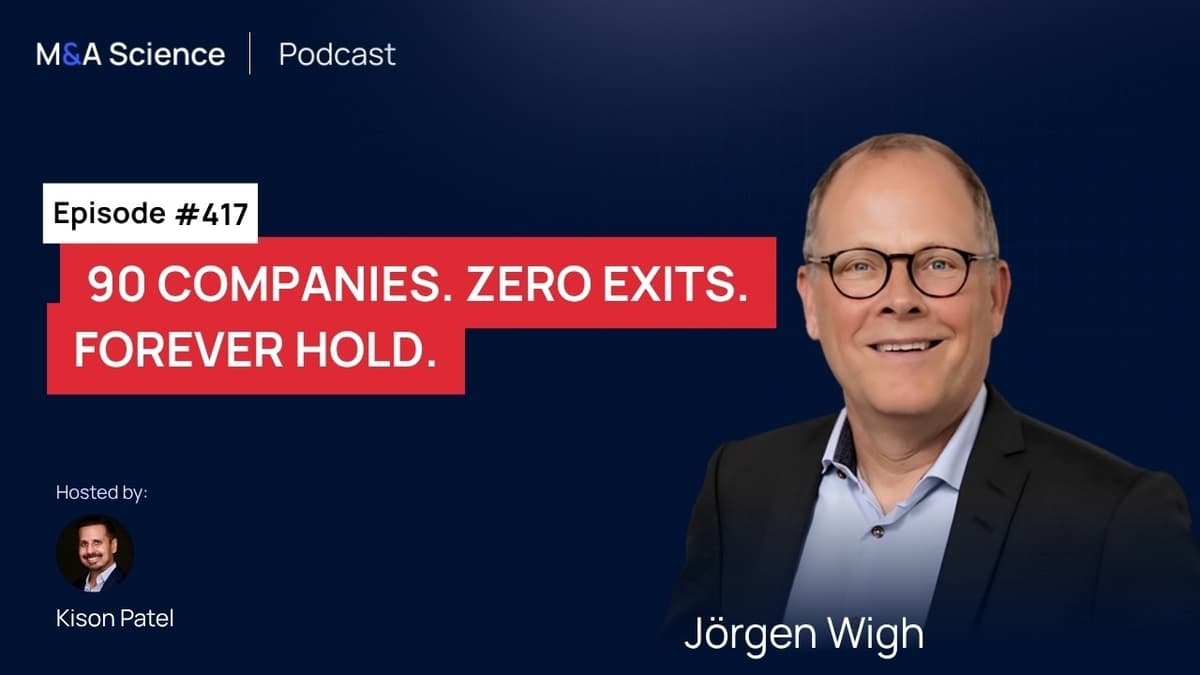
Lagercrantz Bought 90 Companies and Never Sold One. The Discipline That Makes It Work | Jörgen Wigh
In this interview, Jörgen Wigh, CEO of Lagercrantz, explains how the Swedish conglomerate has bought roughly 90 companies over two decades and never sold a single one, opting for a permanent‑hold strategy that emphasizes autonomy and disciplined capital allocation. Wigh outlines...

M&A Integration Technology: What Actually Works
In this episode of M&A Science, host Kan Patel convenes four seasoned integration leaders—from Intel, Corsera, Ancis, and UKG—to dissect what truly works in integration technology. The conversation, recorded for Deal Pilot members and now public, moves beyond polished presentations,...
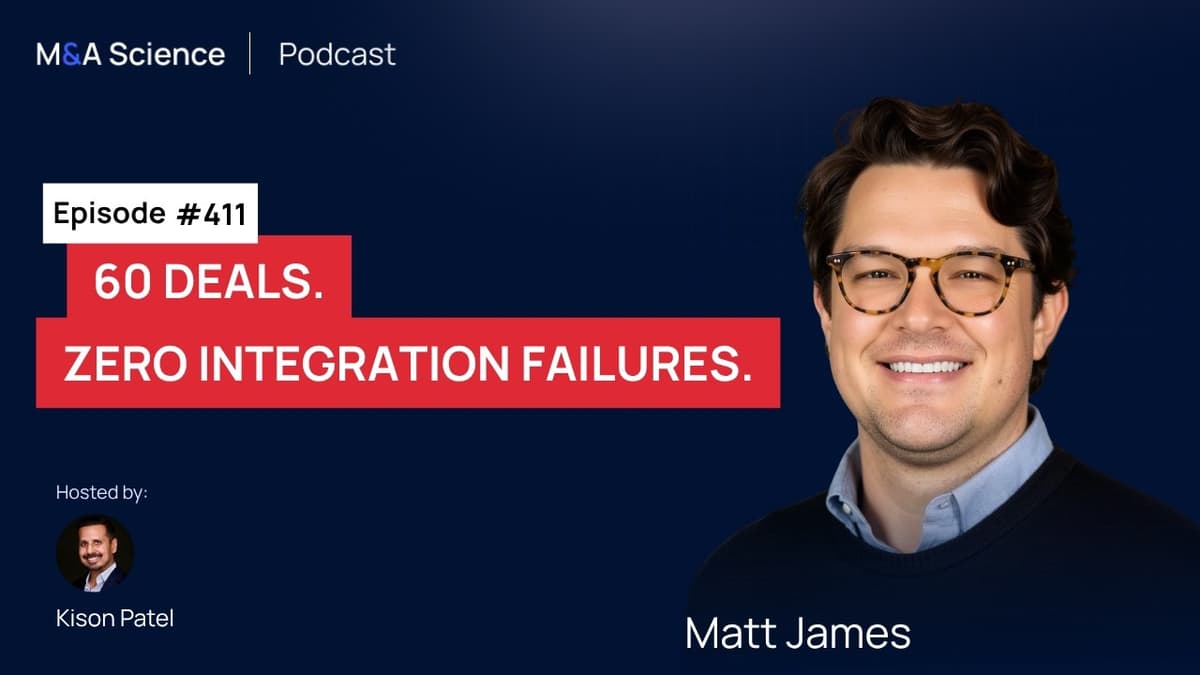
400 Acquisitions and a Failed Process: What Happens When You Don't Integrate | Matt James
The podcast with Oakridge Insurance EVP Matt James centers on why integration must be baked into roll‑up strategies from day one, not treated as a post‑close cleanup. James argues that modern private‑equity buyers no longer buy for multiple arbitrage alone;...

People-First M&A: The Framework Behind 93% Post-Merger Leadership Retention | M&A Science Ep 406
The episode spotlights Solless O'Brien’s people‑first M&A model, which has achieved a cumulative 93% leadership retention rate across 55 deals over 15 years. Host Kissan Patel and SVP Nathan Rust discuss how the firm treats acquisitions as partnerships rather than...

Guardrails for High-Volume Acquisitions W/ Birgitta And Lars Elfversson
Two experienced operators—Brigitta Elfversson, former Unilever M&A lead, and Lars Elfversson, Netlight co-founder—discuss pragmatic guardrails for high-volume rollup strategies: prevent “deal fever,” tailor diligence to scale, and prioritize people and culture risks that financial models miss. They emphasize a buyer-led...
The Next Chapter After 400 Episodes
The episode marks a turning point for M&A Science after reaching 400 podcasts, announcing a schedule move from Mondays to Thursdays and the founder’s decision to step back from the CEO role to concentrate on the community platform. The shift...
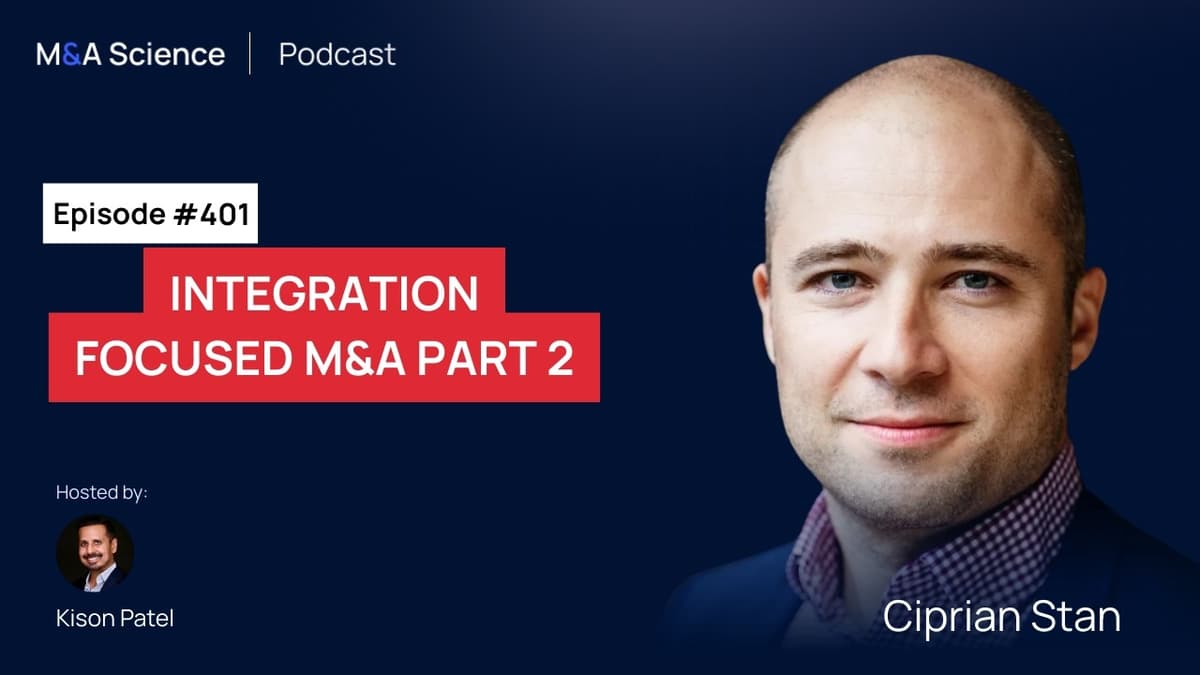
Integration Focused M&A: Why Execution Should Inform Strategy Before You Sign Part 2 W/ Ciprian Stan
The video dives into integration‑focused M&A, emphasizing that execution should shape strategy before a deal is signed. Ciprian Stan, integration manager at Sallesiana, shares lessons from his experience in the European textile‑laundry sector, warning that many firms stumble not on...