
Megha Bhardwaj
Creator
0 followers
Cloud & DevOps engineer sharing end‑to‑end tooling stacks (Kubernetes, Terraform, GitHub Actions/Jenkins, ArgoCD, Prometheus/Grafana) and performance testing.
Recent Posts

Social•Feb 21, 2026
HTTPS Is Non‑optional: Encrypt Everything by Default
Most people see the 🔒 in the browser, but few think about the engineering behind it. Here’s the real difference: HTTP (Port 80) The postcard Data travels as plain text Anyone on the same network can read credentials or session tokens Okay for local testing. Dangerous in production HTTPS (Port 443) The locked envelope SSL/TLS handshake verifies identity first Data is encrypted before it moves Privacy, integrity, and trust by default In systems, this isn’t a choice. HTTPS is the baseline.
By Megha Bhardwaj

Social•Feb 20, 2026
Simple Shell Scripts Save Hours Over GUIs
You don’t need fancy tools for everything A few lines in Bash or Shell can: • Automate boring tasks • Move or rename files in bulk • Parse logs and extract useful info • Deploy or restart services I’ve seen engineers spend hours hunting solutions in...
By Megha Bhardwaj
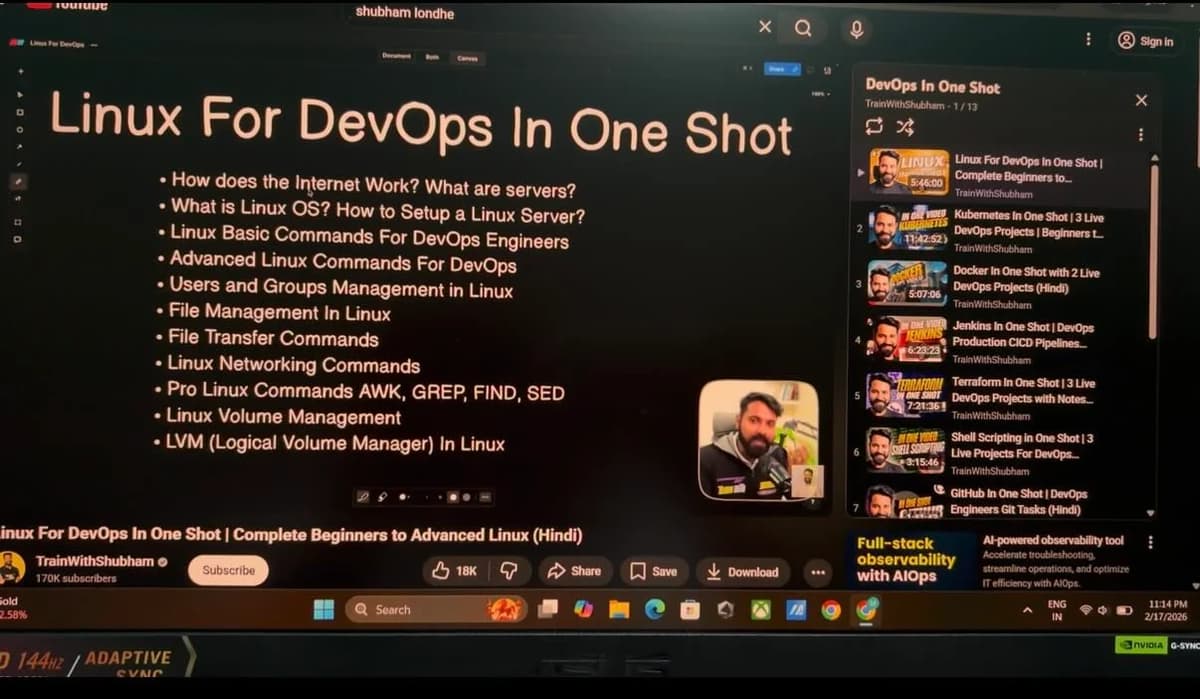
Social•Feb 19, 2026
Hindi Linux for DevOps: Clear, Complete Guide
Recently I found a YouTube channel — TrainWithShubham He has explained Linux for DevOps in Hindi in a very clear and practical way. From basics like: • What is Linux • Commands • Users & permissions • Networking • LVM Everything is covered in one structured session. If you’re...
By Megha Bhardwaj

Social•Feb 17, 2026
Stop Chasing Stacks, Focus on Solving Problems
Building apps → Docker Orchestrating containers → Kubernetes Provisioning infra → Terraform Managing configs → Ansible Automation glue → Python Version control → Git + GitHub CI/CD pipelines → GitHub Actions / Jenkins GitOps workflow → ArgoCD Monitoring metrics → Prometheus Dashboards → Grafana Logging → ELK Stack Secrets → Vault Cloud...
By Megha Bhardwaj

Social•Feb 17, 2026
Azure Services Simplified: Plain English Cheat Sheet
☁️ Azure in Plain English • VM → computer in the cloud • Blob Storage → file storage • Azure SQL → managed SQL database • Functions → code that runs automatically • App Service → deploy apps easily • VNet → private network •...
By Megha Bhardwaj