
Recent Posts

Video•Feb 26, 2026
The Property Rules Have Changed Again – How to Win in 2026 | Brett Warren
The podcast with Michael Yardney and Brett Warren warns that the property investment rules that drove success five years ago have shifted dramatically, and 2026 will reward the most strategic, not the most aggressive, investors. Higher interest rates, tighter lending standards and rising holding costs have reduced the margin for error. Investors clinging to assumptions of continued price growth, easy financing or relying on recent gains risk cash‑flow shortfalls. Brett stresses building buffers, avoiding FOMO and re‑evaluating ownership and finance structures as essential. Both hosts cite concrete examples: demand outstripping supply, Melbourne’s pivot toward owner‑occupier‑driven A‑grade suburbs, and the danger of B‑grade regional assets that have delivered short‑term spikes but flat long‑term returns. They also highlight value‑add renovations and land‑banking strategies that generate cash flow and depreciation benefits. The takeaway for investors is to adopt a holistic, long‑term plan—target scarce, high‑land‑value locations, use robust ownership structures, and prioritize value‑add opportunities. Those who adjust now can mitigate risk and capture the differentiated returns expected in the next phase of the cycle.
By Michael Yardney (Australia)

Video•Feb 24, 2026
Are We Misreading Australia’s Property Market Right Now?
The video questions whether Australia’s property market is being misread, with Dr. Andrew Wilson arguing that strong labor data contradicts narratives of a looming downturn. It highlights unemployment at 4.1%, participation at a record 66.7%, job creation of 17,800 in January,...
By Michael Yardney (Australia)
Video•Feb 23, 2026
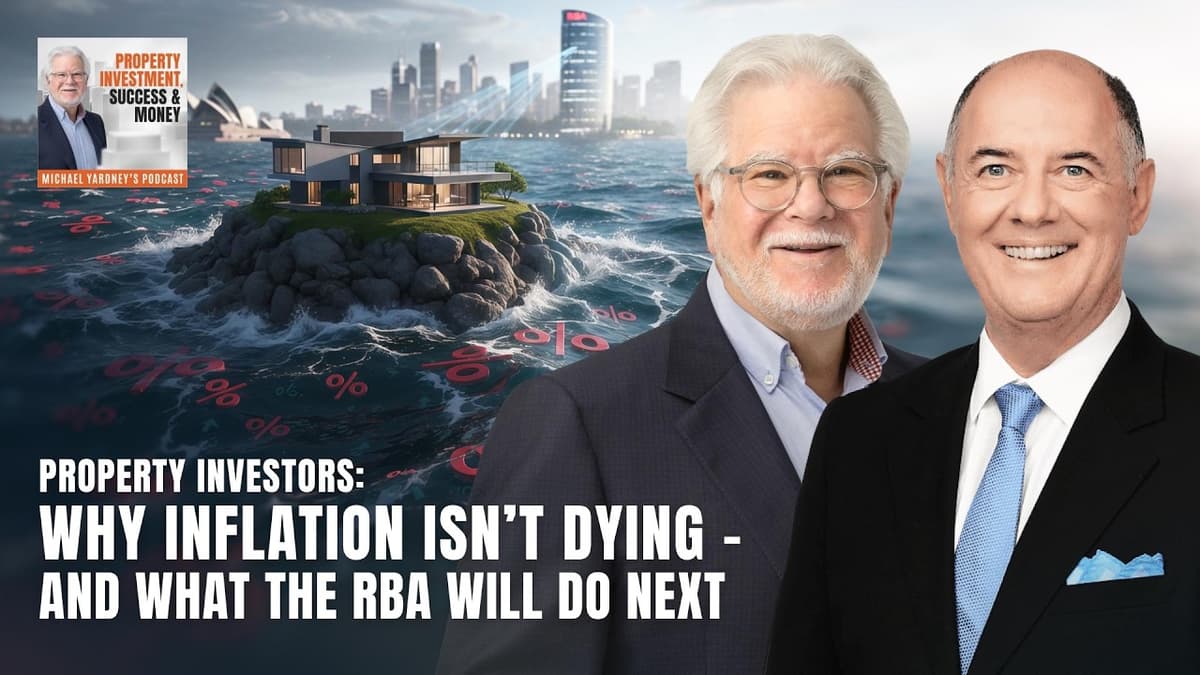
Why Inflation Isn’t Dying - What the RBA Will Do that Property Investors Must Understand. Ken Raiss
Ken Raiss and Michael Yardney dissect why Australia’s inflation remains stubborn despite recent easing, pointing to entrenched supply‑side constraints rather than solely government spending. They explain the Reserve Bank of Australia’s dilemma: keeping policy rates elevated to curb capacity‑driven price...
By Michael Yardney (Australia)