Video•Feb 26, 2026
The Russian Air Force Is Becoming A Bigger Threat
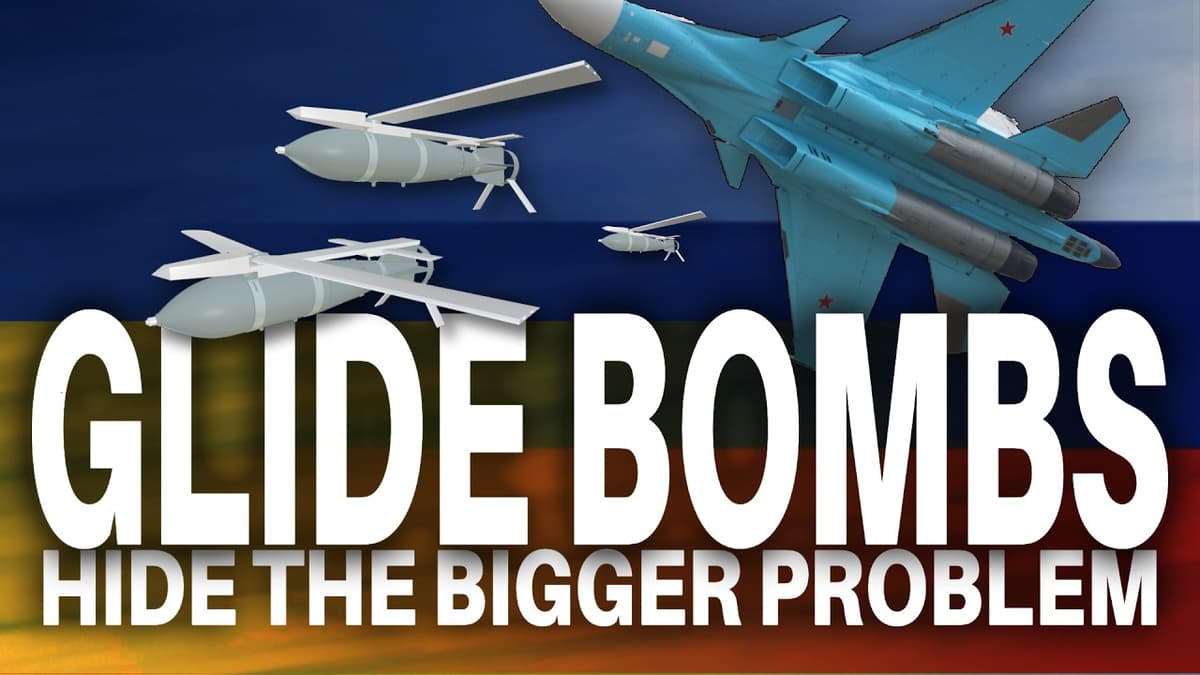
The video outlines how Russia’s glide‑bomb program has exploded in 2025, delivering more than 44,000 drops against Ukrainian forces and civilians, and argues that the same low‑cost, long‑range capability could pose a broader threat to NATO if a European flashpoint erupts.
Two families of munitions dominate the campaign: the modular UMPK kit, which can be fitted to 250‑3,000 kg bombs and has gradually reduced its circular error probable from over 25 m to tighter figures, and the purpose‑built UMPB, which already shows better accuracy, is less vulnerable to jamming, and now incorporates a small rocket motor to push its range beyond 50 km. Both are cheap and mass‑produced.
The primary delivery platform is the Sukhoi Su‑34 “Fullback.” Ukrainian intelligence estimates roughly 130 glide bombs are launched each day; assuming a full load of four bombs per aircraft, that translates to about 32 sorties daily—equivalent to two full squadrons operating at a sustained tempo. The VKS has refined tactics, targeting frontline positions, command posts and logistics, forcing Ukrainian units to constantly relocate or risk destruction.
The analysis concludes that without long‑range air‑to‑air missiles, advanced EW suites and deeper integrated air‑defense, Ukraine cannot reliably interdict the Su‑34s, and NATO air forces risk facing the same cheap standoff strike in any future conflict. Accelerated delivery of modern missiles, expanded Patriot or equivalent coverage, and continued sanctions on Russian supply chains are essential to blunt the glide‑bomb threat and preserve air superiority.
By Military Aviation History