

Investing in Real Estate Through Market Shifts
The MIT Center for Real Estate podcast featured David Depra, partner of Bane Capital’s special situations team, to explain how the firm navigates shifting market dynamics while investing in real‑estate. Depra highlighted Bane’s unique structure—privately owned, employee‑LP alignment, $215 billion AUM and a $25 billion special‑situations franchise—as the foundation for its disciplined, high‑fee, high‑return approach. Key insights included the evolution from a pure distressed‑debt model in the early 2010s to an "all‑weather" capital‑solutions platform that blends downside‑protected credit with equity upside. The strategy is divided into three sub‑strategies: capital‑solutions (preferred equity with warrants), asset‑backed platforms (levered equity in real‑estate and other assets), and episodic distressed deals. Bane relies on a deep post‑closing portfolio group and external partners rather than direct asset management, allowing scale and expertise without operating the properties. Depra illustrated the approach with examples: the COVID‑era hotel distress wave, a recent New York non‑performing loan (NPL) portfolio acquisition, and the current cap‑rate rerating from 4% to 6% across commercial real‑estate. He noted that while the market has moved from outright defaults to "amend‑and‑extend" restructurings, insurance money and debt‑fund capital now dominate CRE financing, reshaping covenant and control dynamics. The implications are clear for investors: Bane’s aligned ownership and platform model offers equity‑like returns with lower volatility, while the shift toward structured capital solutions creates new entry points in a market still adjusting to higher rates and tighter lending. Partners and specialized expertise become critical differentiators as lenders retreat and alternative capital steps in, making special‑situations assets a compelling niche for sophisticated portfolios.

Historical Perspective on Current RE Market #podcastclips #globaleconomy
The podcast revisits commercial‑real‑estate data from the late 1960s and early 1970s, showing that cap rates rose while rental rates surged because new supply was effectively shut off. That historic inflationary cycle, driven by supply constraints, generated the bulk of...

#marketcycles at Play in 2026 #realestate #podcast
The podcast centers on Hines' strategic allocation for 2025 and how the current market cycle is reshaping acquisition versus development decisions in real‑estate. The firm disclosed that roughly half of its business resides in the United States, 30% in Europe...

The Forces Reshaping Global Real Estate
The MIT Center for Real Estate’s Meet the Visionaries podcast featured David Steinbach, Hines’ global chief investment officer, who traced the firm’s evolution from a modest $10 billion portfolio in 1999 to more than $90 billion across 30 countries and 384 cities....
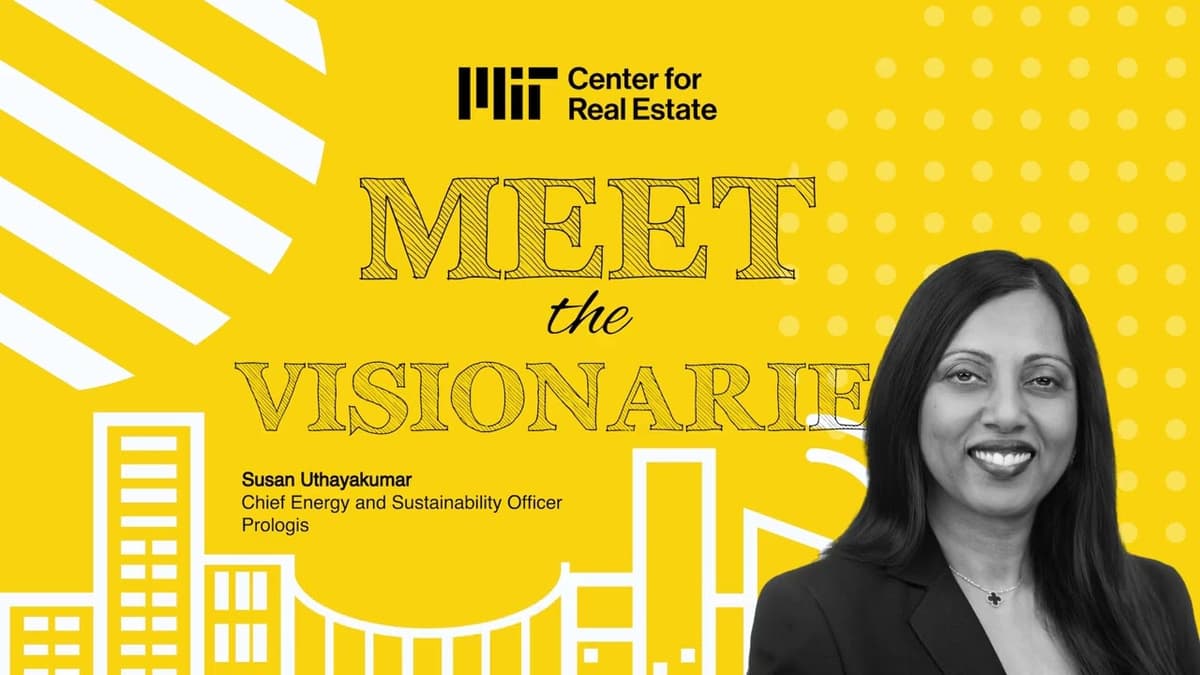
Energizing and Decarbonizing Logistics at Global Scale
In a MIT Center for Real Estate podcast, Prologis Chief Energy and Sustainability Officer Susan Utaykumar outlines how the world’s largest logistics‑real‑estate firm is tackling decarbonization at scale. Prologis controls roughly 1.3 billion square feet of warehouse space across 20 countries,...