
How Transport for London (TfL) Became One of the World's Most Integrated Transport Organizations
The MIT Mobility Forum session highlighted Transport for London’s (TfL) evolution into one of the world’s most integrated transport agencies. Established in 2000 under the Greater London Authority, TfL consolidated control of the Underground, buses, light rail, road traffic management, taxis and river services, creating a city‑wide mobility authority rarely seen elsewhere. Key insights include the dramatic rise in sustainable mode share—from 52 % to 63 %—and the successful rollout of policies such as the 2003 congestion charge and the ultra‑low‑emission zone. These achievements stem from institutional integration: a single body can plan, fund, and enforce transport measures, eliminating the coordination gaps that plague fragmented systems. Shashi Verma emphasized concrete examples: the Oyster card, now a global contactless‑payment model, links over 800 stations; the Stratford hub for the 2012 Olympics demonstrated seamless multimodal connectivity; and the congestion charge, applied to a 1.5 % land area housing 45 % of jobs, dramatically shifted travel behavior because TfL could simultaneously improve public transit and regulate road use. The broader implication is clear: integrated governance aligns the London Plan, the Mayor’s Transport Strategy, and TfL’s business and budget cycles, delivering coherent investment decisions and measurable outcomes. Other megacities can replicate this model to accelerate sustainability, reduce congestion, and unlock new revenue streams from unified fare systems.
Eopolitics of Mineral Supply Chains for Transportation
The MIT Mobility Forum session examined how the electrification of transportation hinges on a handful of critical minerals—lithium, cobalt, nickel, neodymium, dysprosium and others—most of which are mined, processed, or refined in China. Speakers highlighted that China controls roughly 60%...
Recharging Cities: An Update on Electric Vehicle Charging in US Cities
The panel titled “Recharging Cities” examined the state of electric‑vehicle (EV) charging across U.S. metropolitan areas, highlighting how soaring gasoline prices have reignited consumer curiosity while many urban dwellers still lack home‑charging options. Panelists traced the market’s roller‑coaster ride: the...
Trade and Tariffs in the Global Automotive Industry: An Update
The MIT Mobility Forum reconvened to assess how a year of heightened trade barriers has reshaped the global automotive landscape, focusing on the United States’ 15% tariffs on European, Japanese and Korean vehicles, a 25% parts tariff on Canada‑Mexico shipments,...
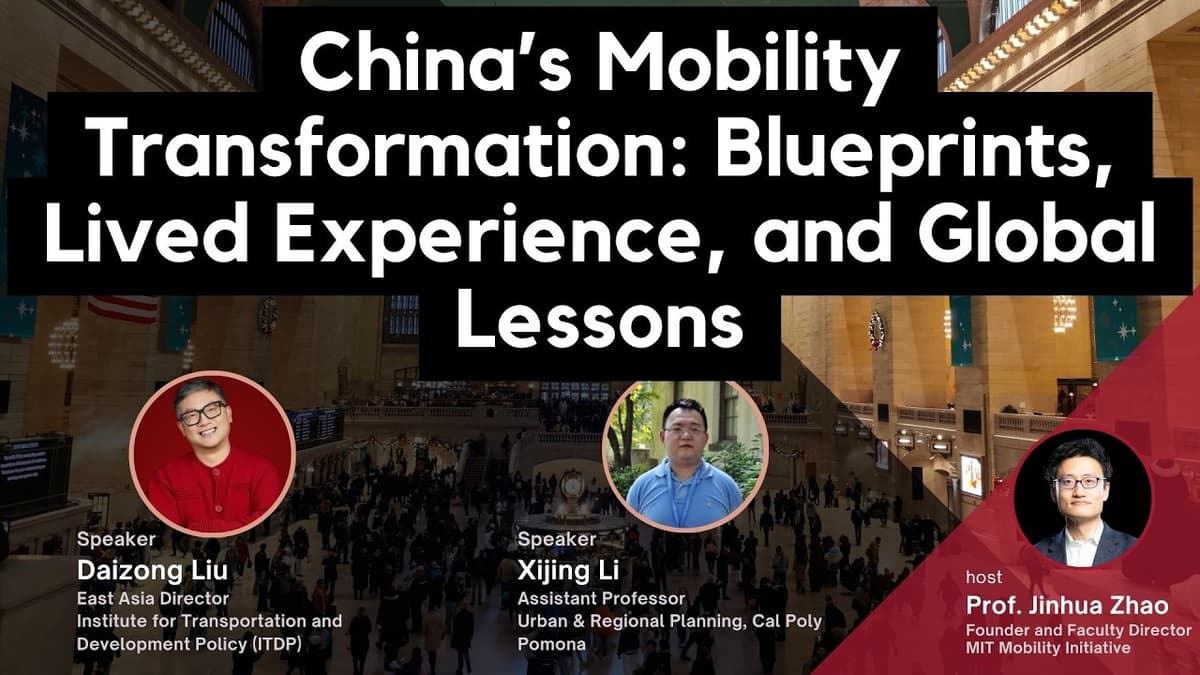
China's Mobility Transformation: Blueprints, Lived Experience, and Global Lessons
The MIT Mobility Forum session examined China’s sweeping mobility transformation, highlighting its massive infrastructure rollout, aggressive electric‑vehicle policies, and emerging global lessons. Over the past two decades China has constructed more high‑speed rail, metro lines, and shared‑mobility systems than any...
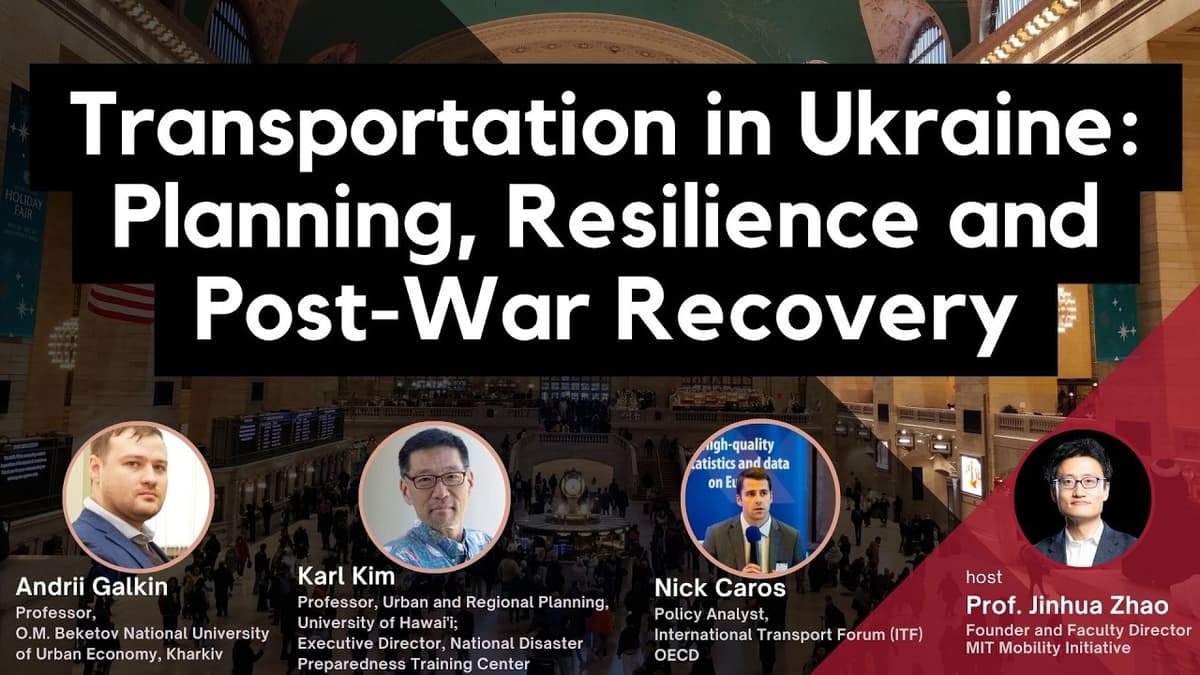
Transportation in Ukraine: Planning, Resilience and Post-War Recovery
The MIT Mobility Forum convened a panel of Ukrainian and international experts to examine how transportation planning can adapt to the extreme shocks of war and support post‑conflict recovery. The discussion centered on Ukraine’s experience since the 2022 invasion,...

From DARPA to Robotaxis to Warehouses — The Full Arc of Autonomy
The MIT Mobility Forum featured Karl Iagnemma, a rare figure who has traversed the entire autonomy spectrum—from MIT research labs and DARPA challenges to founding Nutonomy, steering the Aptiv‑Hyundai joint venture Motional, and now leading Vecna Robotics. Iagnemma recounted the...

A Dialog with Daniel Ramot, CEO of Via Transportation
In a MIT Mobility Forum session, Via Transportation CEO Daniel Ramot outlined how his company is reshaping public‑transit perception from a technology laggard to a high‑growth, investor‑friendly sector. He traced Via’s 14‑year journey from a Stanford‑spun‑out to a publicly listed...
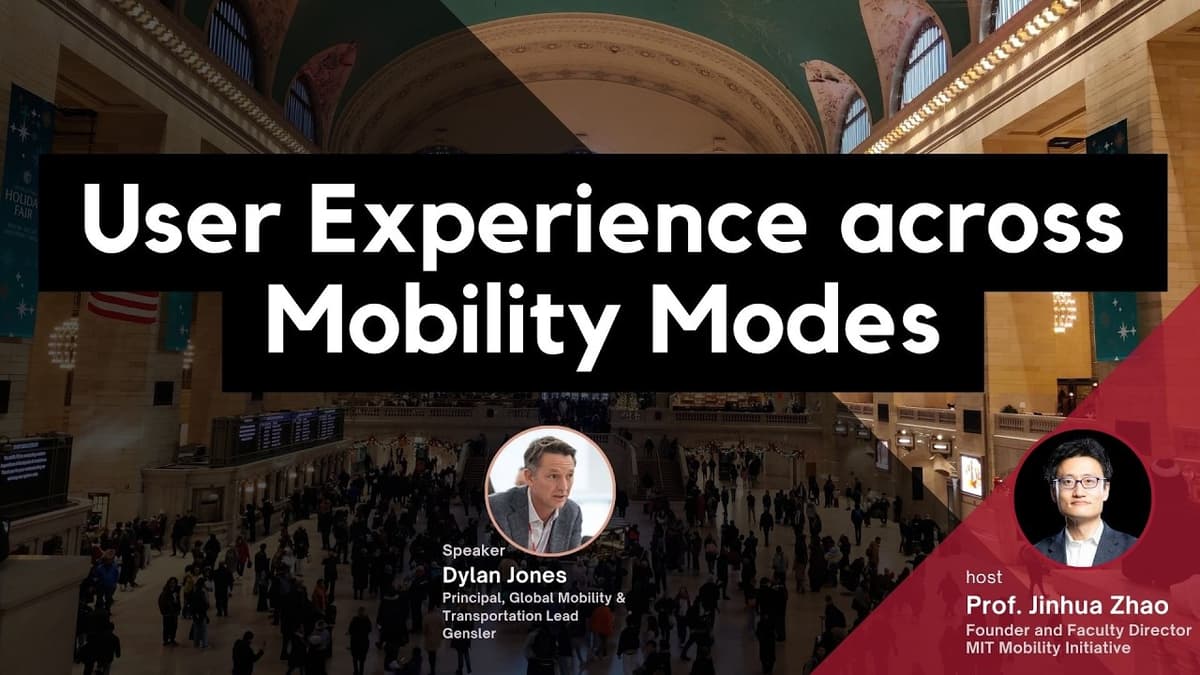
User Experience Across Mobility Modes
The MIT Mobility Forum brought together Professor Jinhua Zhao, Gensler principal Dylan Jones, and Sound Transit’s Julie Montgomery to explore how design shapes user experience across airports, public transit, and electric‑vehicle charging. The discussion centered on Gensler’s research‑driven methodology,...
The Value of Transit
The MIT Mobility Forum session examined the multifaceted value of public transit, presenting new research on Chicago, Seattle and San Francisco. Researchers from MIT’s Transit Lab, together with local agencies, quantified how transit supports economic vitality, public health and...

The Shoup Doctrine: Essays Celebrating Donald Shoup and Parking Reforms
The MIT Mobility Forum convened to commemorate the legacy of Donald Shoup, whose seminal book The High Cost of Free Parking reshaped urban planning. Professor Dan Hess presented his newly published tribute, The Shoup Doctrine, outlining Shoup’s career, his paradigm‑shifting...
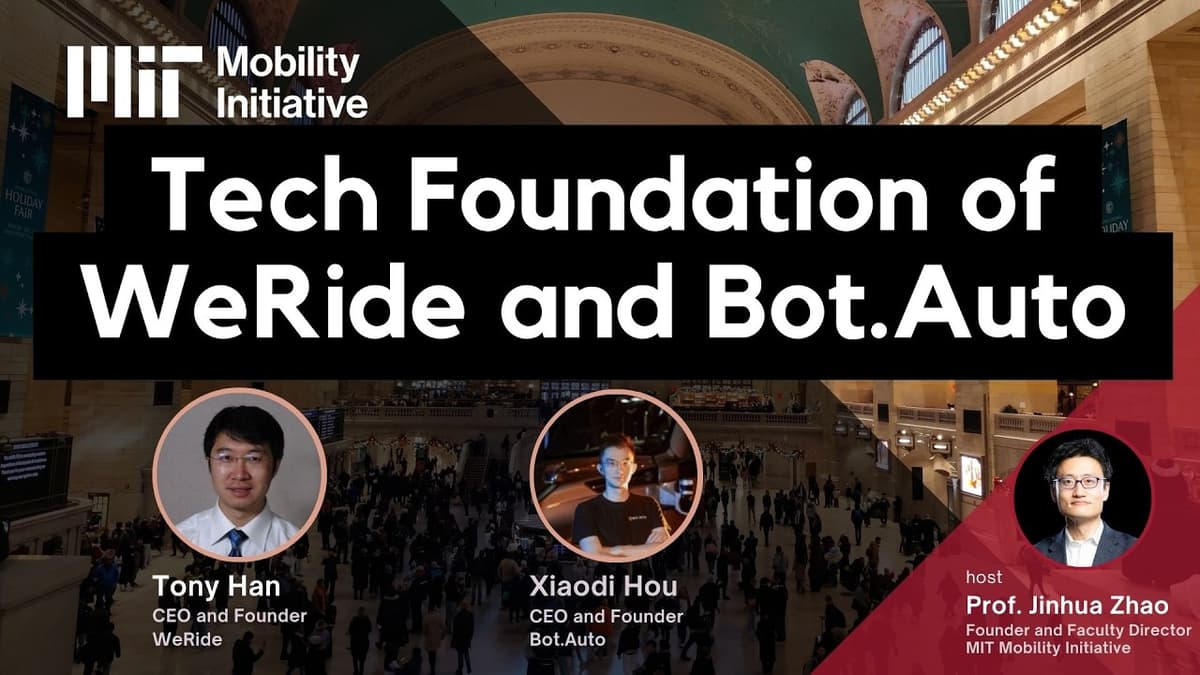
Tech Foundation of WeRide and Bot.Auto - Tony Han & Xiaodi Hou
The MIT Mobility Forum session brought together Tony Han of WeRide and Xiaodi Hou of Bot.Auto to dissect the technology backbone of today’s autonomous‑vehicle push. Their conversation centered on four pillars—simulation and world models, human‑in‑the‑loop versus full autonomy, hybrid...
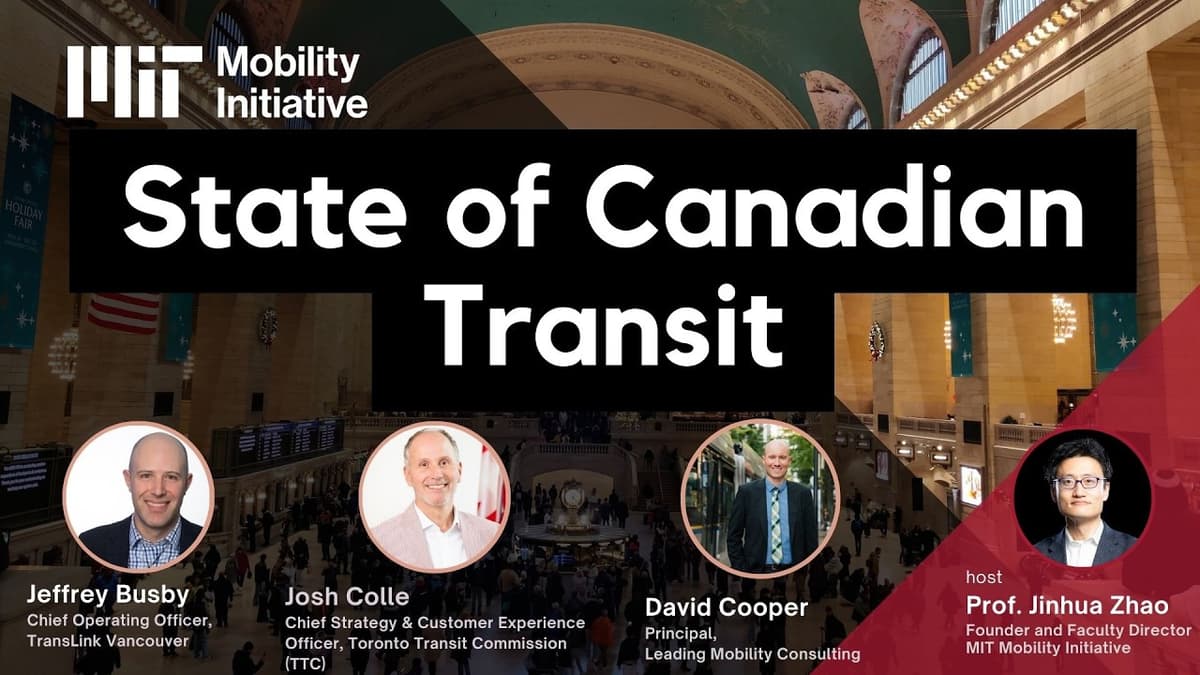
State of Canadian Transit
The MIT Mobility Forum panel examined the state of Canadian transit, contrasting it with U.S. systems and highlighting why Canada is often viewed as a model. Speakers from TransLink, the Toronto Transit Commission, and a mobility consultant discussed service levels,...

Oregon Road Usage Charge: Voluntary to Mandatory
The MIT Mobility Forum episode introduced Oregon's shift from the voluntary ORIGO program to a mandatory road usage charge (RUC) under House Bill 3991, signed by Gov. Tina Kotek, marking the first statewide per‑mile tax in the U.S. The charge is...