
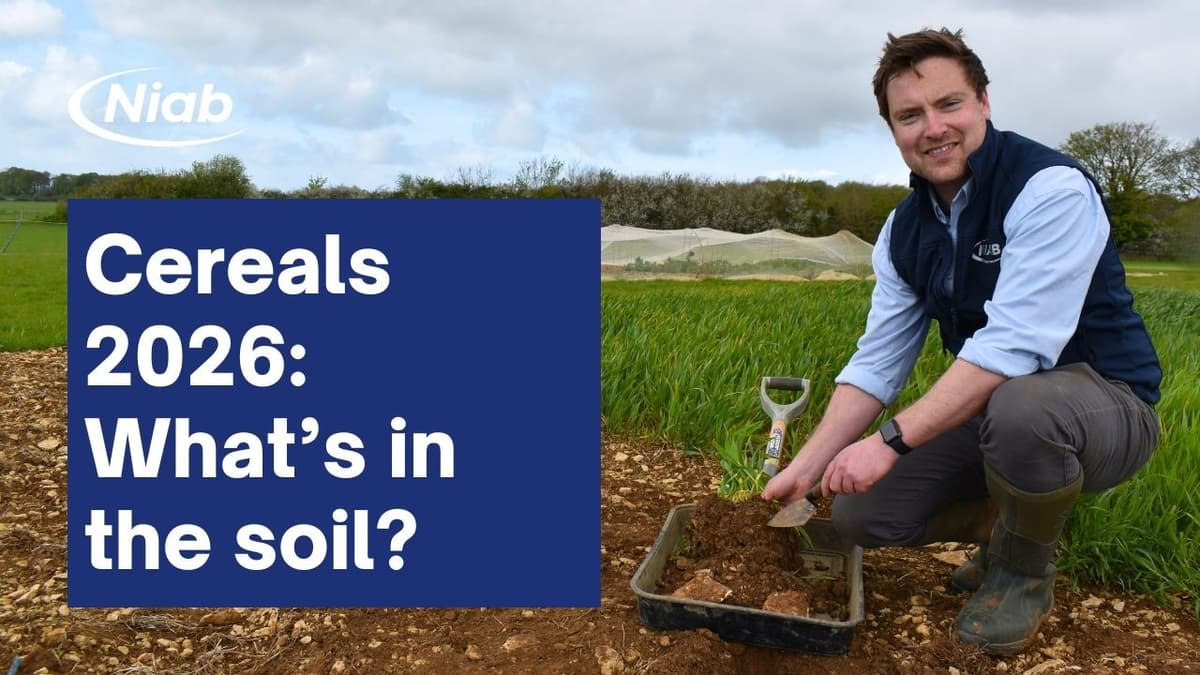
Cereals 2026: What to Expect From the Soil Hole
Mid‑April, researchers inspected a test pit at the Cereals 2026 site to anticipate conditions for the planned June soil‑hole. The shallow 30 cm topsoil consists of fragmented limestone, ample moisture, and supports dense wheat roots, which account for roughly 70 % of the crop’s total root mass. Below the cultivated zone, a thin, lighter‑colored layer shows minimal organic matter, followed by a deeper 40 cm+ stratum of broken limestone still traversed by roots. The team expects that digging to 1.5 m will reveal continuous root networks extracting water from these drought‑prone soils, guiding water‑use strategies and improving yield forecasts for cereals under increasingly dry conditions.
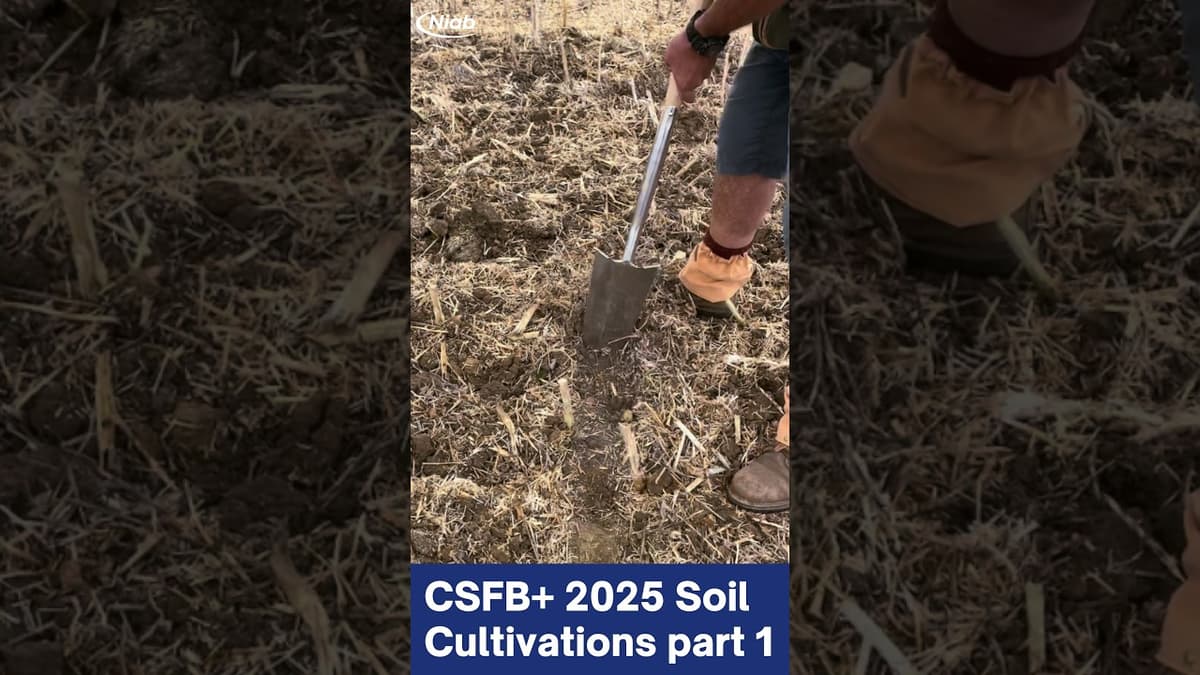
CSFB+ Soil Cultivations Part 1
The video documents a field trial by Colin Peters and Philip Bright examining shallow soil cultivation as a strategy to suppress flea‑beetle emergence from seed‑rape stubble. The team focuses on moving only the top inch or two of soil—roughly 20‑30 mm—where...