Video•Mar 9, 2026
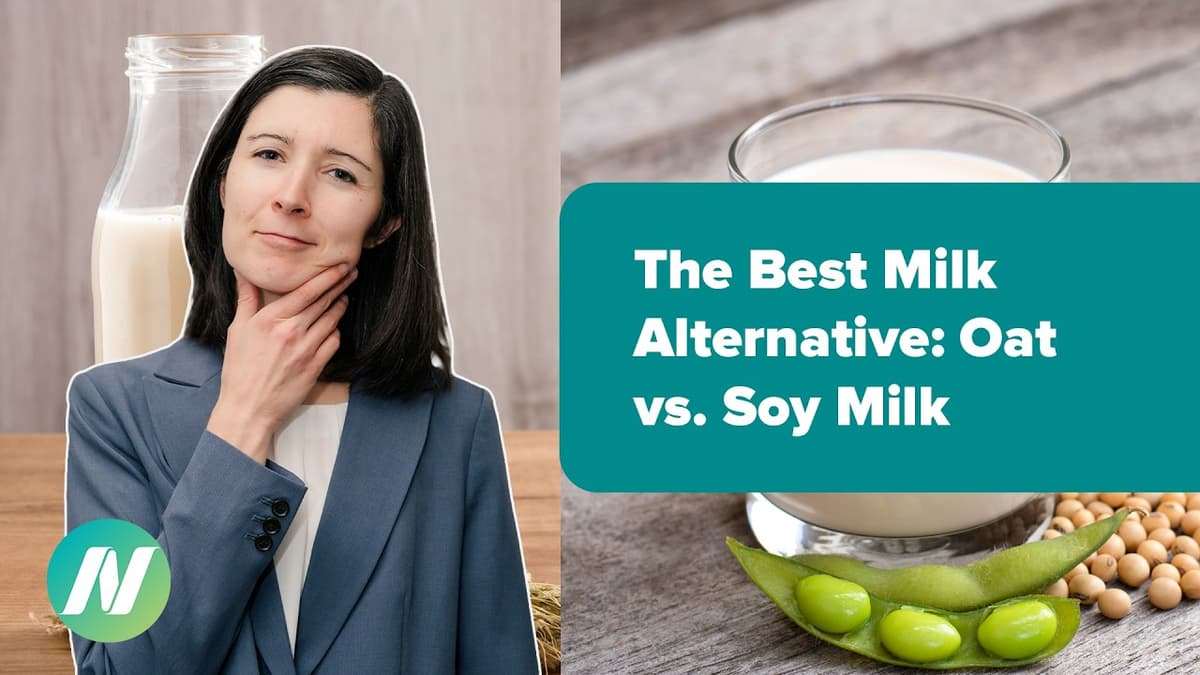
The Best Milk Alternative: Oat Vs. Soy Milk
The video compares oat and soy milk as leading plant‑based alternatives, examining nutrition, market share, and health impacts versus dairy.
It notes soy provides ~7 g protein per cup and is consistently fortified, while oat matches calcium and vitamin D but contains less protein and more sugar variability. Clinical trials show both oat and soy reduce LDL by ~8 mg/dL, unlike cow’s milk, and soy’s polyphenol content exceeds oat’s tenfold.
The presenter cites Academy of Nutrition guidelines restricting plant milks for toddlers except soy, and highlights global fortification gaps—80 % in the U.S. versus 20 % in Australia. A cited study of 3‑4 cups daily oat milk lowered LDL similarly to oatmeal.
For consumers, the data suggest choosing fortified soy for protein‑rich diets or oat for cholesterol benefits, while scrutinizing labels for added sugars and vitamin D. The shift also signals market opportunities as oat milk overtakes soy in the U.S. and Europe.
By NutritionFacts.org (Michael Greger, MD)