
Recent Posts
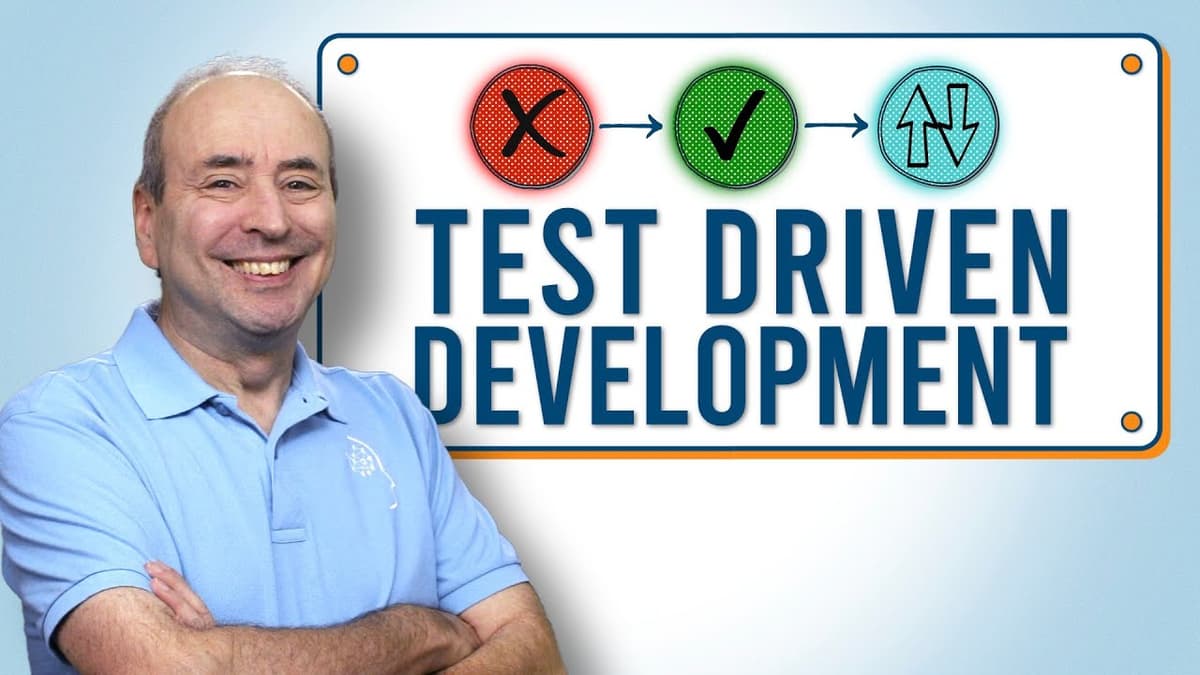
Video•Feb 26, 2026
What Is Test-Driven Development? TDD Explained for PMs
The video introduces test‑driven development (TDD) as a methodology where developers write automated tests before any production code, positioning the test as the definition of done rather than a post‑hoc quality check. It walks through the classic red‑green‑refactor loop: a failing test (red), the minimal code to pass it (green), and subsequent refactoring while keeping tests green. The presenter highlights that TDD yields executable specifications, early bug detection, and living documentation, especially valuable for complex, long‑lived systems and continuous‑delivery pipelines. Key examples include the contrast between TDD and alternatives such as test‑last, exploratory testing, or BDD, and a quote that “testing is the starting point for and driver of development.” The speaker also notes that TDD‑generated code tends to be more modular, reducing unnecessary embellishments. For project managers, the implications are concrete: upfront planning must accommodate extra test‑writing time, velocity metrics should incorporate quality indicators, teams need training, and code‑review focus shifts to design and refactoring. When integrated with CI/CD, TDD can lower defect rates, accelerate onboarding, and protect against regression, delivering higher‑value releases.
By Online PM Courses (Mike Clayton)

Video•Feb 12, 2026
Scenario Planning: 5-Step Process to See the Future
The video outlines a five‑stage scenario‑analysis framework designed to help organisations anticipate multiple plausible futures rather than attempt precise forecasts. It begins with problem definition, urging leaders to clarify objectives and map drivers using the SPECTERS framework—social, political, economic, commercial, technological,...
By Online PM Courses (Mike Clayton)