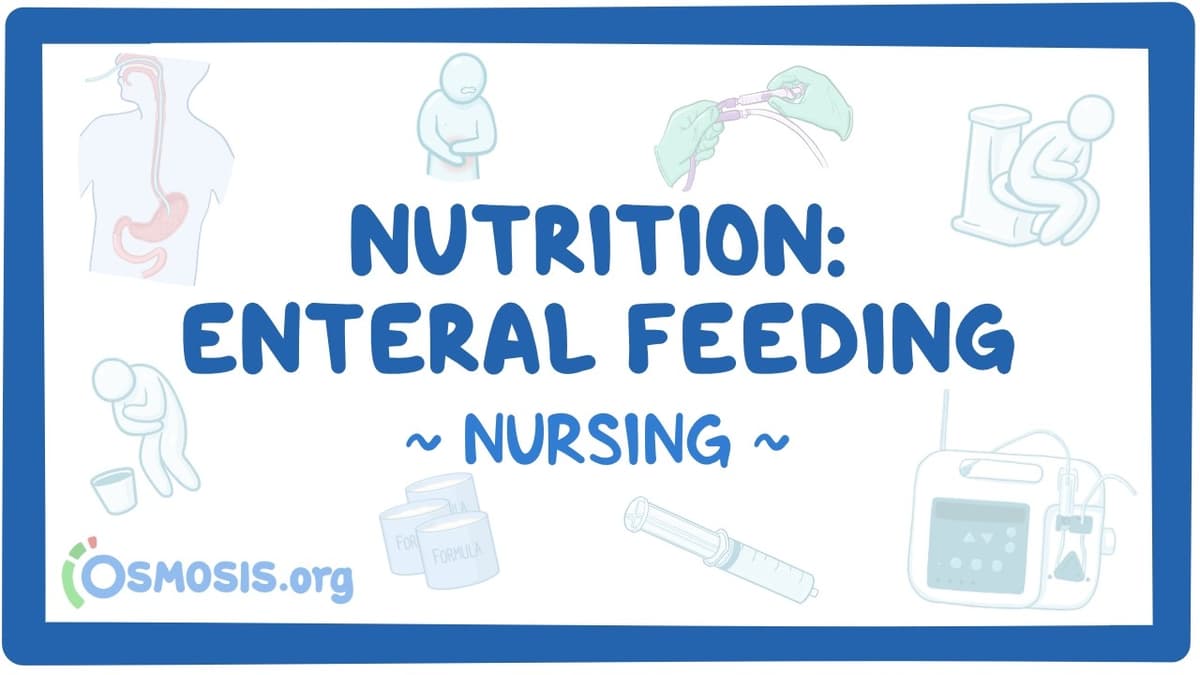
Nursing Fundamentals: Nutrition - Enteral
The video outlines the fundamentals of enteral nutrition (EN), a method of delivering fluids and nutrients directly into the gastrointestinal tract through a feeding tube. It emphasizes EN’s role for patients who cannot chew or swallow due to head‑neck trauma, surgery, neurological disorders, or tumors. Various tube routes are described: nasogastric (NG) and nasointestinal (NI) tubes for short‑term use, and gastrostomy (G), percutaneous endoscopic gastrostomy (PEG), and jejunostomy (J) tubes for feeding longer than six weeks. Placement is confirmed by X‑ray, followed by bedside verification using aspirate appearance and pH testing. Formulas are selected per patient needs, and feeding can be administered via continuous or intermittent pump, gravity, or bolus methods, with gradual rate escalation to monitor tolerance. The instructor highlights critical safety checks: gastric pH 0‑4 indicates correct gastric placement, while pH > 6 suggests misplacement. Residual gastric volumes above 250 mL signal intolerance and raise aspiration risk. Patients must be kept at a 30‑45° head‑of‑bed angle during and for at least one hour after feeding, and ENFit connectors are mandated to avoid accidental IV infusion. By standardizing tube verification, formula preparation, and monitoring protocols, nurses can reduce complications such as aspiration, tube dislodgement, and malnutrition. Accurate documentation and adherence to these steps are essential for quality care and for meeting regulatory standards in acute and long‑term settings.

Self-Directed Learning Essentials: Using Osmosis and Complete Anatomy to Engage Learners
The webinar introduced new updates to Elsair’s digital learning platforms—Complete Anatomy for web and Osmosis—highlighting how they support self‑directed learning in medical education. The presenter explained that the web‑based version of Complete Anatomy removes the need for software installations, giving...
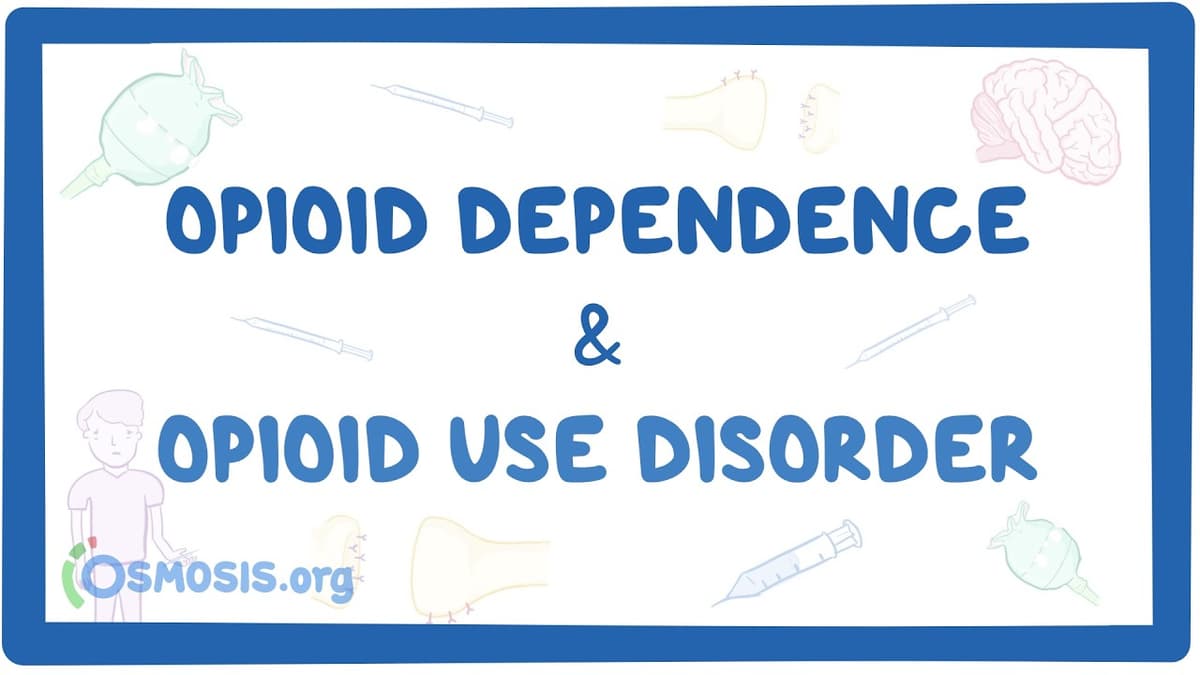
Opioid Use Disorder
The video provides a detailed overview of opioid pharmacology, the dramatic rise in opioid consumption worldwide, and the clinical definition of opioid use disorder (OUD) as outlined in the DSM‑5. It emphasizes that opioids, whether endogenous or exogenous, act on...
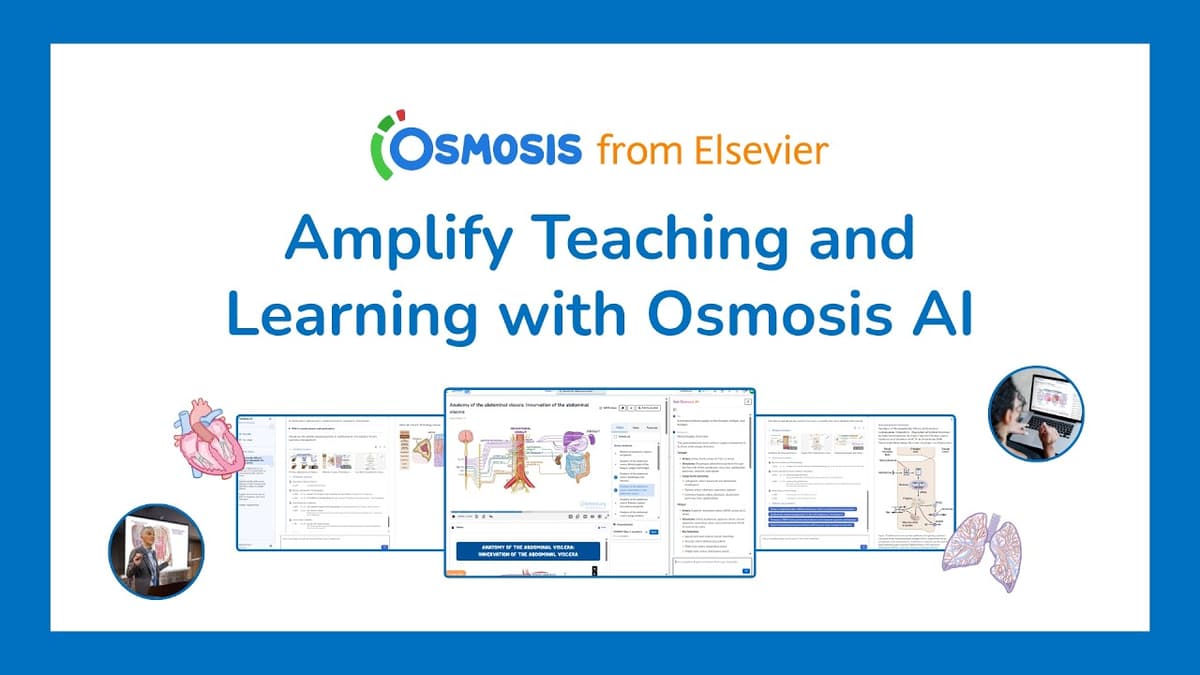
Amplify Teaching and Learning with Osmosis AI
The video introduces Osmosis AI, a conversational artificial‑intelligence platform designed to accelerate and enrich medical education. Powered by Elsevier’s vetted content, the tool delivers instantly generated explanations, citations, and links to Osmosis video assets, positioning itself as a one‑stop teaching...
Raise the Line Podcast: Dr. Mel Herbert & The Pitt - Mental Health
The Raise the Line podcast featuring Dr. Mel Herbert of the University of Pittsburgh tackles the mounting mental‑health crisis among clinicians, linking it to recent security lapses on hospital campuses. Herbert argues that inadequate safety protocols not only endanger patients...
Arrhythmias - Sinus Tachycardia and Sinus Bradycardia: Nursing
The video explains sinus tachycardia and sinus bradycardia—two arrhythmias where the sinoatrial node fires at an abnormal rate while preserving a normal rhythm. Tachycardia is defined as a heart rate above 100 beats per minute, bradycardia below 60, and both...
MHC Class I and MHC Class II Molecules
The video explains the two major families of major histocompatibility complex (MHC) molecules—class I and class II—and their central role in the adaptive immune response. It outlines how MHC genes on chromosome 6 encode human leukocyte antigens (HLA) that act as...
B Cell Activation, Differentiation, and Contraction
The video explains the life cycle of B lymphocytes, from their birth in the bone marrow through activation, differentiation, and eventual contraction of the immune response. It details how VDJ rearrangement creates a vast repertoire of B‑cell receptors, which are...
Physiology of Pain: Clinical Nursing Care
The video explains the physiological basis of pain and its relevance to clinical nursing care, outlining the four core mechanisms—transduction, transmission, perception, and modulation—that transform harmful stimuli into conscious discomfort. Transduction occurs when nociceptors detect mechanical, chemical or thermal insults and...

Isodicentric Chromosome 15 Syndrome (Year of the Zebra 2026)
Isodicentric chromosome 15 (IDIC‑15) syndrome is a rare genetic disorder caused by an extra super‑numerary marker chromosome derived from the long arm of chromosome 15. The marker contains duplicated 15q material that is typically of maternal origin, resulting in three...
Atrial Septal Defect - Physiology, Pathology, Clinical Manifestations, Diagnosis, Treatment
The video explains atrial septal defect (ASD), a congenital opening between the heart’s atria that persists after birth when the septum primum and septum secundum fail to fuse properly. It details embryologic formation—septum primum creates the ostium primum, followed by the...