
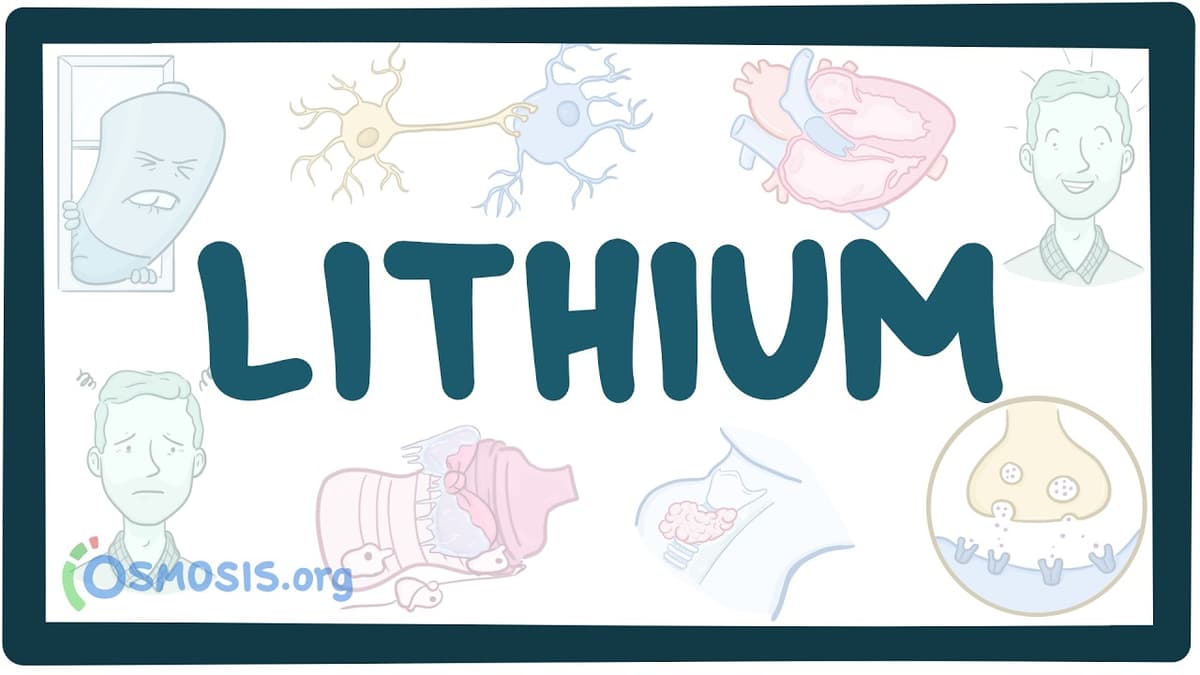
Lithium
The video explains lithium’s role as a primary mood stabilizer for bipolar disorder, highlighting its ability to smooth extreme highs and lows and its use in treatment‑resistant unipolar depression. It outlines how lithium, taken orally and cleared by the kidneys, has a narrow therapeutic window that demands frequent serum level checks, especially when renal function is compromised or interacting drugs are present. Key pharmacological insights include lithium’s inhibition of inositol monophosphatase (IMPase) and inositol polyphosphate phosphatase (IPPase), which blocks the recycling of inositol and reduces neurotransmitter release. The drug’s pharmacokinetics—rapid gut absorption, no hepatic metabolism, renal excretion—make dose adjustments critical. Common adverse effects range from gastrointestinal upset and tremor to nephrogenic diabetes insipidus and hypothyroidism, while severe toxicity can cause acute renal failure and CNS impairment. The presenter reinforces learning with vivid mnemonics: a lithium battery stuck in a window for the narrow therapeutic window, a polar bear for bipolar indication, and visual cues for side effects such as Einstein holding a baby heart‑t‑shirt for Ebstein’s anomaly. These examples underscore the real‑world risks, including teratogenicity and the need for vigilant monitoring of thyroid and renal function. Clinicians must balance lithium’s proven efficacy against its toxicity profile, ensuring regular blood tests, patient education on fluid intake, and caution with interacting medications. Proper management can maintain mood stability while minimizing life‑threatening complications, making lithium a cornerstone yet high‑maintenance therapy in psychiatric practice.

Introducing Osmosis AI
The video unveils Osmosis AI, a conversational study assistant that blends the speed of generative AI with Osmosis’s rigorously vetted medical curriculum. Designed for medical students preparing for high‑stakes exams such as the USMLE, the tool promises instant, trustworthy answers...
B- and T-Cell Memory
The video explains how B‑cell and T‑cell memory underpins the adaptive immune system, contrasting it with the fast, non‑specific innate response. It outlines the journey of naïve lymphocytes—developing unique receptors in bone marrow or thymus, migrating through lymphatics, and expanding...
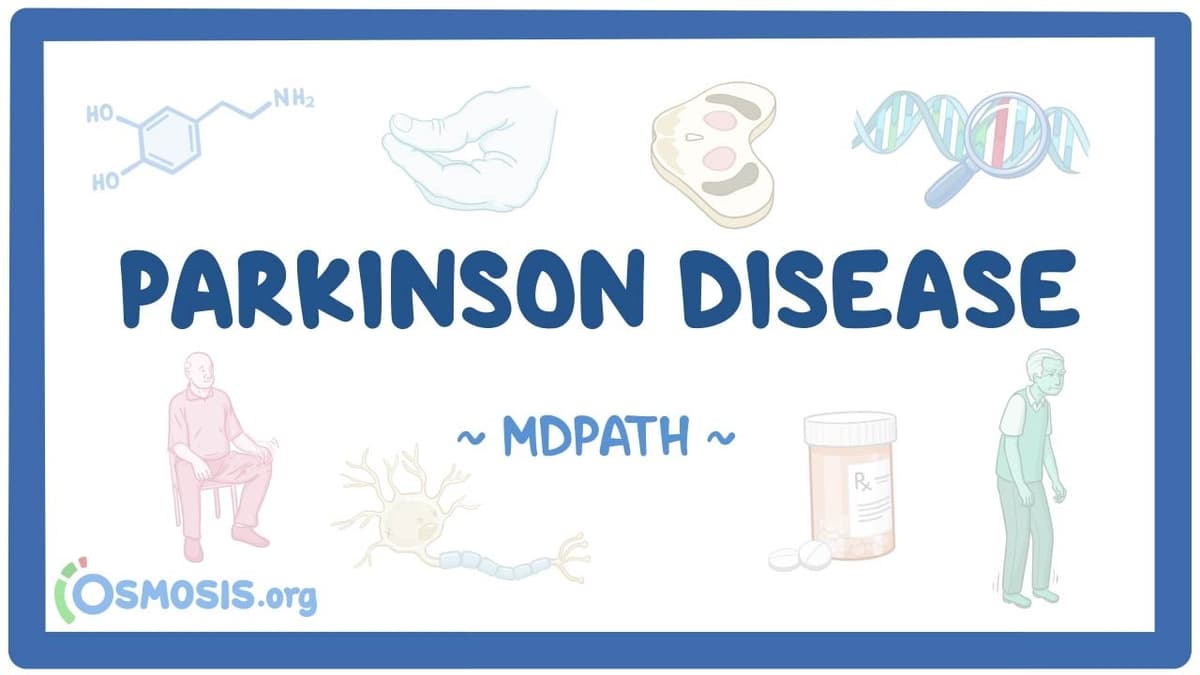
Parkinson Disease - Physiology, Pathology, Clinical Manifestations, Diagnosis, Treatment
The video provides a concise yet thorough overview of Parkinson disease, detailing its neurophysiological basis, clinical presentation, diagnostic strategies, and therapeutic options. It emphasizes the central role of the substantia nigra pars compacta, whose progressive loss of dopamine‑producing neurons underlies...
MRNA Therapy (NORD)
The video explains how messenger RNA (mRNA) is being engineered as a protein‑replacement therapy for a range of inherited disorders. By copying DNA’s instructions into a transportable mRNA strand, scientists can deliver the missing or malfunctioning protein blueprint to cells...