
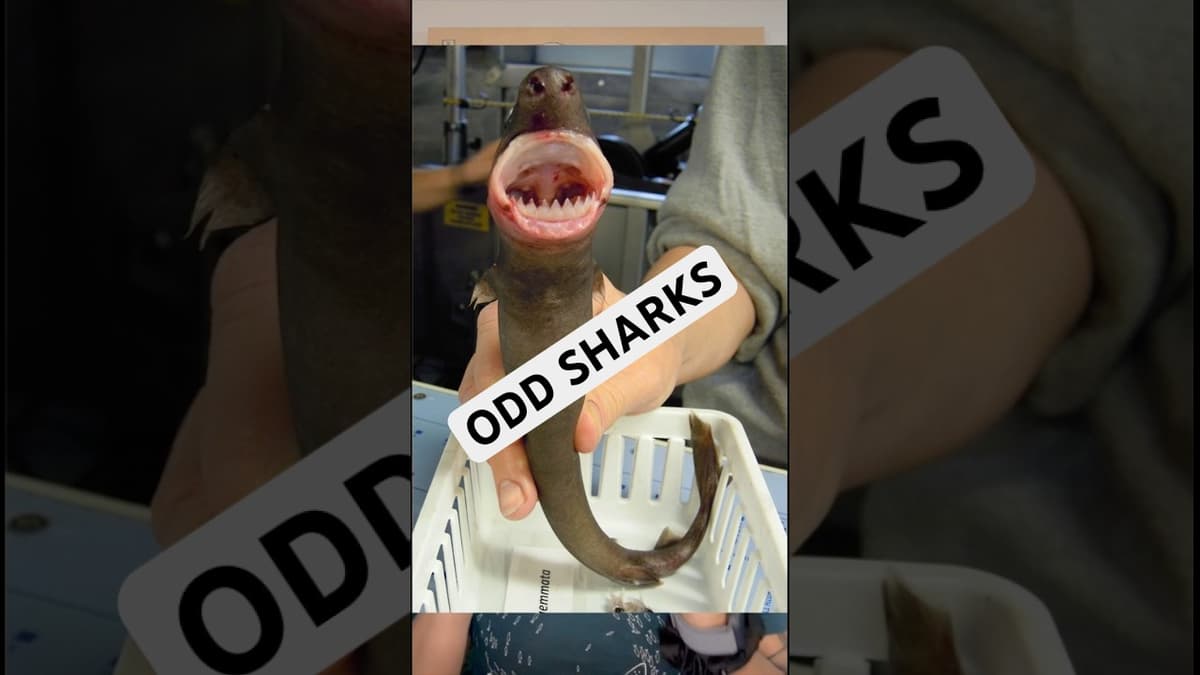
These Are the Weirdest Sharks Out There
The video explores three of the ocean’s most unconventional sharks—cookie‑cutter, wobbegong, and frilled—highlighting how their odd appearances serve specialized survival strategies. By examining morphology, feeding behavior, and habitat adaptation, the presenter underscores the breadth of shark diversity beyond the stereotypical great white silhouette. Cookie‑cutter sharks, barely two feet long, emit bioluminescent light from their undersides to attract larger fish, then latch on with fleshy lips and carve out perfect, cookie‑shaped plugs of flesh. Wobbegong sharks, often called carpet sharks, sport fringe‑like dermal lobes that mimic seaweed, allowing them to lie motionless on reefs and strike prey with lightning speed. Frilled sharks, resembling ancient sea slugs, possess six gill slits per side, lack a first dorsal fin, and wield needle‑sharp teeth ideal for snatching slippery squid. The narrator notes, “Their teeth look a bit like sea slugs, but those points are sharp and perfect for capturing slippery squid,” emphasizing how form follows function in these species. Visual contrasts are drawn between the massive, wind‑sock‑shaped basking shark and the sleek, white‑belly great white, reinforcing identification challenges for casual observers. Understanding these outlier species illustrates the evolutionary experimentation that has produced over 500 shark species, each occupying distinct ecological niches. For marine biologists, conservationists, and the broader public, recognizing such diversity informs ecosystem management and underscores the importance of protecting even the most obscure marine predators.
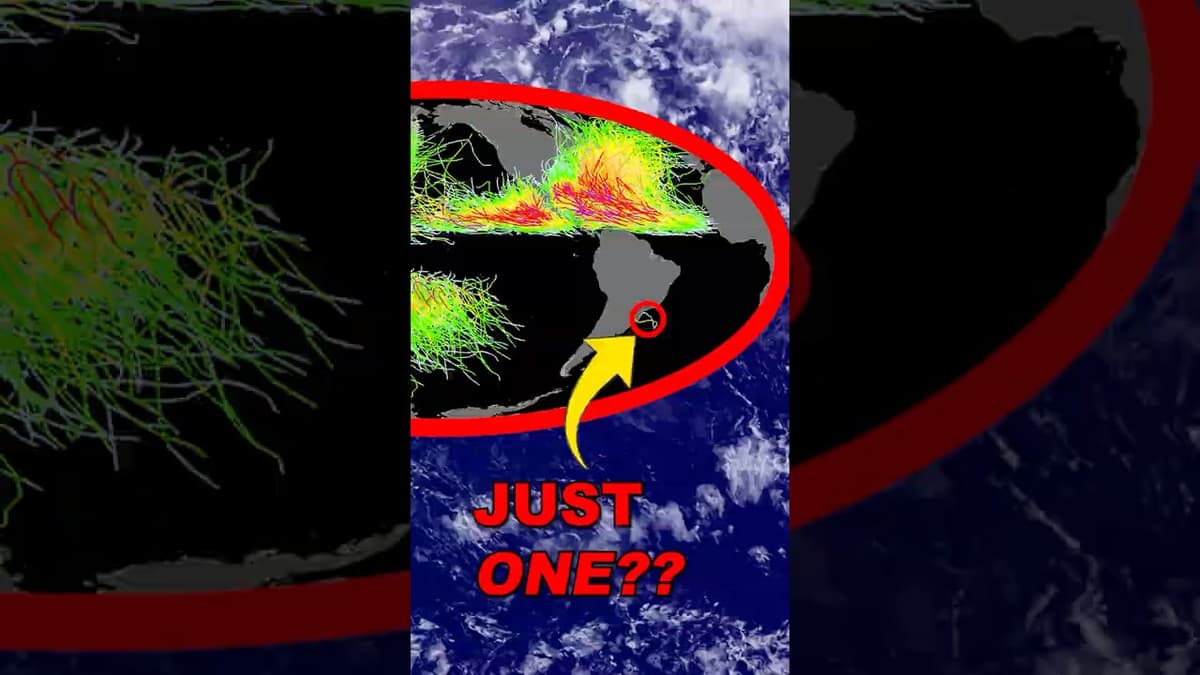
Why Are Hurricanes Scared of South America?
The video examines a comprehensive map of tropical cyclones from 1851 to 2010, using it to explain why hurricanes rarely form or travel near South America. It highlights the Pacific’s warm, extensive ocean as the planet’s most prolific hurricane‑fueling region...

The Hidden Danger of the Northern Lights
The video explores the hidden threat posed by the Northern Lights, focusing on the GNEISS mission’s rocket launches from Fairbanks, Alaska, designed to pierce the auroral zone and capture real‑time data on space weather. By sending instrument‑laden rockets up to...