
Physics Videos by Eugene Khutoryansky
Educational channel featuring animated explanations of physics and math concepts (including quantum theory), narrated in a clear and engaging style to help visualize abstract topics ([superyoutubers.com](https://superyoutubers.com/best/youtube-channels-for-quantum-physics#:~:text=Physics%20Videos%20By%20Eugene%20Khutoryansky,Eugene%20Khutoryansky)).
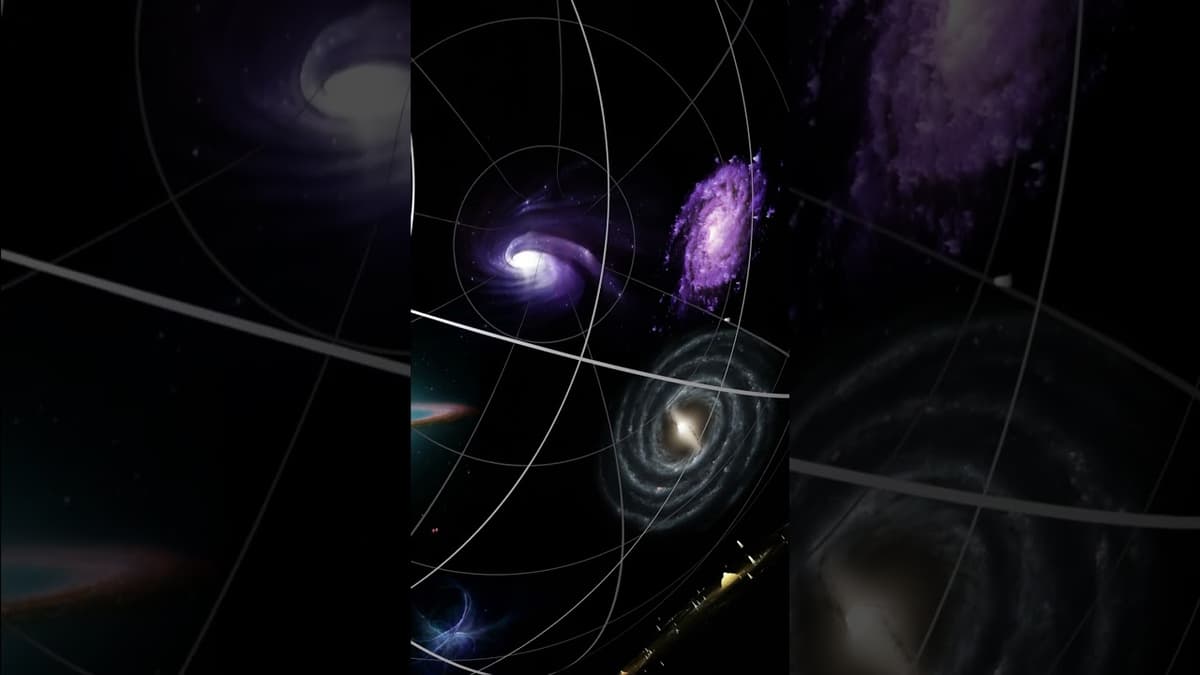
Fine Tuning - Fundamental Constants
The video examines the fine‑tuning problem: how minute variations in fundamental physical constants would preclude the formation of stars, planets, and ultimately life. It contrasts a single‑universe view, where constants must take precise values, with a multiverse scenario that allows a spectrum of constant values across many universes. Illustrative examples include the cosmological constant, the strength of the strong nuclear force, and the mass differences between quarks. A slightly larger cosmological constant would stop galaxy formation; a marginally stronger strong force would burn almost all hydrogen in the early universe, while a weaker force would limit element synthesis beyond hydrogen. Even tiny shifts in quark masses would destabilize protons or neutrons, collapsing the building blocks of matter. The presenter invokes Ockham’s Razor, arguing that the number of assumptions required to specify a single‑universe model—precise decimal values for dozens of constants—may exceed those needed for a multiverse, where each universe simply inherits different constant values. He illustrates this by comparing the informational content of a set of all positive real numbers versus a single, highly precise number, suggesting the latter carries more informational weight. The discussion underscores a broader debate: whether the apparent fine‑tuning points to a deeper physical mechanism, a multiverse, or even theological design. It challenges scientists to weigh explanatory simplicity against empirical testability, shaping future research in cosmology, particle physics, and philosophy of science.
Dark Matter Beyond the Stars
Astronomers historically explained Uranus’s orbital anomaly by positing an unseen planet, leading to Neptune’s discovery and validating Newtonian gravity’s predictive power; Mercury’s perihelion shift, however, resisted Newtonian fixes until Einstein’s general relativity accounted for it. Today, two remaining puzzles—dark matter...

Moving in Curved Space-Time
The video explains how motion is described in a curved space‑time by repeatedly approximating tiny regions as flat and then correcting for curvature. It begins by treating a minuscule patch of the four‑dimensional manifold as locally Minkowski, assigning one spatial...