Video•Feb 13, 2026
Precision Landing with PX4 and ROS 2 Using Aruco Markers
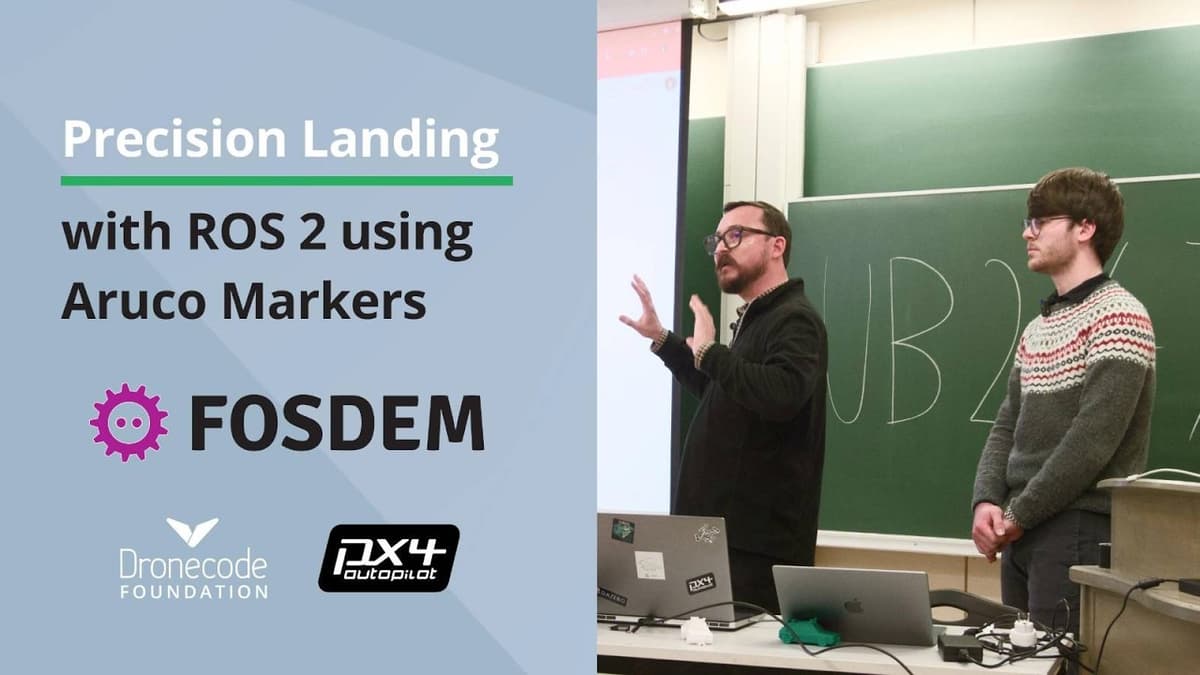
The session, led by PX4 maintainer Benjamin and Linux Foundation’s Ramon, introduced a new workflow for achieving precision landing on drones by integrating the PX4 autopilot stack with ROS 2.
Key technical points included the use of PX4’s uORB middleware extended to ROS 2 via a DDS bridge (or experimental CycloneDDS), the introduction of external flight modes that allow ROS 2 nodes to define custom control logic, and the ROSU interface library that abstracts low‑level PX4 topics into simple APIs for navigation, control, and mission planning.
The presenters demonstrated the end‑to‑end pipeline in Gazebo: a down‑facing camera streams images to a ROS 2 node that detects ArUco markers with OpenCV, publishes the tag pose, transforms it into the world frame, and commands the drone to hover and land precisely on the marker. The take‑off and landing sequence was shown both in simulation and on the ROSU control panel.
By offloading heavy perception and planning to Linux‑level ROS 2 while retaining PX4’s safety‑critical core, developers can prototype sophisticated autonomous behaviors faster, reduce firmware complexity, and bring advanced applications such as indoor GPS‑denied navigation to market more quickly.