Recent Posts

Social•Feb 19, 2026
Bipartisan Push for 3% GDP Deficit Cap Gains Momentum
I Love and Endorse the Bipartisan 3 % of GDP Budget Deficit Solution In the House of Representatives there is now a bipartisan bill in the works to enact, and a growing agreement that we need, a 3% cap on the budget deficit. The bill was introduced by Representatives Bill Huizenga (R) and Scott Peters (D) to reduce and maintain the federal budget deficit at or below 3% of GDP. While most responsible members of both parties don't agree on much, they agree on this, which is also urged by the Committee for a Responsible Federal Budget and almost all knowledgeable investors, economists, and business leaders beyond them. Treasury Secretary @SecScottBessent has long been a supporter of this path, publicly saying, “I would urge [President Trump] to make public his desire to get the deficit down to 3% by the end of his term.” In my book How Countries Go Broke: The Big Cycle, I described the mechanics of how the United States will go broke unless it gets the budget deficit down to 3% of GDP, which I describe as my "3% 3-Part Solution." All leaders from both parties I spoke with in private agree. The only impediment is their fear of the political consequences of being in favor of raising taxes and cutting benefits if that is required to reach the 3% GDP budget deficit. Passing this bill would be a step toward overcoming that objection as it would help legislators argue for fiscal responsibility. A stated 3% GDP ceiling goal would become a benchmark for accountability across administrations, providing both a rule and a report card. With it in mind, each year we would naturally ask, “Is the nation moving toward or away from sustainability?” That stated goal and progress toward fiscal responsibility would strengthens markets, bolster investor confidence, and reduce the risks of the U.S. experiencing a sovereign debt/currency crisis.
By Ray Dalio
Social•Feb 18, 2026
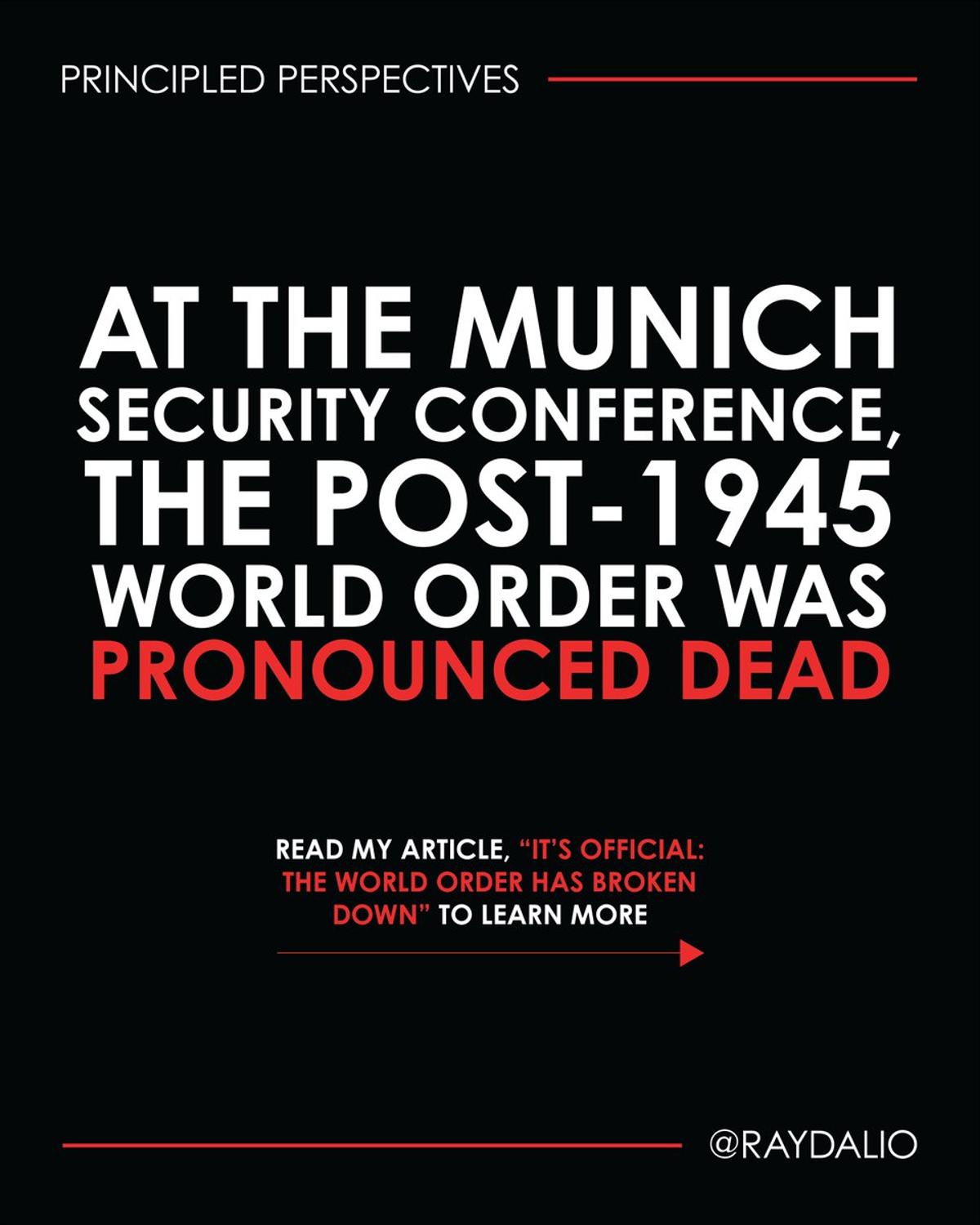
World Order Collapses: Entering Stage 6 of Global Disorder
It’s official: The current world order has broken down. In my parlance, we are in the Stage 6 part of the Big Cycle in which there is great disorder arising from being in a period in which there are no rules,...
By Ray Dalio

Social•Feb 12, 2026
Excess Wealth vs Limited Cash Fuels Asset Bubbles
Wealth isn’t worth anything unless it can be converted into money to spend. And when there’s a lot of wealth relative to the amount of hard money available — like we’re seeing today — bubbles are created. @nikhilkamathcio https://t.co/iBiRkkv7Ok
By Ray Dalio
Social•Feb 11, 2026
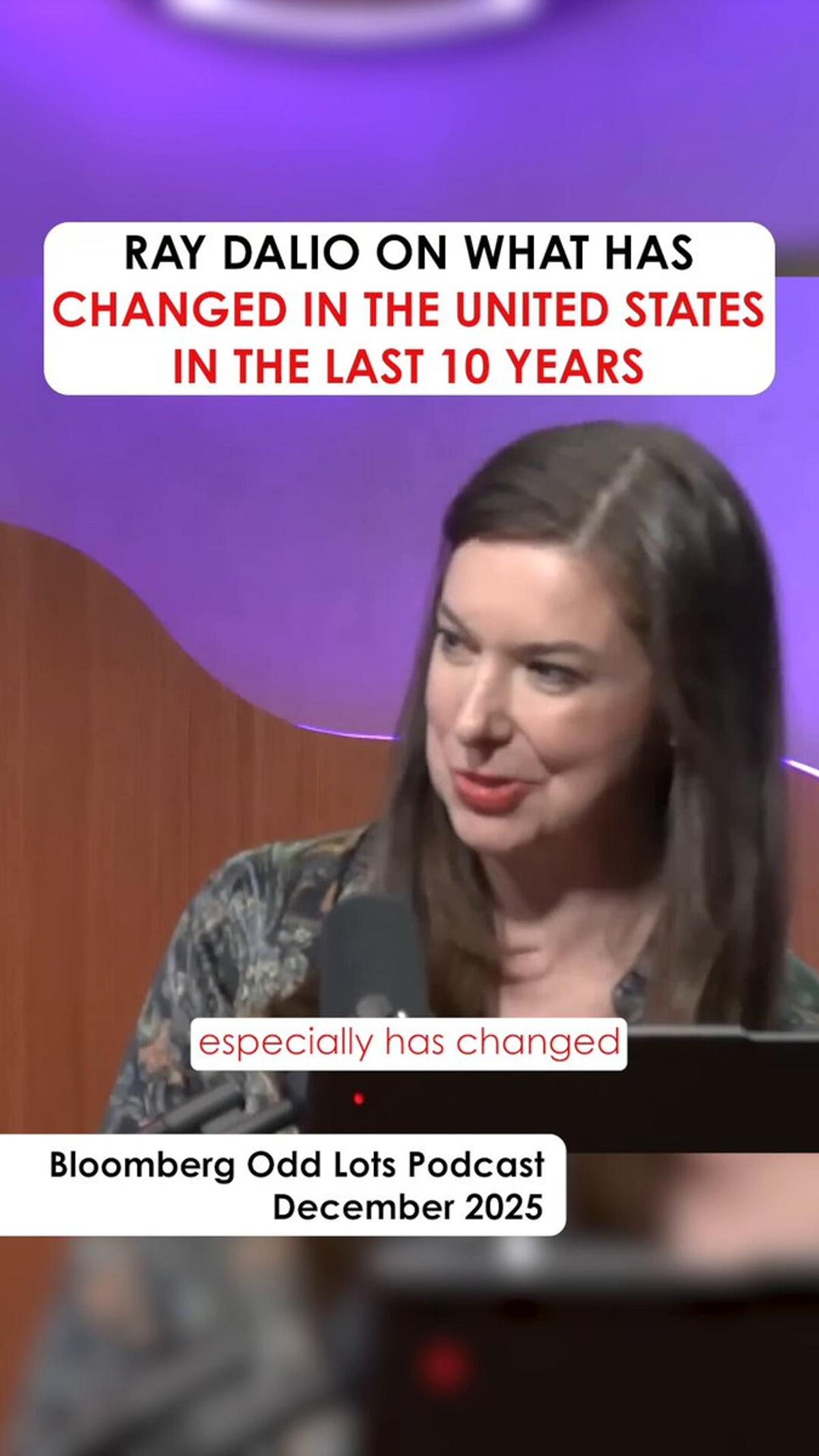
Historical Cycles Link US Inequality, Deficits, and Global Populism
The changes in the US over the last decade — rising inequality, massive deficits, and a shifting global outlook — are not isolated events. They are all interconnected and part of a dynamic that has occurred many times before for...
By Ray Dalio