Video•Feb 23, 2026
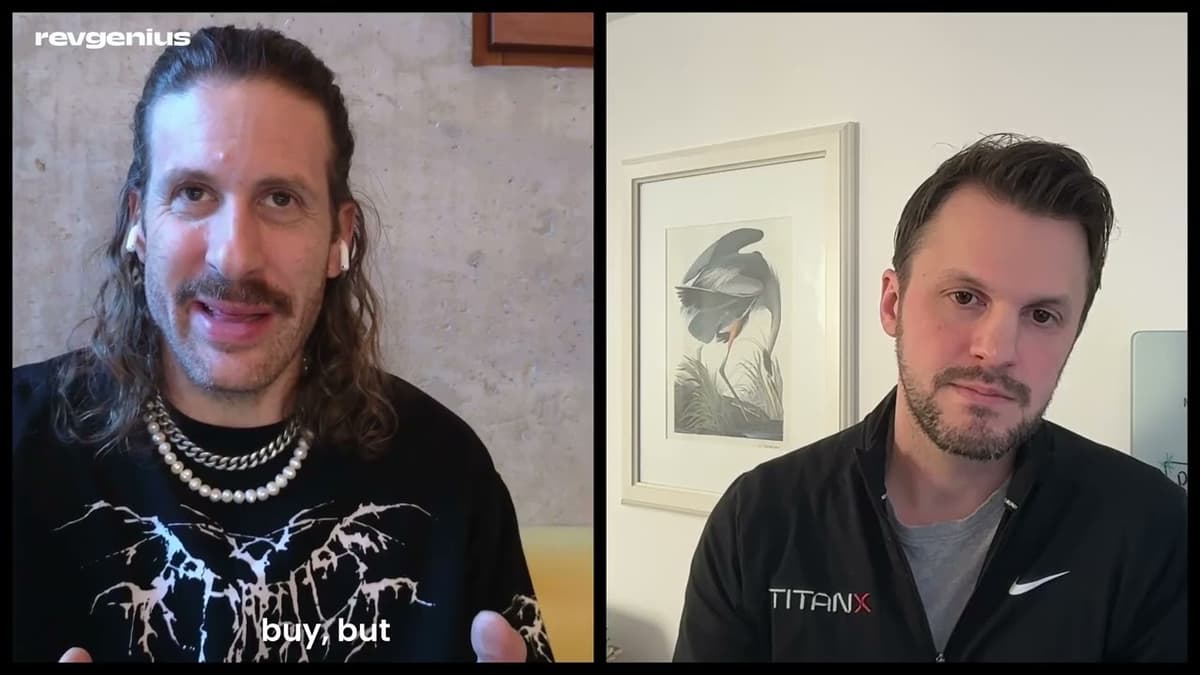
Jared Robin X Evan Dunn | Beyond Intent Signals
In this Beyond Intent Signals conversation, Jared Robin interviews Evan Dunn, Titan X’s head of marketing, about a data‑driven framework that uses job‑description mining and generative AI to sharpen outbound prospecting. The discussion centers on how Titan X built a workflow that extracts job postings for key roles—SDR, AE, RevOps, and demand‑gen—feeds them through the Gemini API, and isolates three high‑value signals: explicit outbound activity, phone‑based calling responsibilities, and full‑cycle sales ownership.
Evan explains that accounts matching all three signals are fifteen times more likely to become customers and six‑point‑five times more likely to appear in the pipeline, a stark contrast to the broader 12‑18% baseline. By applying this filter to a 28,000‑account universe, the team observed SDRs double their meeting‑booking rates—from 8% overall to 18% when the signals align, and a striking 42% for the most qualified titles. The methodology also surfaced anecdotal evidence, such as the “Isaac Morehouse” incident, underscoring the noise around commoditized intent versus the precision of job‑description data.
The conversation highlights practical tactics: leveraging Clay’s enrichment integrations to pull historical and current job descriptions, using AI to parse language for outbound relevance, and layering these static insights with real‑time intent signals for a balanced outreach cadence. Evan stresses that while AI can automate discovery, the human element—personalized calls referencing specific JD excerpts—drives credibility and conversion.
For B2B marketers, the takeaway is clear: job‑description intelligence offers a high‑signal, low‑noise foundation for account selection, and when combined with timely intent data, it can dramatically improve connect rates, meeting bookings, and ultimately pipeline velocity.