
Recent Posts
Video•Jan 15, 2026
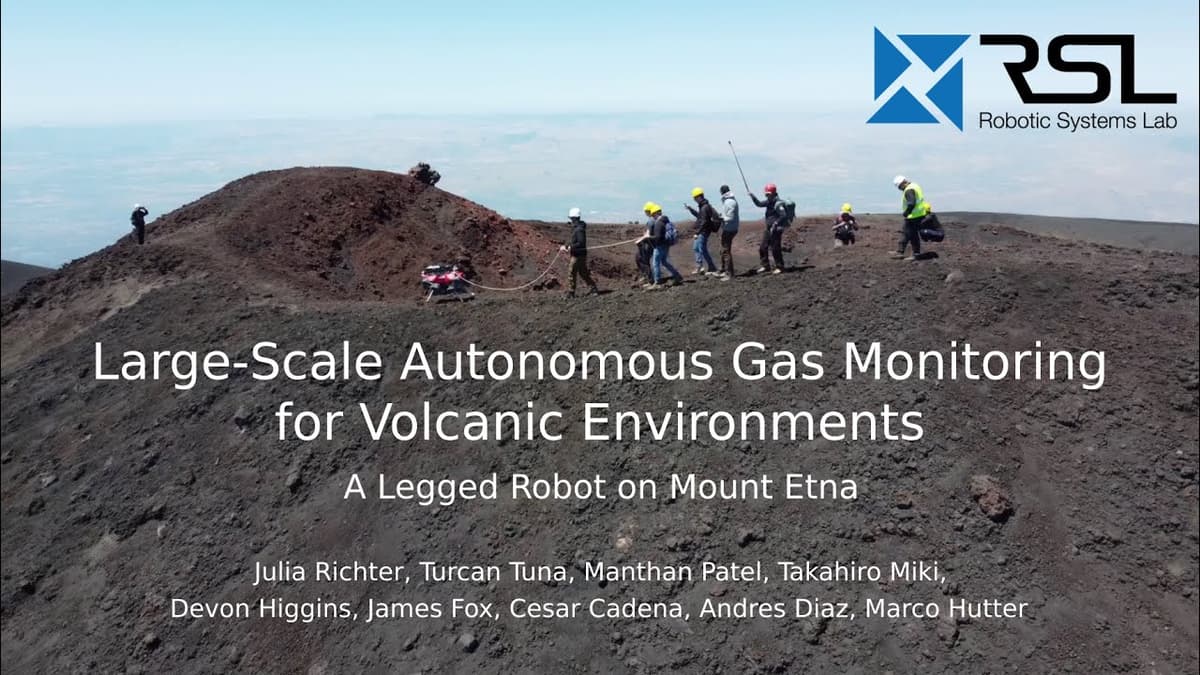
Large-Scale Autonomous Gas Monitoring for Volcanic Environments: A Legged Robot on Mount Etna
The video introduces a quadruped robot designed to autonomously monitor volcanic gases on Italy’s Mount Etna, addressing the long‑standing challenge of sampling in unstable, toxic terrain. Equipped with a commercial quadrupole mass spectrometer, the robot combines global localization and terrain‑aware navigation, allowing it to traverse loose soil, steep slopes and lava fields. In four field missions—three fully autonomous at the Sylvestri crater rim, a crater descent, and a volcanic desert at Legetto—the system achieved autonomy rates above 90% and identified multiple artificial gas releases. During a tele‑operated run inside Legetto crater, the spectrometer recorded clear sulfur‑dioxide and carbon‑dioxide signatures that matched handheld reference measurements, confirming analytical accuracy even on unstable ground. These results demonstrate that legged platforms can safely collect high‑resolution gas data from hazardous volcanoes, opening the door to continuous, human‑free monitoring and more timely eruption forecasts.
By Robotic Systems Lab
Video•Jan 5, 2026
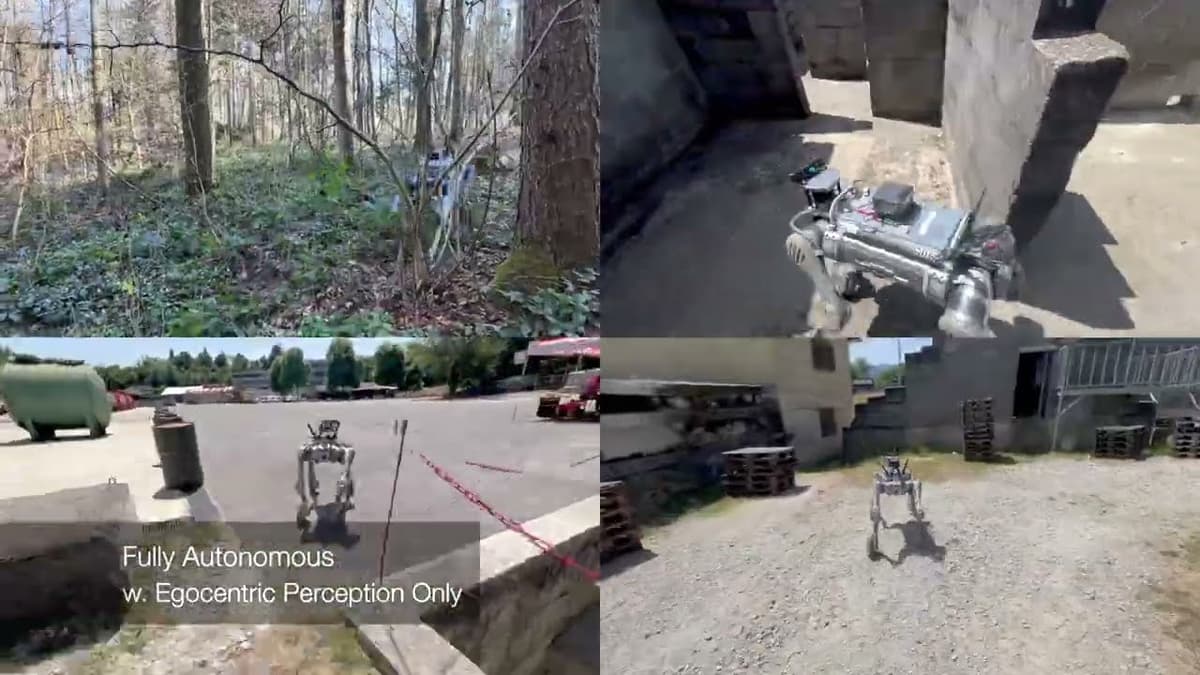
Spatially-Enhanced Recurrent Memory for Long-Range Mapless Navigation
The video presents a new approach called Spatially‑Enhanced Recurrent Memory (SERM) designed to enable robots to navigate long distances without pre‑built maps. The authors describe how SERM augments a standard recurrent neural network with a spatial attention module that stores and...
By Robotic Systems Lab
Video•Dec 24, 2025
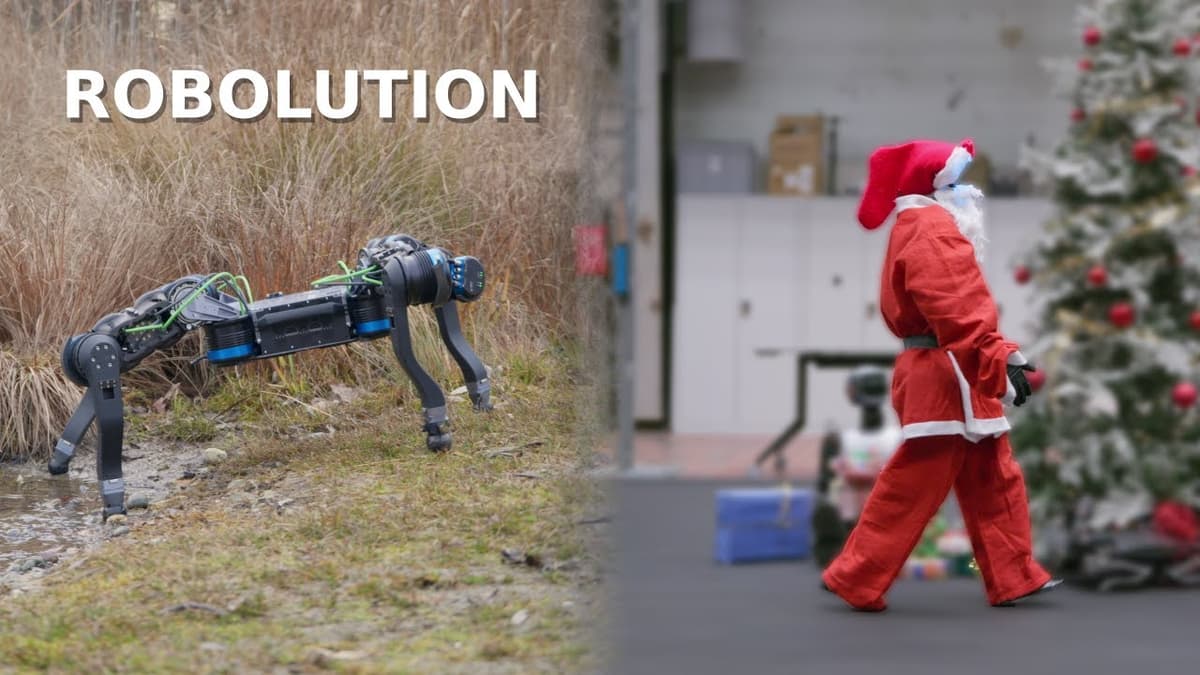
What If Evolution Was Metal Instead of Carbon?
The video imagines a parallel history in which metal‑based machines, not carbon‑based organisms, undergo an evolutionary saga. Starting as simple single‑core robots, they gradually acquire specialized forms—first mastering buoyancy and grace in water, then conquering land with sturdy limbs and...
By Robotic Systems Lab