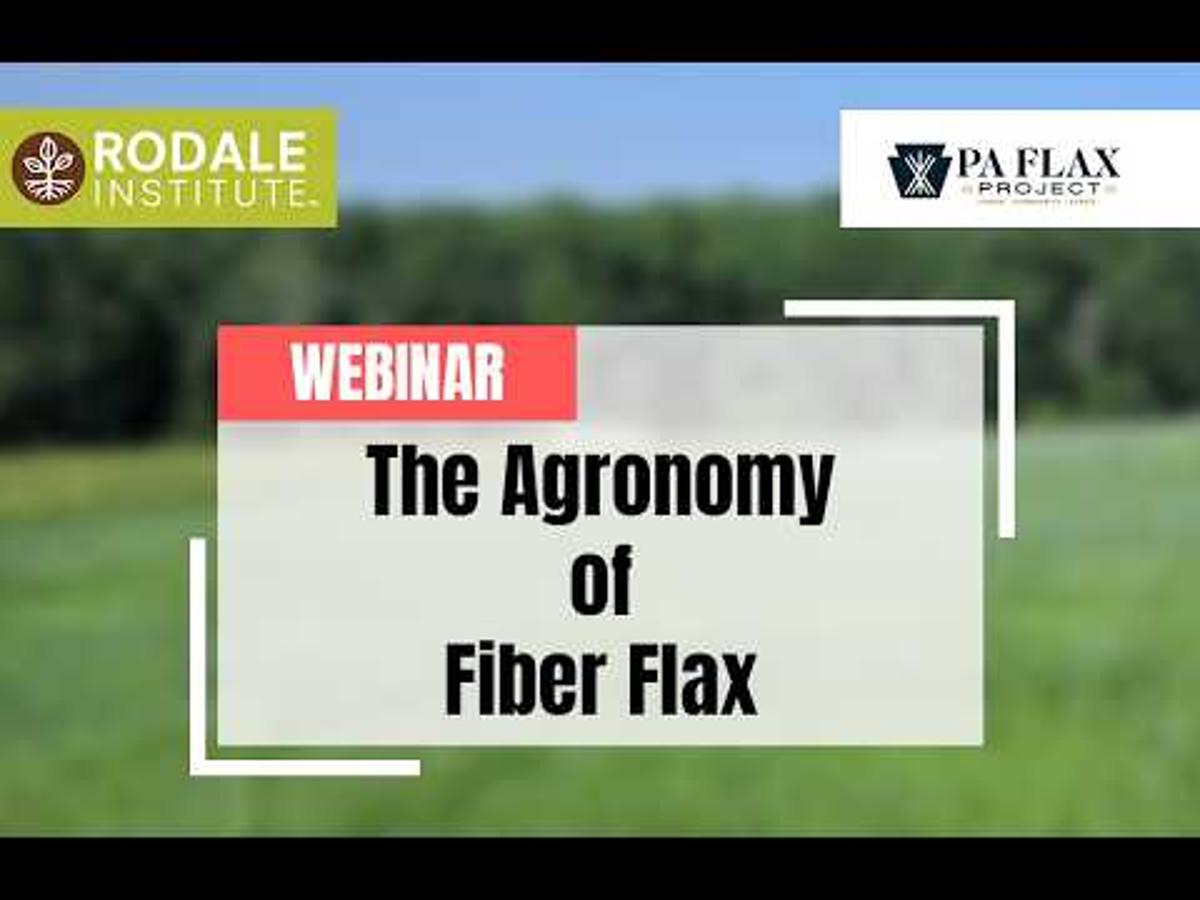
The Agronomy of Fiber Flax - PA Flax Project
The webinar introduced the PA Flax Project, a worker‑owned cooperative dedicated to re‑establishing a commercial fiber‑flax supply chain in Pennsylvania. Director Bill Schik outlined the organization’s mission to create a sustainable textile ecosystem that benefits growers, mill workers, and the broader community while partnering with universities and European industry experts. Key agronomic insights highlighted the fundamental differences between fiber flax and oilseed flax: fiber varieties grow taller, produce fewer seeds, and require dense, 4‑inch row spacing. Successful cultivation depends on early‑spring planting, a 90‑100‑day growth cycle, and a controlled post‑harvest “reading” period before pulling the crop with specialized harvesters imported from Belgium. The project also emphasizes integrated pest management, soil fertility, and a four‑year rotation that allows a second summer crop. Schik stressed that flax cannot be harvested with hemp or grain equipment; pulling preserves the long bast fibers essential for high‑quality linen and bio‑composite applications. He noted that by‑products such as shive and short fibers (toe) are gaining value in green building, animal bedding, and composite materials, turning what was once waste into revenue streams. The initiative signals a new revenue avenue for Pennsylvania farmers, diversifying rotations beyond corn and soy, and laying the groundwork for a regional, environmentally responsible textile industry. By aligning cooperative ownership with advanced agronomy, the PA Flax Project could catalyze broader adoption of natural fibers in U.S. manufacturing.

Regenerate Ventura
The video announces a collaborative effort led by the Rodell Institute, Holdfast Collective, and Patagonia to convert Ventura County’s intensive agricultural landscape into a regenerative organic system. The initiative targets more than 10,000 acres, aiming to make the county...

WEBINAR Cover Crops Made Simple From Planting Basics to Livestock Grazing
The Midwest Organic Center’s webinar walked participants through the fundamentals of cover cropping, from basic definitions to advanced practices such as livestock grazing and mixture design. Hosted by research director Sean Stokes and farm manager Drew Ericson, the session emphasized...