
Recent Posts
Video•Feb 26, 2026
Reflections After Four Years of War in Ukraine | Dr Maryna Vorotnyuk
Dr Maryna Vorotnyuk, an associate fellow at the Royal United Services Institute, delivered a briefing on the fourth anniversary of Russia’s full‑scale invasion, evaluating the current military stalemate and diplomatic avenues for peace. She noted that Ukraine has reclaimed portions of occupied territory but lacks a decisive breakthrough, while Russia shows signs of war fatigue and internal dissent. Vorotnyuk emphasized that any durable settlement must incorporate robust security guarantees, credible enforcement mechanisms, and substantial reconstruction funding. She concluded that a negotiated cease‑fire remains possible only with coordinated Western pressure and a clear roadmap for post‑war recovery.
By Royal United Services Institute (RUSI)

Video•Feb 24, 2026
Four Years After Russia’s Invasion of Ukraine: Can the Stalemate Be Broken?
Four years into the war, the conflict looks set to remain a grinding stalemate into 2026 driven by three structural factors: neither side can achieve decisive firepower overmatch, rapid diffusion of commercial drone and countermeasure technologies erodes battlefield advantages, and...
By Royal United Services Institute (RUSI)
Video•Feb 23, 2026
Sanctions: A War of Attrition Between Russia and The West
The video frames sanctions as a central pillar of the West’s response to Russia’s four‑year invasion of Ukraine, describing the policy tool as a "war of attrition" between Western policymakers and Russian actors seeking to evade restrictions. While sanctions have...
By Royal United Services Institute (RUSI)

Video•Feb 20, 2026
Fallout: America's Failure to Disarm North Korea
The webinar centered on Joel Wit’s new book, *Fallout: The Inside Story of America’s Failure to Disarm North Korea*, and a broader review of three decades of U.S. negotiations with Pyongyang. Wit, a former State Department official, argued that the...
By Royal United Services Institute (RUSI)
Video•Feb 17, 2026
5 Ways Europe Needs to Change | Insights From the Munich Security Conference 2026
The Munich Security Conference 2026, themed around disruption and deconstruction, spotlighted Europe’s strategic crossroads. Organizers used an elephant mascot to symbolize a lumbering international order that must be rebuilt, setting a tone of anxiety and anticipation about the continent’s future...
By Royal United Services Institute (RUSI)
Video•Feb 10, 2026
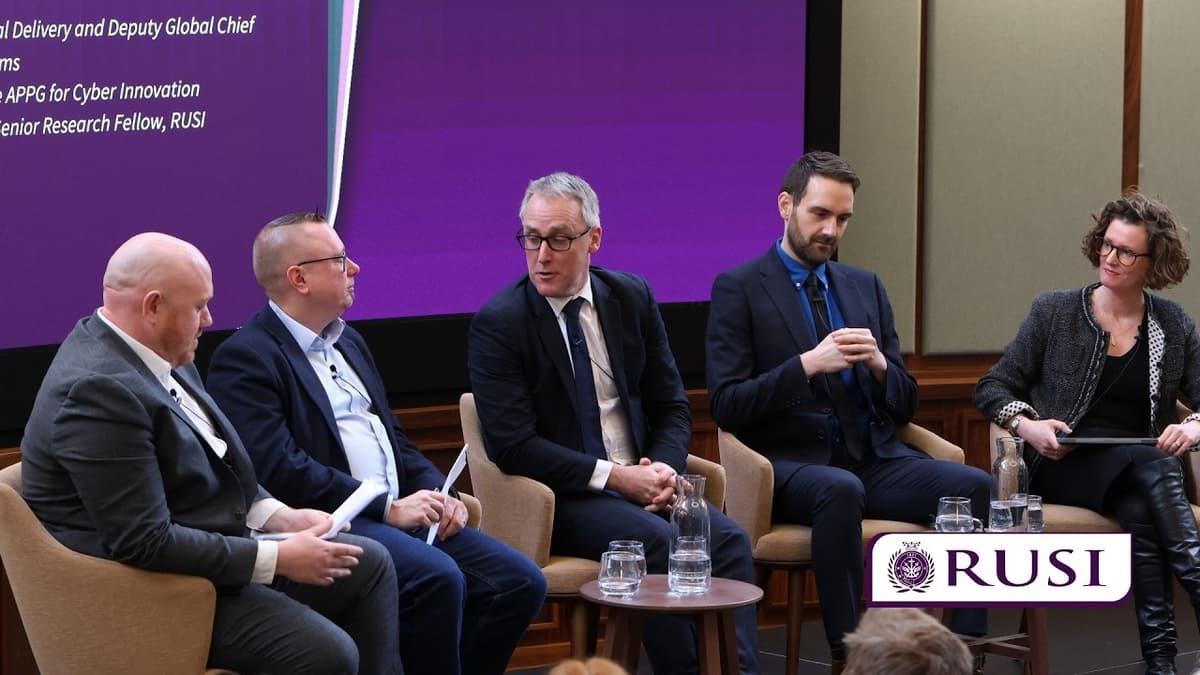
The Next Phase Of UK Cyber Strategy
The panel discussion, hosted by Rusei’s Jamie McColl, examined the United Kingdom’s current cyber‑security posture in the wake of high‑profile 2025 breaches at major retailers and Jaguar Land Rover. Participants—including NCSC chief technical officer Ollie Whitehouse, former NCSC chief Kieran Martin,...
By Royal United Services Institute (RUSI)
Video•Feb 6, 2026
Brazil's Strategic Weight in South American Security Architecture | LASC 2026
The video outlines Brazil’s emerging strategic weight in South American security architecture, emphasizing its massive geography, extensive borders, and the upcoming chairmanship of the South Atlantic Peace and Cooperation Zone in 2026. It frames Brazil’s defense posture as a blend...
By Royal United Services Institute (RUSI)
Video•Feb 6, 2026
Confronting Transnational Crime and Strengthening State Resilience | LASC 2026
The panel at LASC 2026 examined how transnational crime is evolving in Latin America and the challenges it poses to state resilience. Participants highlighted a shift from a few dominant drug cartels to a fragmented landscape of competing groups, driving...
By Royal United Services Institute (RUSI)

Video•Feb 6, 2026
Security Cooperation in the South Atlantic and Antarctic | LASC 2026
The LASC 2026 panel examined how the United Kingdom and its Latin American partners can sustain peaceful governance under the Antarctic Treaty System amid rising strategic competition. Moderators highlighted the shift from a Cold‑War consensus to a landscape where hard...
By Royal United Services Institute (RUSI)
Video•Feb 6, 2026
Latin America’s Response to the War in Ukraine | LASC 2026
The panel at LASC 2026 examined Ukraine’s wartime diplomacy aimed at Latin America and the Caribbean, focusing on the newly unveiled Latin American‑Caribbean Communication Strategy (LACCS). Panelists Dr. Carlos Suller and Francisco Lobo explained how the strategy, conceived after the...
By Royal United Services Institute (RUSI)
Video•Feb 6, 2026
Securing the Future: The Next Generation of Defence Cooperation | LASC 2026
The panel at LASC 2026 examined how the United Kingdom, led by BAE Systems, is shaping the next generation of defence cooperation with Latin America, especially Brazil. Speakers highlighted a history of joint projects that go beyond sales, focusing...
By Royal United Services Institute (RUSI)
Video•Feb 6, 2026
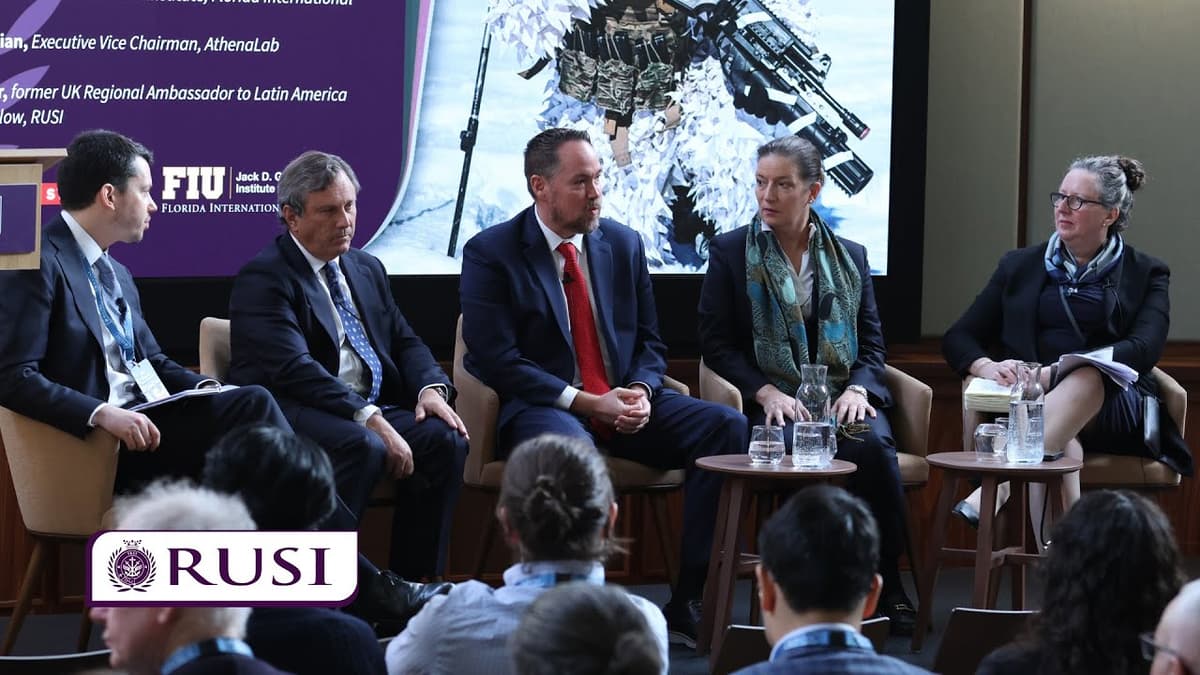
The Strategic Implications for Regional and Global Politics of the Venezuelan Crisis | LASC 2026
The LASC 2026 panel examined the Venezuelan crisis as a flashpoint for regional and global geopolitics, focusing on the surprise U.S. military operation dubbed "Operation Southern Spear" and its rapid escalation in early January. Panelists traced how the strike, described...
By Royal United Services Institute (RUSI)
Video•Feb 6, 2026
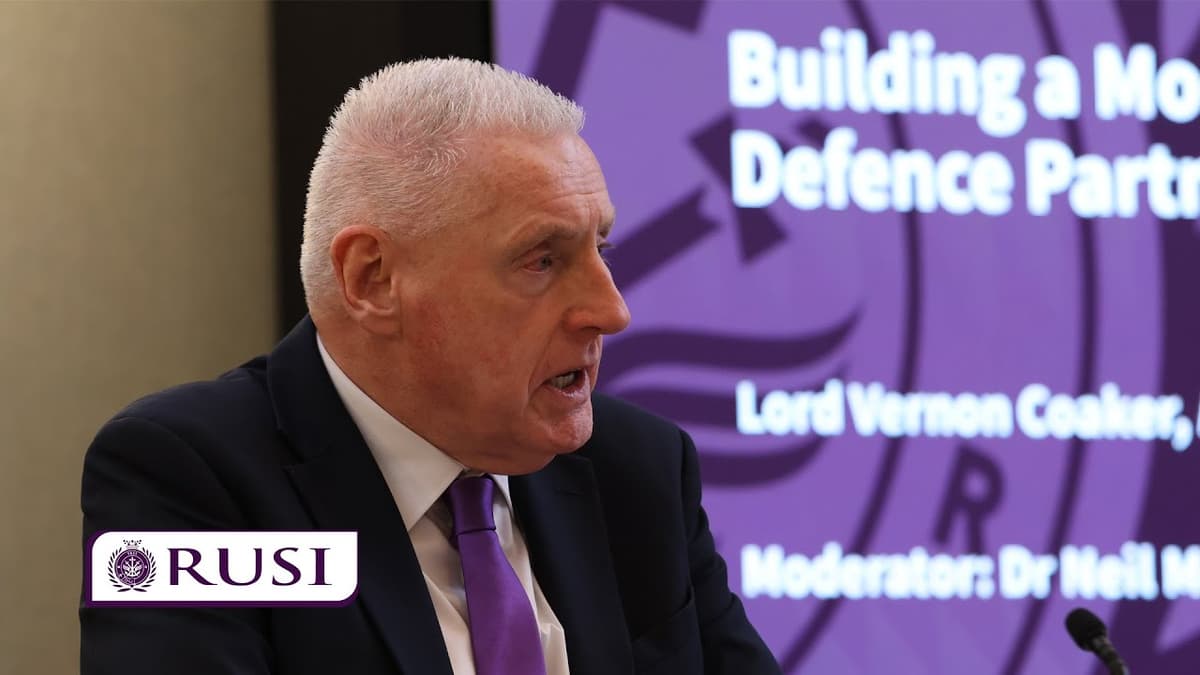
Building a Modern UK–Latin America Defence Partnership | LASC 2026
The LASC 2026 conference highlighted the United Kingdom’s push to modernise its defence partnership with Latin America, framing it as a strategic response to heightened geopolitical interest, including the recent U.S. operation in Venezuela. Lord Vernon Stoker outlined a three‑pillar...
By Royal United Services Institute (RUSI)