
Recent Posts
Video•Feb 7, 2026
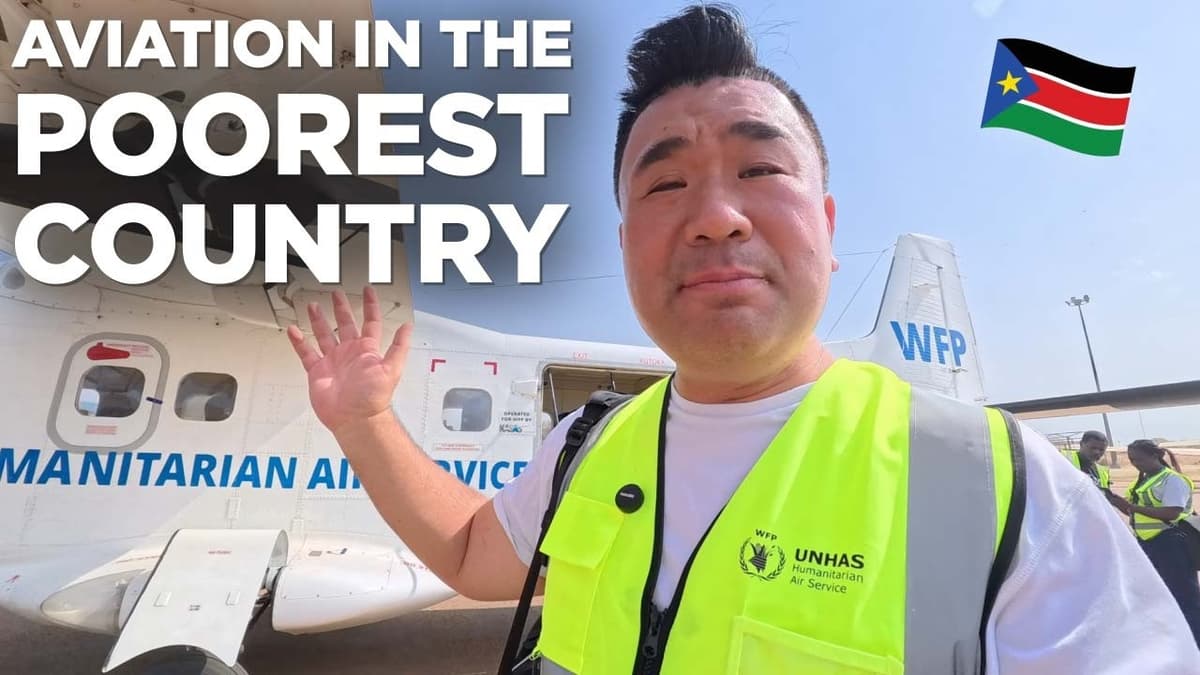
Flying to the World’s Poorest Country — Aviation Means Survival
The video follows a traveler’s journey from Nairobi to Juba, South Sudan, to document how aviation underpins humanitarian operations in the world’s poorest nation. He discovers that the United Nations World Food Programme (WFP) runs ANHAS, the largest humanitarian air service on the planet, ferrying food, medicine and personnel to remote villages that lack roads, rail or navigable rivers. The narrator flies on a 737‑800 to Juba, then observes twin‑engine STOL aircraft and a fleet of UN‑marked planes that routinely operate from makeshift airstrips. Key moments include a runway change from 13 to 31, a captain’s explanation of “holes” used to lose altitude, and Captain Pascal’s demonstration of a Swiss‑registered short‑take‑off aircraft capable of landing on grass. The narrator notes the crowded Juba airport, the restrictive security environment, and the stark contrast between modern jets and abandoned, sun‑bleached wrecks. These observations highlight aviation’s role as a critical lifeline in South Sudan, where conflict and infrastructure gaps make ground delivery impossible. Understanding these logistics informs donors, policymakers and private‑sector partners about the high operational costs and safety risks inherent in delivering aid by air.
By Sam Chui

Video•Jan 31, 2026
A Night Inside Kenya Airways 787: The Crew’s World Passenger Don't See
Kenya Airways offers a rare behind‑the‑scenes look at its 787‑8 Dreamliner operating a Guangzhou‑Bangkok‑Nairobi itinerary, showcasing crew handover procedures, sustainability projects, and aircraft-specific amenities that passengers rarely see. The video highlights a CSR initiative where in‑flight magazine pages are recycled into...
By Sam Chui