
Navigating the Quantum Complexity of Matter
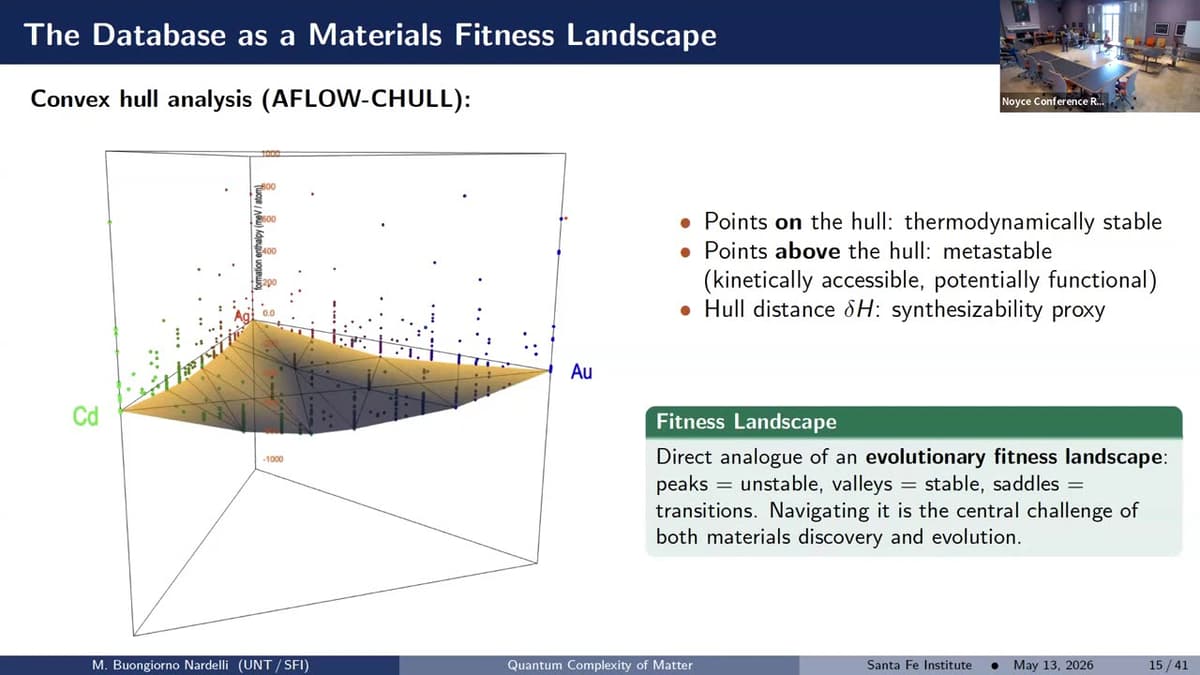
The talk explores how modern materials science is confronting the quantum‑level complexity of matter, shifting from traditional alloy discovery to designing compounds whose properties emerge from electron interactions. With over a hundred elements, the combinatorial space of possible compounds is astronomically large, yet only a vanishing fraction has been realized. Researchers now target exotic quantum phenomena—topological insulators, superconductors, spintronic media—by treating material design as a high‑dimensional optimization problem. The speaker highlights two complementary strategies: bottom‑up first‑principles calculations rooted in density‑functional theory, and top‑down data‑driven screening using massive repositories such as the AFLOW database, a product of the Materials Genome Initiative that now contains roughly four million simulated compounds. Machine‑learning descriptors and even a prototype large‑language model interface enable rapid navigation of stability hulls and property maps. By marrying quantum theory with AI‑augmented databases, the workflow promises to compress years of trial‑and‑error into months, accelerating the delivery of next‑generation electronic, energy‑storage, and quantum‑computing materials to industry.
Metacognitive Intelligence in Human-AI Teams
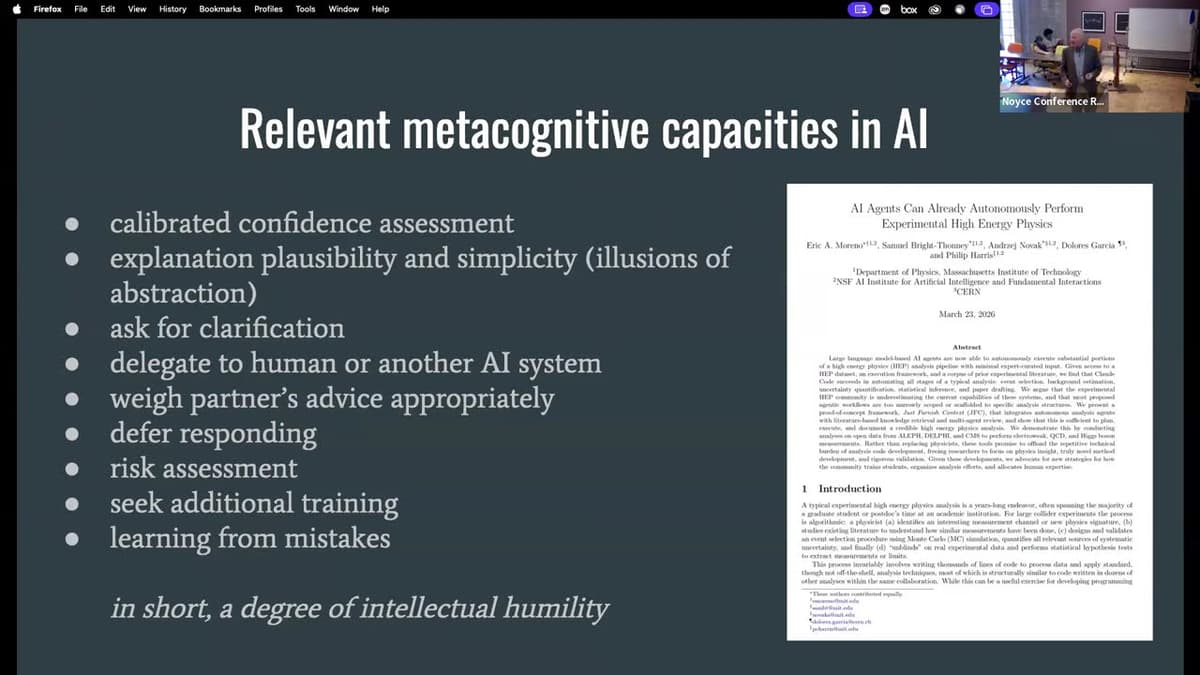
The talk by a University of Illinois researcher explores how current large language models (LLMs) differ from humans in metacognitive abilities and what that means for human‑AI collaboration. He argues that LLMs can generate fluent text but cannot assess their own...
Sieving Through Complexity: How Transient Dynamics Emerge From Finite Observer-Referenced Framework
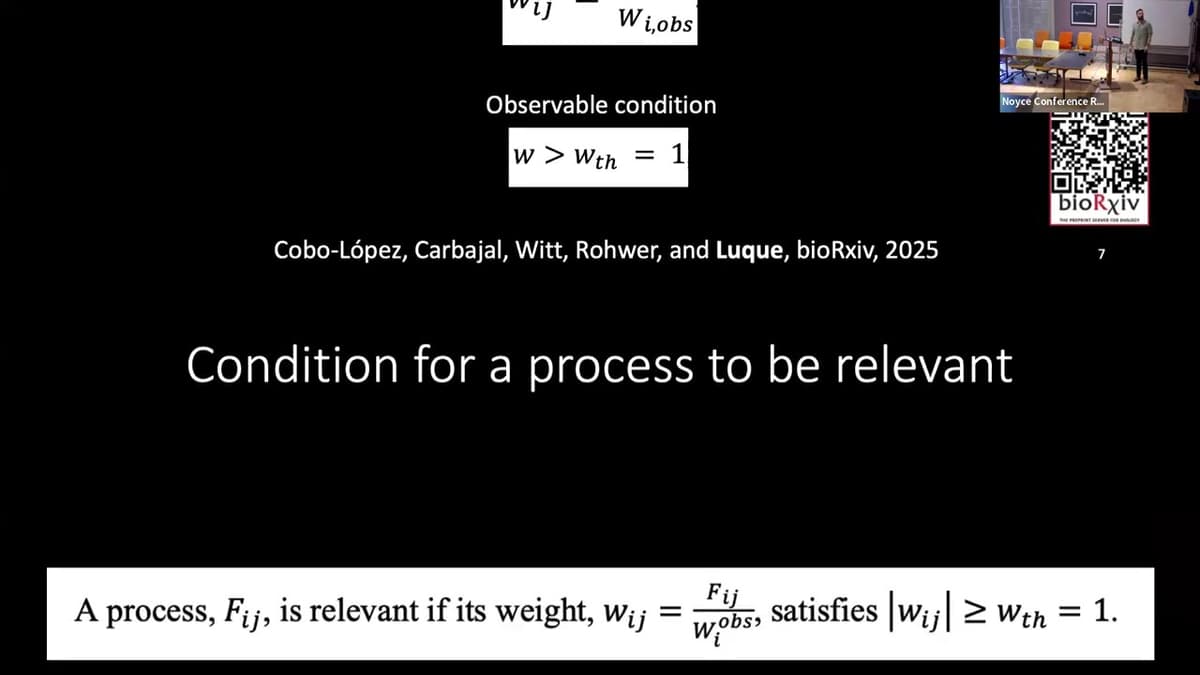
The talk challenges conventional dynamical‑system analysis by arguing that the observer, like in Einstein’s relativity, should be explicitly incorporated when studying transient phenomena. The speaker introduces two finite observer parameters—ΔT (observation window) and ΔA (minimum detectable change)—to compute an observable rate....

Computational Universality of Fungal Sandpile Automata
The talk introduces a novel cellular‑automaton framework inspired by fungal communication, where each cell’s compartment can be open or closed, allowing token flow across a von Neumann neighborhood. By treating the system as a sandpile model, the presenter demonstrates how simple...

The Quest for Dark Matter
The talk revisits the origins and evolving narrative of dark matter, challenging the popular myth that the term and its acceptance began only with Fritz Zwicky in the 1930s and Vera Rubin in the 1970s. By digging into early papers—Kelvin’s...
Realizing the Potential of Community-Led, Science-Driven Participatory Complex Systems Modeling
The video features Dr. Moira Zellner’s presentation on community‑led, science‑driven participatory modeling for socio‑ecological challenges such as climate hazards and urban planning. She frames the approach as the third stage of reasoning about complex systems, where stakeholders move beyond merely acknowledging...