
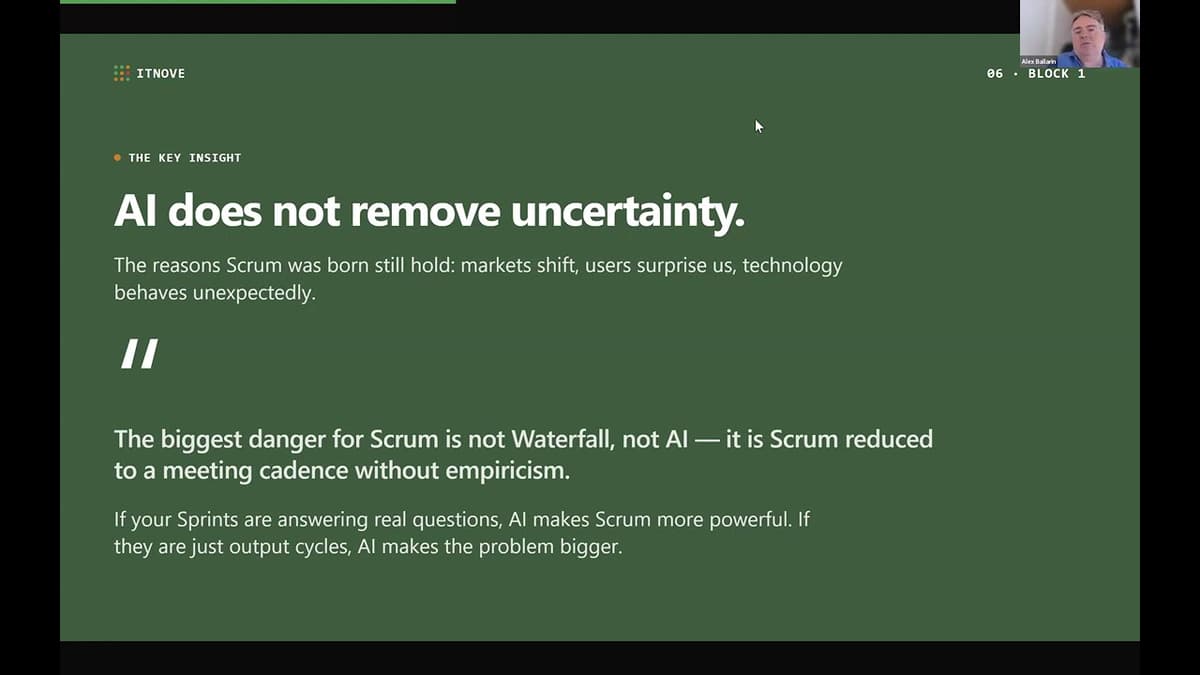
Scrum and AI: Partners or Rivals?
The webinar, hosted by Eric Neberg and Scrum trainer Alex Balerin, explored whether Scrum and artificial intelligence are allies or adversaries in modern product development. After a quick poll revealed most teams are still experimenting with AI at an individual level, the presenters framed the discussion around Scrum’s core purpose and the profound workflow changes AI introduces. Key insights highlighted that AI dramatically reduces the cost and time of code generation, shifting the real bottleneck to discovery, requirement definition, and validation—activities that still demand human judgment. When Scrum is applied mechanically, focusing solely on velocity, teams risk flooding the pipeline with features that add no business value. Conversely, a learning‑oriented Scrum, combined with disciplined AI usage, can accelerate delivery while preserving empirical feedback loops. Examples included a GitHub‑based study showing a 17‑fold increase in code output but only a 30 % rise in releases, underscoring the danger of “being too fast.” The presenters cited Joshua Sen’s logical model to stress tracking resources, engineering KPIs, and, crucially, outcome‑based metrics rather than raw feature counts. They warned that strategic lag—delayed validation of shipped code—can render rapid AI‑driven development counterproductive. The implication for businesses is clear: adapt Scrum ceremonies to incorporate AI governance, enforce detailed upfront specifications, and prioritize outcome measurement. By rebalancing sprint goals toward validated impact, organizations can harness AI’s speed without sacrificing the empirical learning that makes Scrum effective.
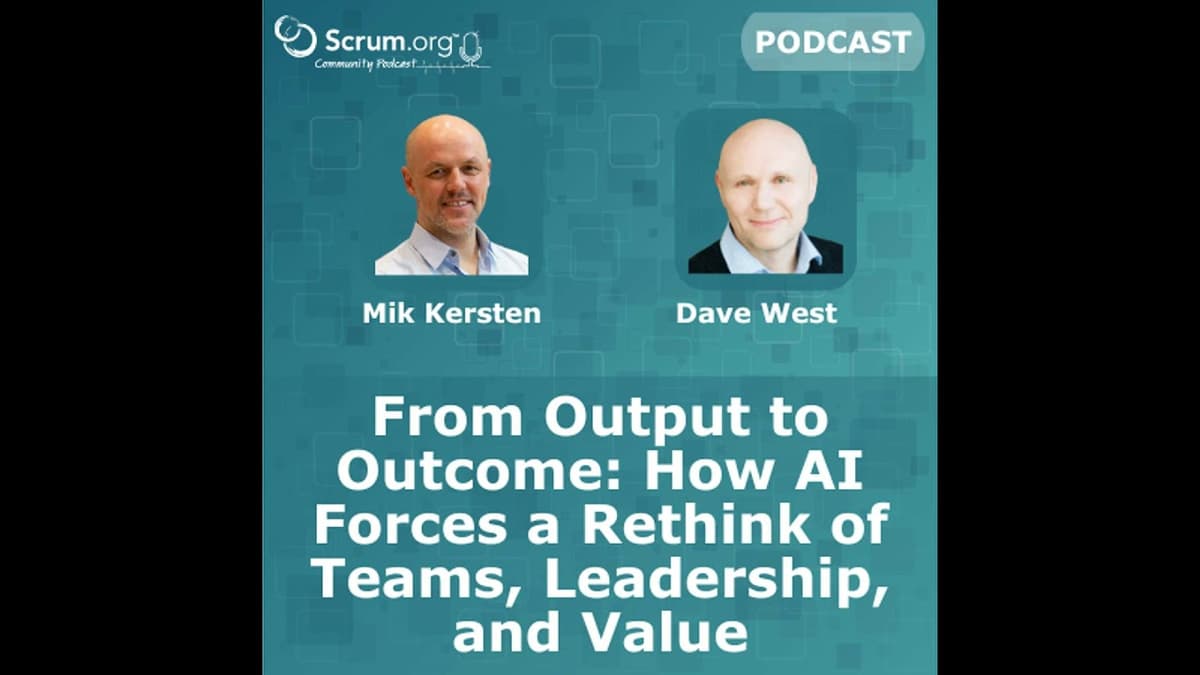
From Output to Outcome: How AI Forces a Rethink of Teams, Leadership, and Value
The podcast introduces Mick Kirsten’s new book, Output to Outcome, which argues that AI forces organizations to move beyond traditional output‑centric metrics and redesign teams, leadership, and value streams. Building on his earlier work, Project to Product, Kirsten shows how...
Context Is the New Currency: AI, Scrum, and the Future of Product Delivery
In this Scrum.org podcast, CTO Tony Hinckley of Avanad discusses how generative AI is redefining product delivery and the role of Scrum. He frames context as the new currency, arguing that AI‑driven tools are turning raw data and intent into...
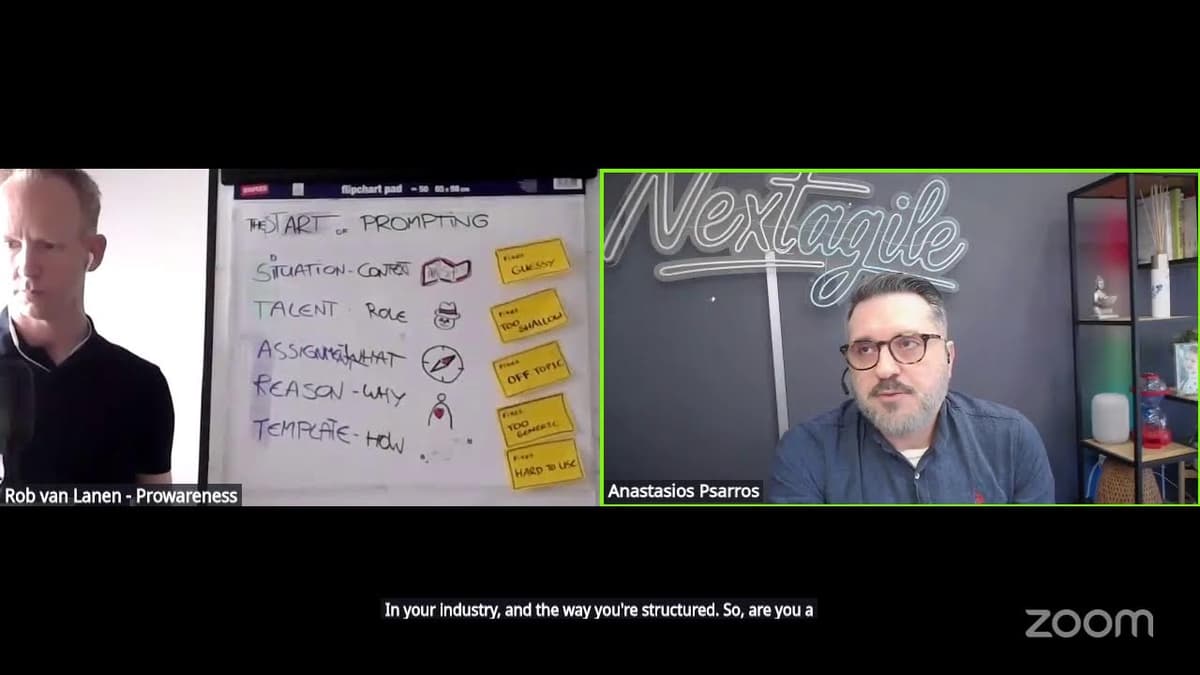
The Art of Prompting with AI - From Hesitation to Action
Scrum.org hosted a webinar where professional scrum trainers Rob Vanlannon and Anastasios (Taso) Sorrowos introduced the “Art of Prompting” to address common AI shortcomings—generic, shallow, off-topic or hallucinatory outputs. They framed prompting as a practical technique (starting with defining the...
Is AI Just an Evolutionary Step in Our Technology Landscape or Is It More of a Radical Shift?
The video debates whether artificial intelligence is merely the next evolutionary step in the technology stack—like cloud or the internet—or a fundamentally radical shift that reshapes business fundamentals. The speaker argues the answer hinges on the viewer’s position. IT, policy, audit...
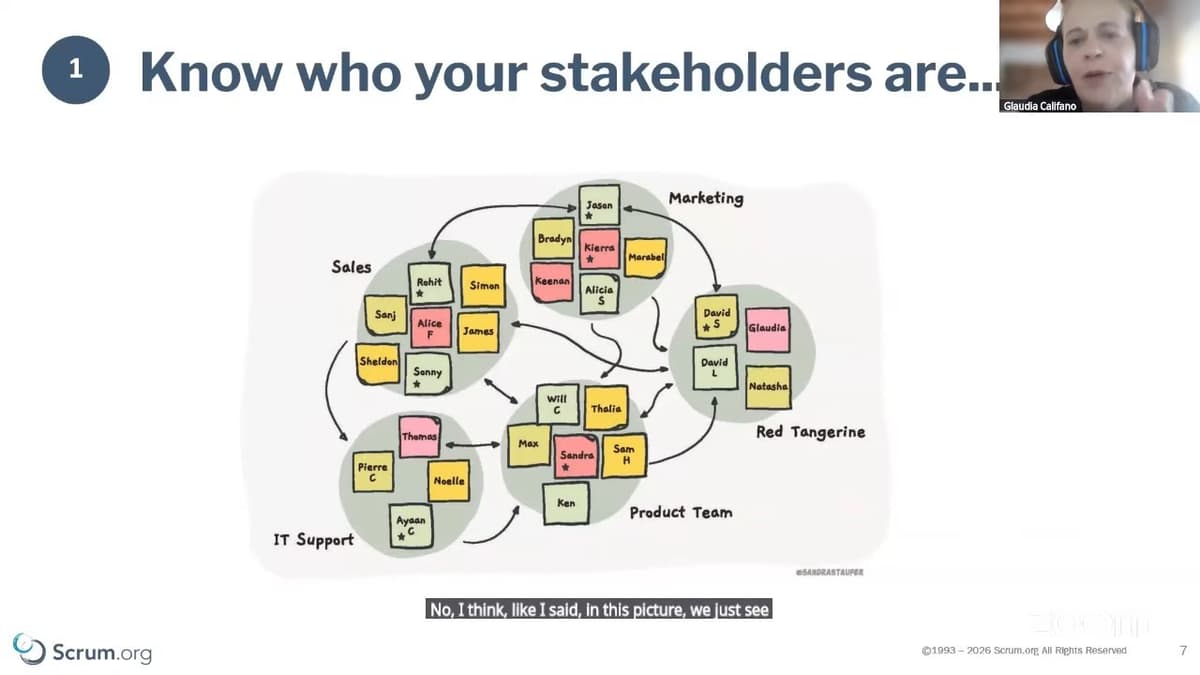
Effective Stakeholder Collaboration for Scrum Teams: Turning Demands Into Dialogue
The webinar, hosted by Scrum.org trainers Gladia Kifano and David, introduced a new self‑paced course aimed at helping Scrum teams turn stakeholder demands into constructive dialogue. Drawing on years of experience, the presenters highlighted the chronic problem of ad‑hoc...
Agile Beyond the Enterprise: Coaching the Businesses Next Door with Marina Alex
The podcast explores how Scrum.org’s Marina Alex transitioned from high‑value enterprise engagements to serving small‑ and medium‑sized businesses after the 2022 market contraction left her without corporate clients. Alex explains that coaches must abandon framework‑centric pitches and instead articulate the concrete...

Is AI Actually Making Your Team Better? Q&A Episode 4
The episode tackles a pressing question for agile teams: how to treat AI as a genuine teammate and gauge its contribution. Eric Neabberg and Daryl Fernandez walk listeners through audience queries from a recent webinar, focusing on metrics, role definition,...

Beyond the Code: Vibe Coding, AI Agents, and Scaling Autonomy with Tomasz Maj of Odevo
The Scrum.org podcast features Thomas Marge, head of product operations at Odevo, discussing how the company is tackling the fragmented residential property‑management market across Europe, the United States and Mexico. Marge explains that Odevo’s strategy is not a single monolithic...
From Vague to Valuable: Practical Writing for Product Backlog Items, Goals and More
The webinar hosted by Scrum.org’s Eric Naborg and trainer Stefan Walpers focused on turning vague product backlog items into actionable, testable artifacts. Emphasizing the link between writing and AI‑enabled agents, the presenters argued that documentation should drive decisions, not merely...
AI on Scrum Teams: Context, Consistency, and Collaboration - Q&A Part 3
The Scrum.org podcast episode dives into how AI can become a strategic teammate for Scrum teams, emphasizing the need for solid context, consistent terminology, and collaborative prompt engineering. Hosts Eric Neabberg and Daryl Fernandez field questions from a recent webinar,...
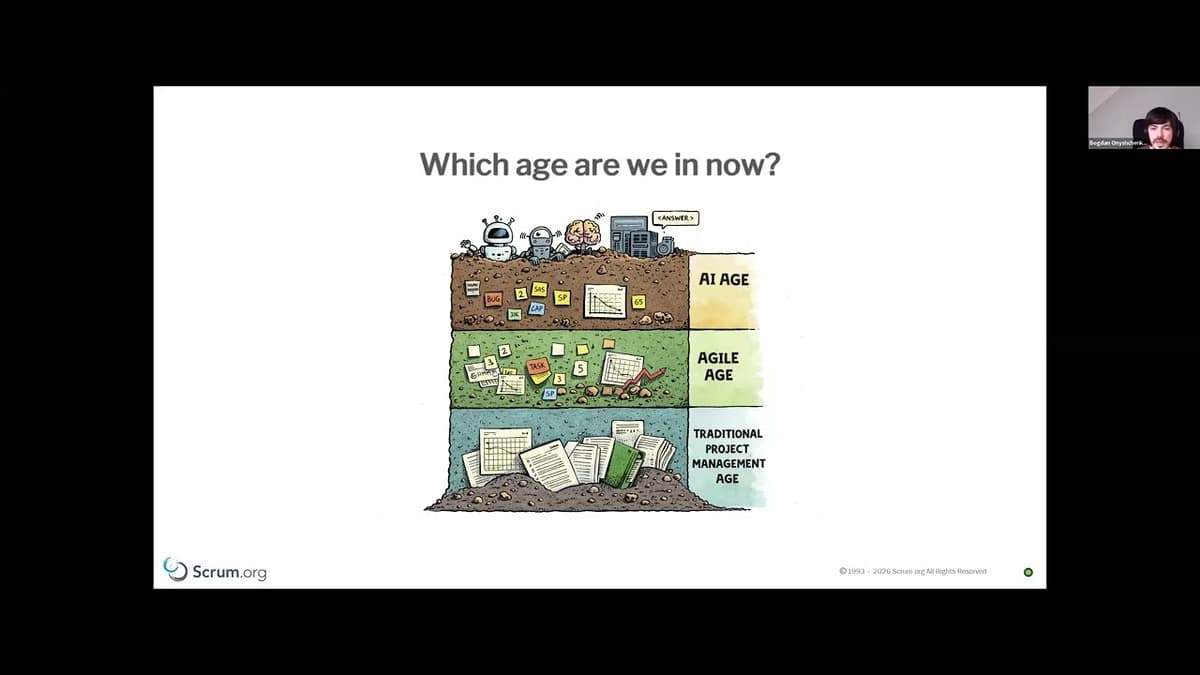
The Next‑Gen Scrum Master: Driving Delivery with AI Augmented Leadership
The Scrum Master role is shifting from traditional facilitator to an AI‑augmented delivery catalyst. This transformation emphasizes outcome‑driven stewardship, systems thinking, and data‑backed decision making to improve predictability. Simon Reindl and Bogdan Onyshchenko outline ethical boundaries for AI use, stressing...
Should Scrum Masters Lead the Charge with AI?
The video asks who should lead AI adoption in agile organizations, suggesting Scrum Masters could fill that gap. It argues Scrum Masters are uniquely positioned to champion AI, translating technical possibilities into team practices while product owners remain focused on market‑driven...
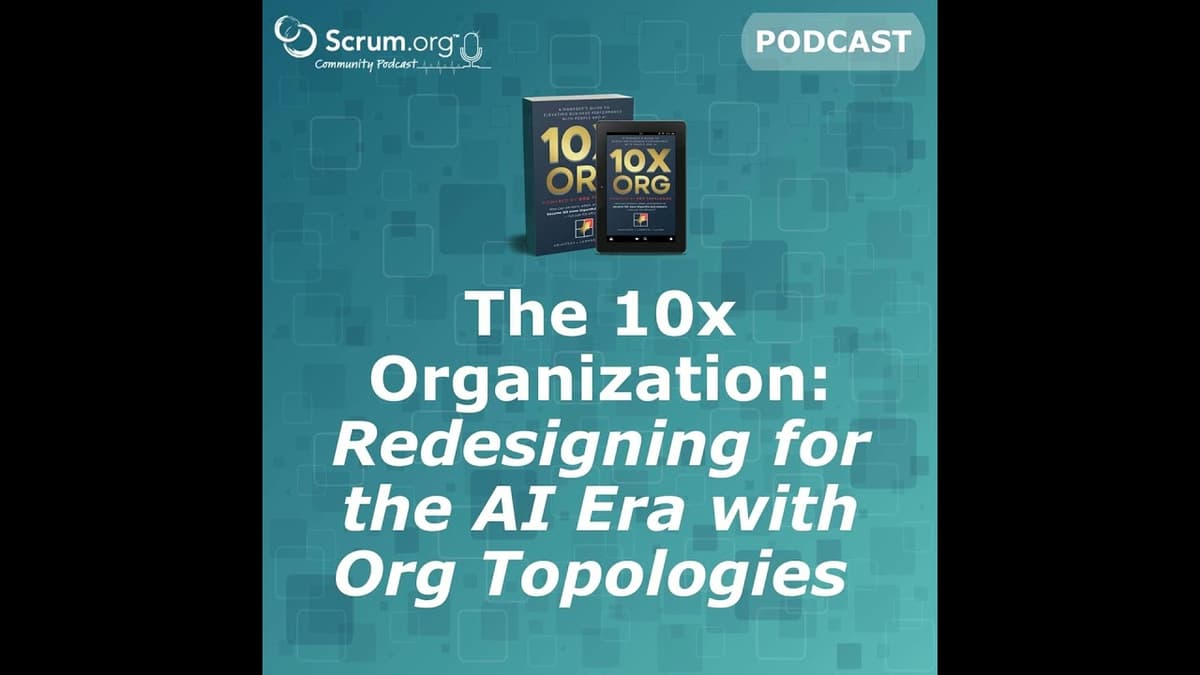
The 10x Organization: Redesigning for the AI Era with Org Topologies
The podcast introduces Org Topologies as a framework for redesigning enterprises in the AI era, positioning it as a language for visualizing how value moves from concept to cash. Host Dave West and authors Alexi Kichki and Roland Flem explain...
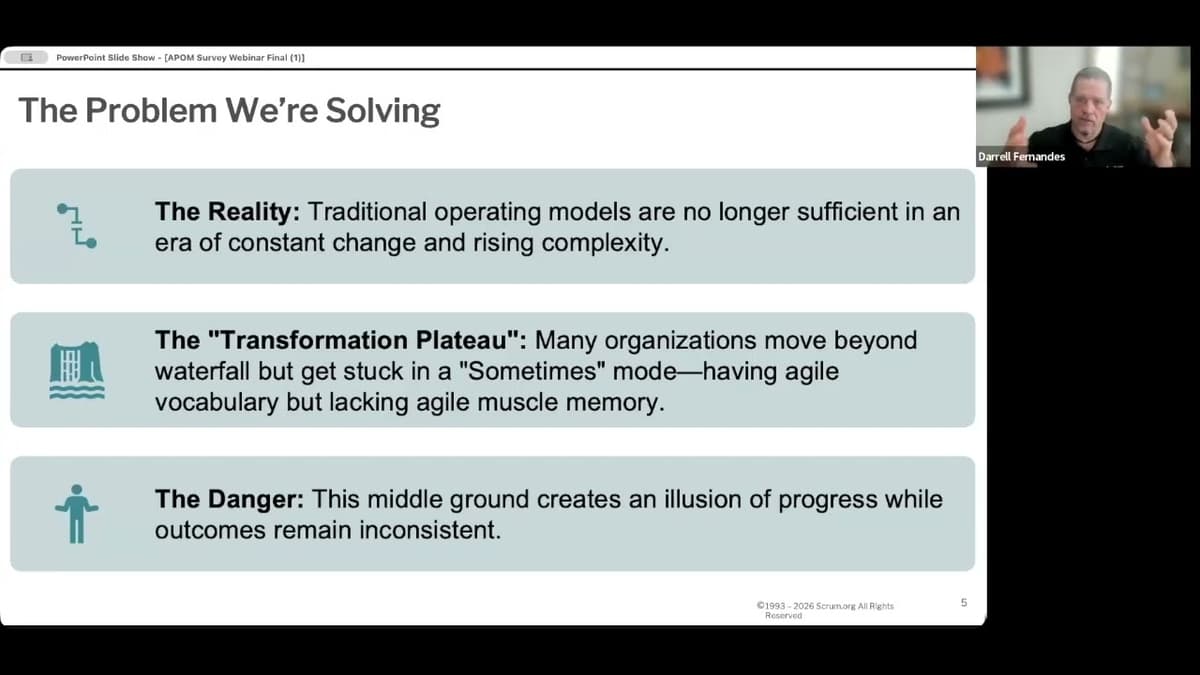
Leading with Evidence: Navigating Complexity Through the Agile Product Operating Model
The Scrum Pulse webinar introduced the Agile Product Operating Model (APOM), a framework that blends modern product management, agile delivery, and Evidence‑Based Management to address the shortcomings of traditional operating models. APOM extends Professional Scrum into a holistic environment where...