

Video•Mar 3, 2026
Washington Medical-Legal Partnership: Integrating Legal Services to Improve Pediatric Health Outcome
The video introduces the Washington Medical‑Legal Partnership (MLP), a collaborative model linking Seattle Children’s Hospital, Harborview Medical Center, and Odessa Brown Children’s Clinic with the Northwest Justice Project. The partnership aims to integrate legal expertise into pediatric care, addressing social determinants of health that traditional medicine alone cannot resolve. Evidence presented includes a review of nine studies showing MLPs reduce asthma exacerbations, improve glycemic control, lower developmental concerns, and cut hospital utilization. Financial benefits are highlighted by a 2010 analysis where cancer‑care payments rose by nearly $1 million over four years after implementing an MLP. The Washington MLP, the state’s largest, leverages the IHELP screening tool—Income, Housing, Education, Legal status, Personal stability—to systematically identify patients’ legal needs. Speakers shared concrete cases: attorneys secured coverage for a life‑saving tumor medication after a managed‑care denial, and they negotiated a reasonable‑accommodation agreement that prevented a family’s eviction following a disability‑related incident. These examples illustrate how direct legal advocacy can produce immediate health improvements and protect families from housing instability. The partnership demonstrates that embedding legal services within health systems can enhance patient outcomes, reduce costly downstream services, and promote equity by reaching underserved communities. For providers, adopting MLP frameworks offers a scalable pathway to address hidden legal barriers, while health administrators can anticipate cost savings and stronger community health metrics.
By Seattle Children’s
Video•Mar 3, 2026
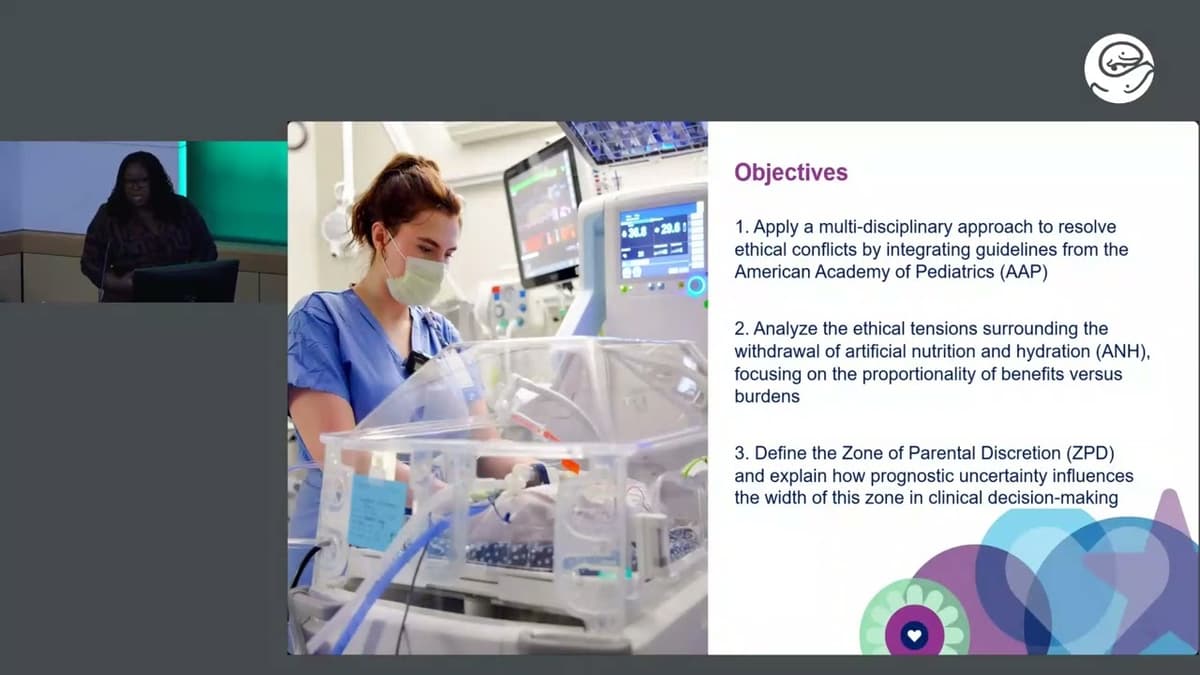
Benefits, Burdens, and Beliefs: The Ethics of Forgoing Pediatric Nutrition and Hydration
The ethics grand rounds examined the dilemma of withdrawing artificial nutrition and hydration in a pre‑term infant, Namir, who suffered severe hypoxic‑ischemic injury. Beth, his mother, after months of intensive care, requested redirection of treatment, prompting a formal ethics...
By Seattle Children’s