Video•Feb 25, 2026
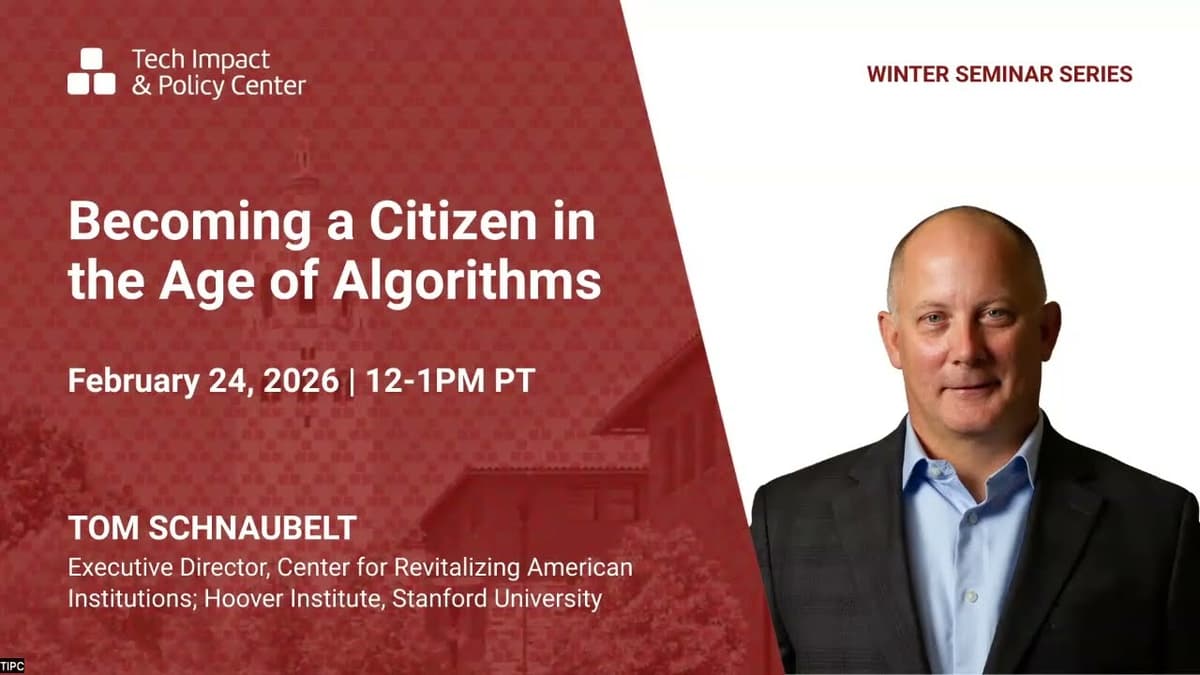
Tom Schnaubelt | Becoming a Citizen in the Age of Algorithms
Tom Schnaubelt, director of the Center for Revitalizing American Institutions, addressed Stanford’s Tech Impact and Policy Center on what it means to be a citizen when algorithms dominate information flows. He framed the discussion around democratic citizenship, civic identity, and the urgent need to rebuild trust in American institutions.
Schnaubelt highlighted three interlocking challenges: the corrosive effect of social‑media algorithms on mental health and political polarization; AI’s uneven impact on civic education, where affluent schools use it for creativity while under‑resourced schools become passive consumers; and a growing reluctance among teachers to tackle controversial civic topics, driven by fear of community pushback.
He illustrated these points with vivid examples—a dinner‑party query about Japanese MLB players answered instantly by AI, underscoring the gap between information retrieval and wisdom; classical definitions of wisdom from Aristotle, Plato and Kant to stress moral self‑awareness; and survey data showing 75 % of civic educators avoid contentious subjects, with 71 % citing parental pressure. A personal anecdote about leading a student‑run fire‑policy project in the Rincon Mountains served as a model of experiential civic identity formation.
The talk concluded that algorithmic tools can be repurposed to foster inclusive civic engagement if they are paired with inquiry‑based pedagogy and cross‑ideological dialogue. Policymakers, educators, and civil‑society groups must prioritize equitable AI access, protect teachers’ curricular autonomy, and embed the core commitments of civic identity to safeguard democratic participation in the digital age.
By Stanford Tech Impact and Policy Center (TIP)