Video•Feb 26, 2026
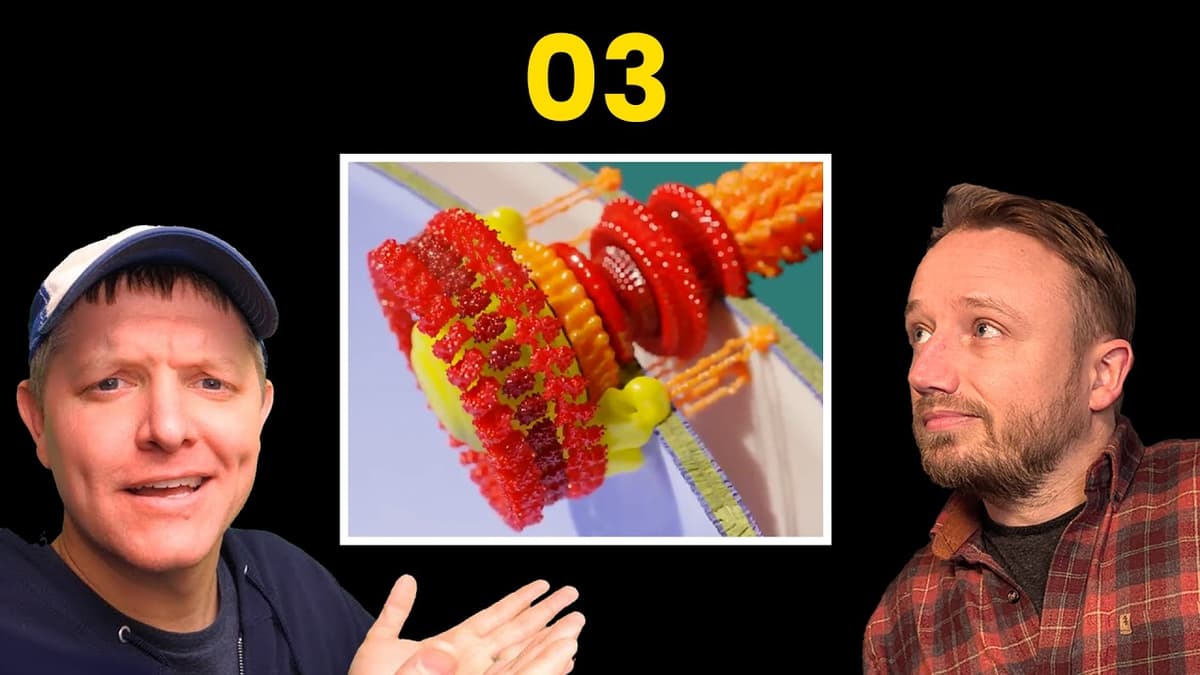
Episode 3: What Good Is Half a Flagellum?
The video “Episode 3: What good is half a flagellum?” explains co‑option, the process by which existing structures acquire new functions, and argues it is essential for understanding the evolution of the bacterial flagellum.
The host illustrates co‑option with dozens of animal and plant examples—frogs swallowing with eyes, Draco lizards extending ribs for display and gliding, turtles respiring through their cloaca, and bee stingers derived from ovipositors. He contrasts this with the “optimization‑only” view and cites Michael Behe’s earlier claim that flagellar parts could not have arisen without pre‑existing functions.
Memorable quotes include “Assume the flagellum first evolved for swimming is like assuming the tongue first evolved for Shakespeare,” and the demonstration that thistle spines are hardened leaf veins. The speaker also debunks anti‑evolution articles that dismiss co‑option as “miraculous,” showing concrete field and laboratory observations.
Recognizing co‑option reshapes how biologists reconstruct ancestral states, warns against oversimplified narratives, and provides a framework for future research on complex molecular machines such as the flagellum.