
Protein Evolution Stated Clearly
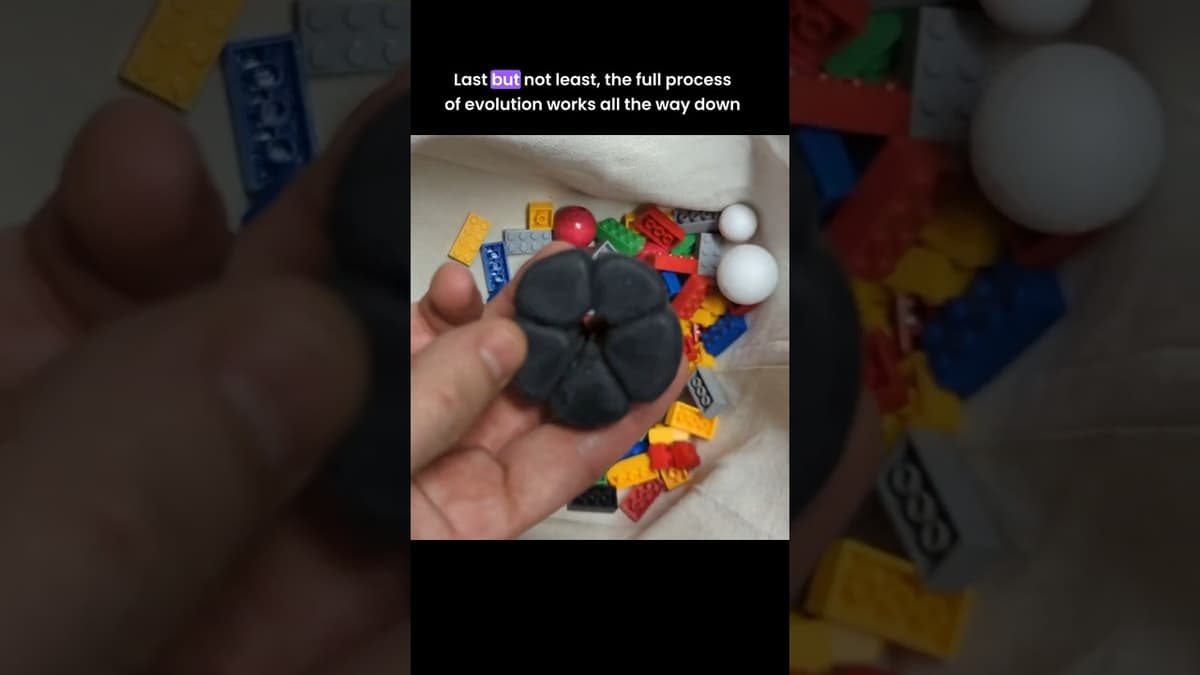
The video distills the central dogma of molecular biology into a concise narrative, describing how a DNA strand serves as a template for a linear chain of amino acids that the cell assembles into a protein. It emphasizes that once synthesized, the polypeptide folds into a three‑dimensional shape whose surface bears a mosaic of positive, negative and neutral charges. Stable regions are reinforced by numerous bonds, while flexible segments can bend, twist, and respond to thermal motion. Brownian motion, the random jiggle of molecules, enables individual proteins to spontaneously associate into larger complexes without external guidance. A striking claim is that “the full process of evolution works all the way down at the level of proteins.” Because proteins readily find partners and self‑assemble, the recruitment of pre‑existing domains into new functional units is far more tractable than reshaping whole organisms. This perspective reshapes how researchers view evolutionary dynamics, suggesting that targeting protein‑level interactions can accelerate synthetic biology, drug discovery, and the engineering of novel biomaterials.

More of Your Flagellum Questions Answered (Halftime Part 2)
John Perry’s halftime Q&A dives deep into evolutionary mechanisms, focusing on the nuanced distinction between co‑option and recruitment. He explains that recruitment is a specialized form of co‑option where separate structures fuse or are repurposed, using bat wings, snake fangs,...

Flagella Evolution 05: Irreducible Complexity Exposed
The video tackles evolution by recruitment – a special form of co‑option where pre‑existing structures are drafted into larger systems – and uses it to dismantle the anti‑evolution claim of irreducible complexity. By revisiting Michael Behe’s 1996 definition and Darwin’s...
Episode 3: What Good Is Half a Flagellum?
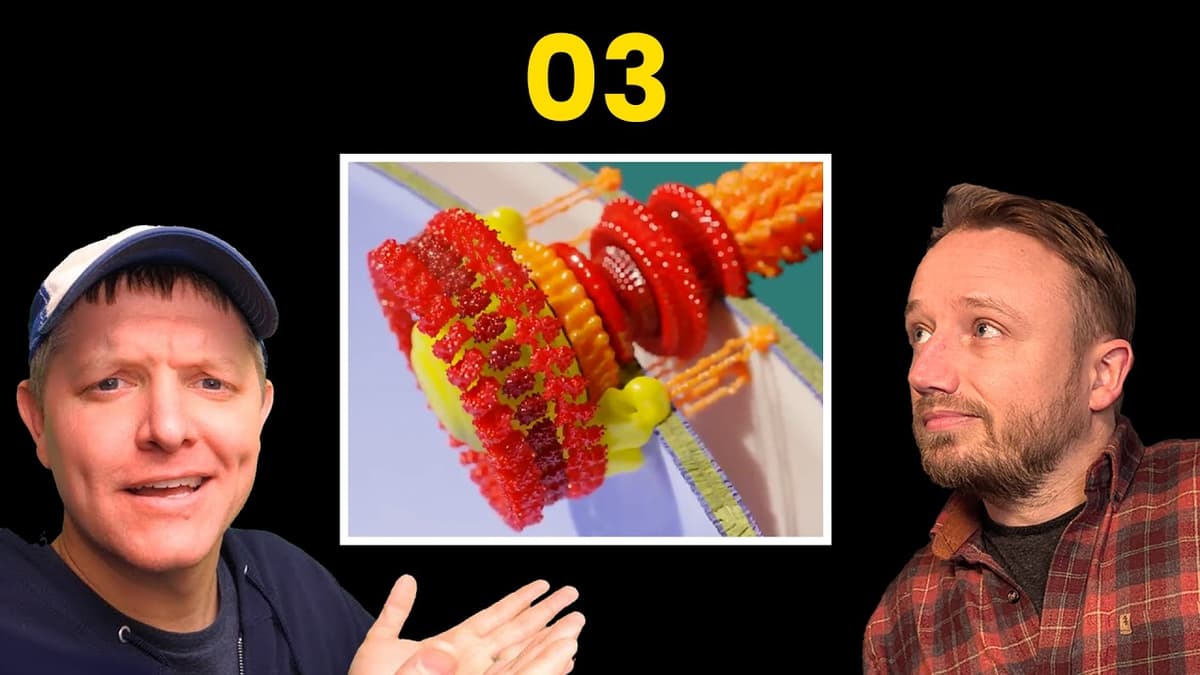
The video “Episode 3: What good is half a flagellum?” explains co‑option, the process by which existing structures acquire new functions, and argues it is essential for understanding the evolution of the bacterial flagellum. The host illustrates co‑option with dozens of...