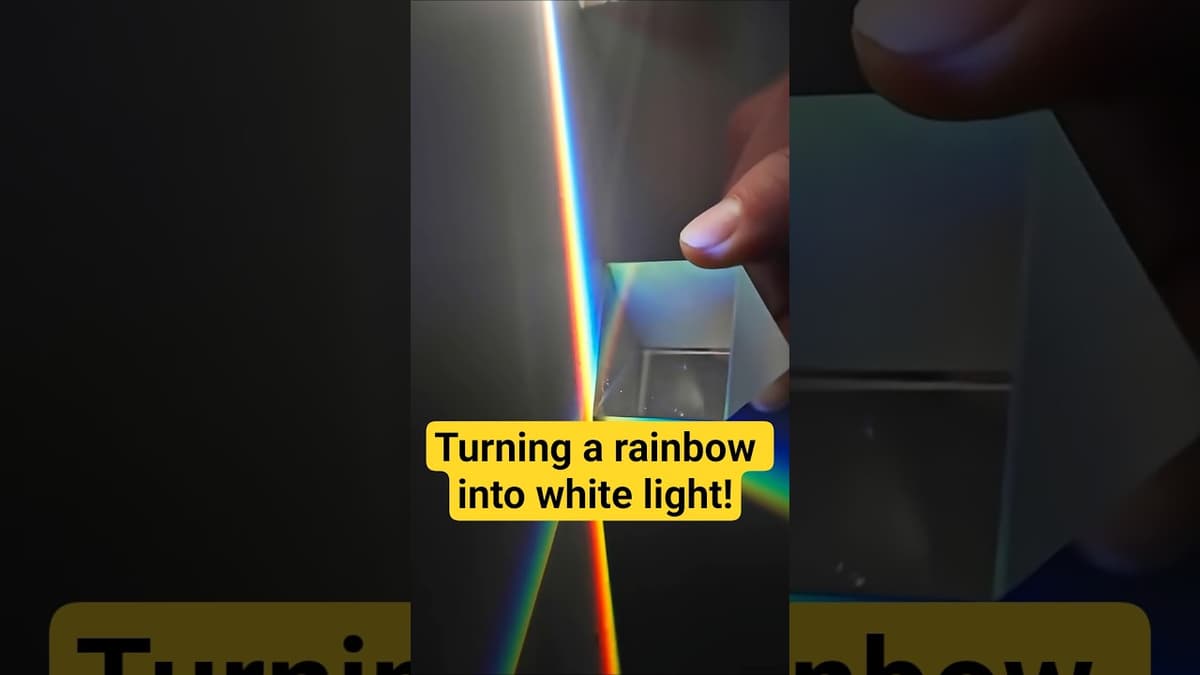
Turning a Rainbow Back Into White Light
The video explores whether a dispersed rainbow can be recombined into a single white‑light beam, replicating and extending Isaac Newton’s classic prism experiments. It shows that simply placing a second, inverted prism after the first does not restore white light because glass dispersion bends each wavelength by a different amount. Blue light bends more than red, leaving a parallel rainbow rather than a unified beam. Consulting Newton’s 1704 *Opticks*, the creator inserts a 75 mm focal‑length convex lens at twice that distance (150 mm) to focus the spectrum to a point. A second prism positioned at this focal spot precisely reverses the initial angular deviation, aligning all colors into a single, collimated white beam. The demonstration confirms that white light is a superposition of colors and illustrates practical methods for spectral recombination, a principle underlying devices such as spectrometers and optical communication systems.
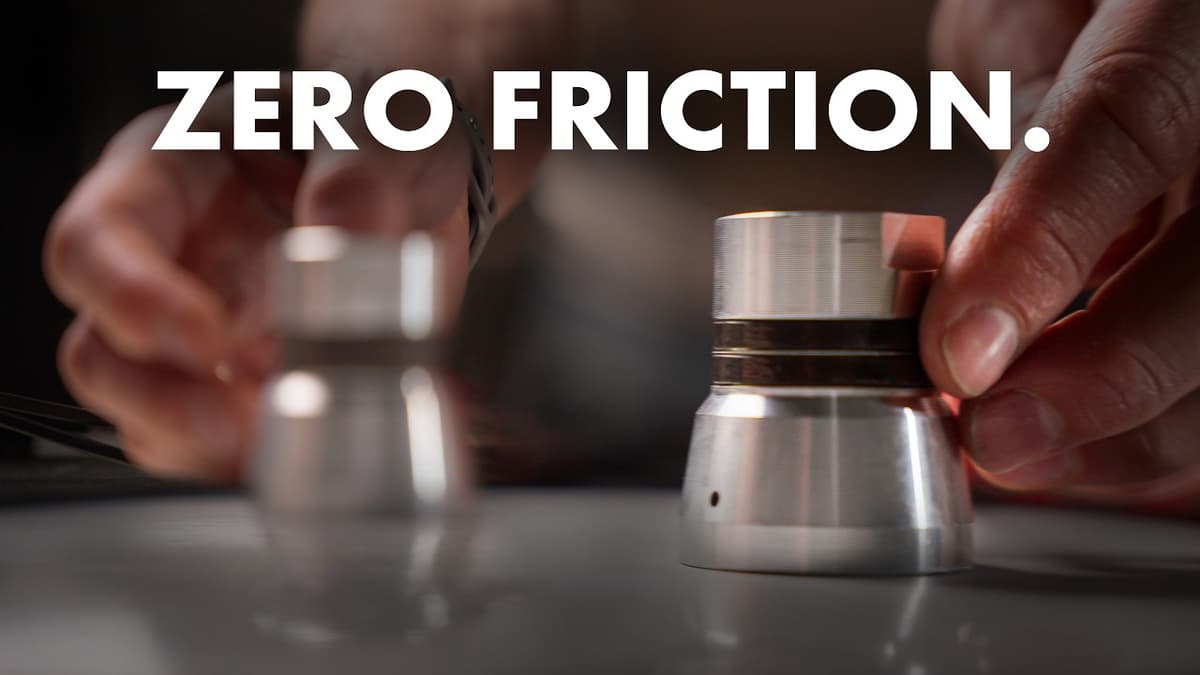
A New Type of Levitation
The video introduces a previously unseen form of ultrasonic levitation that emerged from a torpedo guidance investigation. Engineer Bob Collins noticed a glass lens sliding off an ultrasonic transducer, prompting a deeper look that revealed a levitating micro‑gap when the...