Video•Feb 20, 2026
What Comes After the Interstate Era? | New Report
Strong Towns released a “Mission Accomplished” report urging an end to highway expansion now that the interstate building era is complete. Founder Chuck Marone presented the findings, emphasizing that the nation must shift from constructing new auto‑centric corridors to maintaining and repurposing the existing network.
The organization outlines five priority campaigns—transparent local accounting, safe‑productive streets, parking reform, incremental housing, and the highway‑expansion campaign. Tools such as the Finance Decoder and Crash Analysis Studio have already transformed city‑level budgeting and safety analysis, while the highway‑expansion effort remains the “ugly duckling” lacking a programmatic strategy. A looming deadline for the insolvent Federal Highway Trust Fund spurs a call to reframe federal transportation financing.
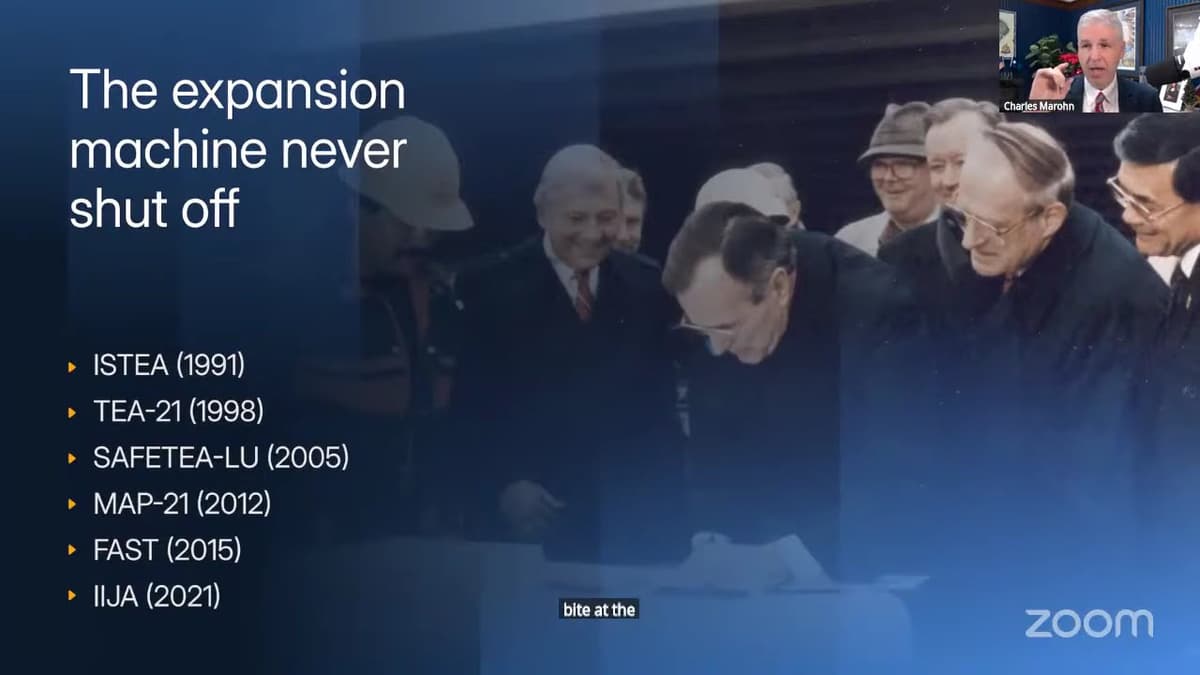
Marone cites New Haven’s multi‑year, grant‑driven street‑safety project as a cautionary example: a dangerous corridor identified in 2022 only secured federal money in 2024, with construction not slated until 2026, highlighting the high cost of victory under the current system. He also traces the interstate system’s origins to the 1930s and Eisenhower’s 1956 act, noting that the original “build‑then‑stop” mission was fulfilled decades ago.
If policymakers adopt Strong Towns’ stewardship model, billions could be redirected toward local road upkeep, safety upgrades, and affordable housing, improving community resilience and fiscal health. The bottom‑up approach aims to empower municipalities to demand a transportation system that delivers reliability, safety, and prosperity rather than endless expansion.