
Recent Posts
Video•Feb 20, 2026
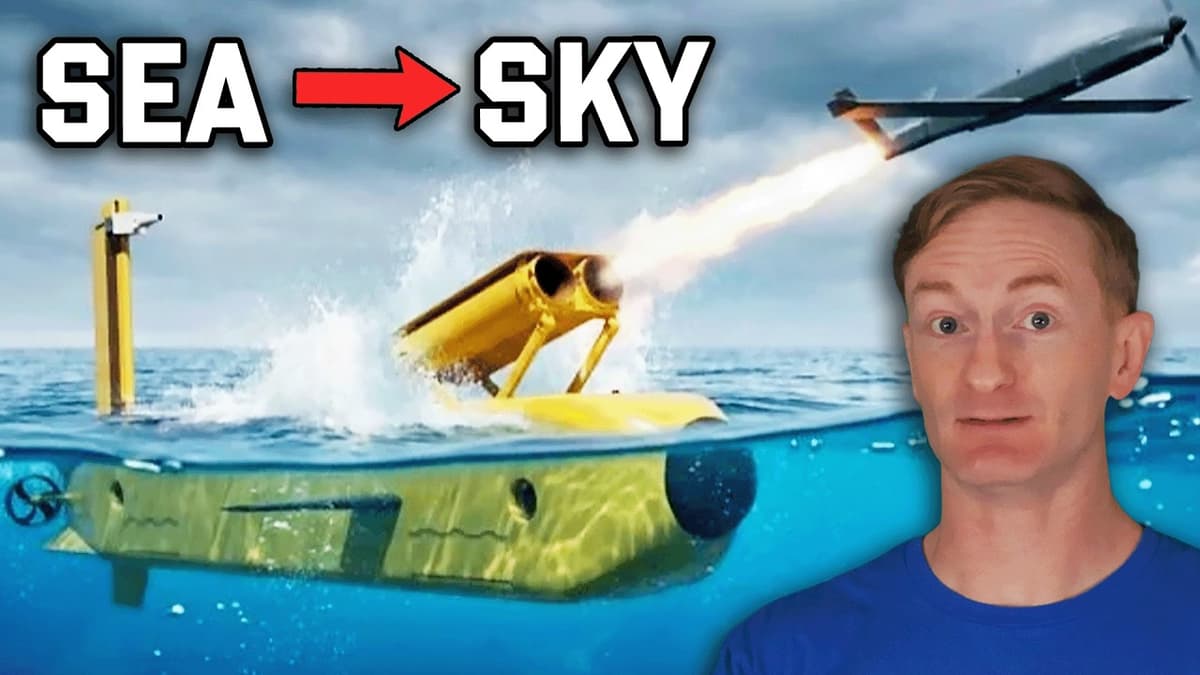
This New Underwater Drone Clings To Ships And Launches Drones
Lockheed Martin unveiled the Lamprey, a multi‑mission autonomous underwater vehicle (MMAV) designed to latch onto surface ships or submarines without any host modifications. Dubbed after the parasitic lamprey fish, the system can ride to a theater, recharge its batteries using side‑mounted hydrogenerator turbines, and then detach to conduct a range of missions from the ocean floor. The vehicle boasts roughly 24 cubic feet of internal payload space—enough for five standard duffel bags—allowing it to carry undersea drones, short‑range UAVs, torpedoes, decoys, and sensor packages. Its primary roles include persistent seabed surveillance, electronic disruption, and kinetic strike capability, effectively extending a fleet’s eyes and ears while reducing the need for manned submarines on low‑risk tasks. By launching UAVs from a low‑profile platform, Lamprey also offers a novel way to insert aerial assets into contested littoral zones without exposing surface ships or aircraft. Lamprey’s development reflects a broader shift toward “seabed warfare,” where navies aim to monitor and protect critical undersea infrastructure such as fiber‑optic cables and power pipelines. Initiatives like NATO’s Baltic Sentry and the EU’s Black Sea maritime hub underscore the strategic importance of these assets, while China’s so‑called “Great Undersea Wall” illustrates the emerging adversarial threat. Lamprey sits alongside other UUV programs—DARPA’s long‑duration Manta Ray, Boeing’s Orca XL, and torpedo‑tube‑launched drones—highlighting a competitive race to field autonomous, energy‑harvesting platforms. If adopted, Lamprey could help the U.S. Navy mitigate its undersea capacity shortfall, providing distributed, low‑cost presence that complicates enemy detection and targeting. However, challenges remain: reliable underwater communication, autonomous decision‑making, and the uncertain procurement path for a self‑funded prototype. Successful integration would signal a new paradigm where fleets rely on swarms of smart, hitchhiking drones to safeguard critical maritime infrastructure and maintain sea‑control without proliferating expensive submarines.
By Task & Purpose

Video•Feb 17, 2026
Why Did The Pentagon Try To Kill The E-7 Wedgetail?
The video examines why the Pentagon moved to cancel the purchase of the Boeing E‑7 Wedgetail, the planned successor to the aging E‑3 AWACS fleet, and how that decision was later overturned. It outlines the critical role of airborne early‑warning...
By Task & Purpose

Video•Feb 12, 2026
Marine Helicopters Can Now Hit Targets 200+ Miles Away
The Marine Corps unveiled the Red Wolf missile, a precision‑strike munition that can be launched from helicopters and other vertical‑take‑off platforms, delivering a strike capability beyond 200 miles. At roughly $300,000 per unit, the weapon offers a cost‑effective alternative to traditional...
By Task & Purpose