5G & AI Native 6G PDSCH Chain and AIML in Phy Layer
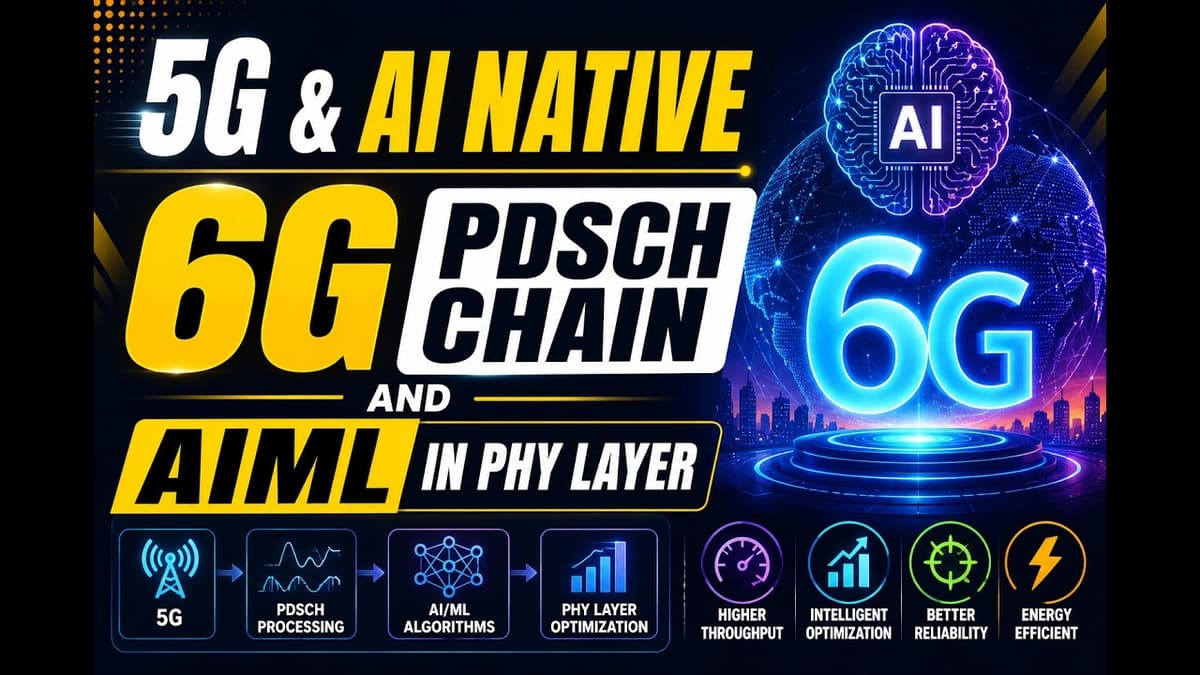
The video walks through the transformation of the physical‑layer digital signal processing (DSP) chain across three generations of mobile radio—4G LTE, 5G NR, and the emerging 6G vision. It frames the discussion around the PDSCH pipeline and how each generation redefines the role of the DSP block. In 4G the DSP is a fixed‑point processor that executes static algorithms for channel estimation, OFDM demodulation, coding and MIMO processing. 5G upgrades this to an adaptive DSP that employs LMS, Kalman‑type filters, and early‑stage machine‑learning tricks to track fast‑varying channels, perform interference cancellation, and support massive MIMO beamforming. The speaker emphasizes that these adaptive techniques already blend rule‑based signal processing with data‑driven adjustments. The 6G outlook shifts to an AI‑native architecture where learned models are embedded inside the traditional DSP flow. Examples cited include auto‑encoders that redesign QAM constellations, neural receivers that replace fixed equalizers, and AI‑driven waveform selection among OFDM, OTFS, and GFDM. The presenter also explains why CNNs, RNNs or transformers are unsuitable for certain low‑latency tasks, highlighting model‑fit as a key design decision. If realized, AI‑enhanced DSP could continuously retrain on live traffic, delivering higher spectral efficiency, lower power consumption, and self‑healing capabilities. However, the transition raises challenges in data collection, real‑time training, and deployment on ASICs, FPGAs or GPUs. Operators and chip makers must therefore invest in end‑to‑end pipelines that marry telecom standards with scalable machine‑learning infrastructure.
5G-NR Physical Channel Explained | Downlink & Uplink Channels |Techlteworld
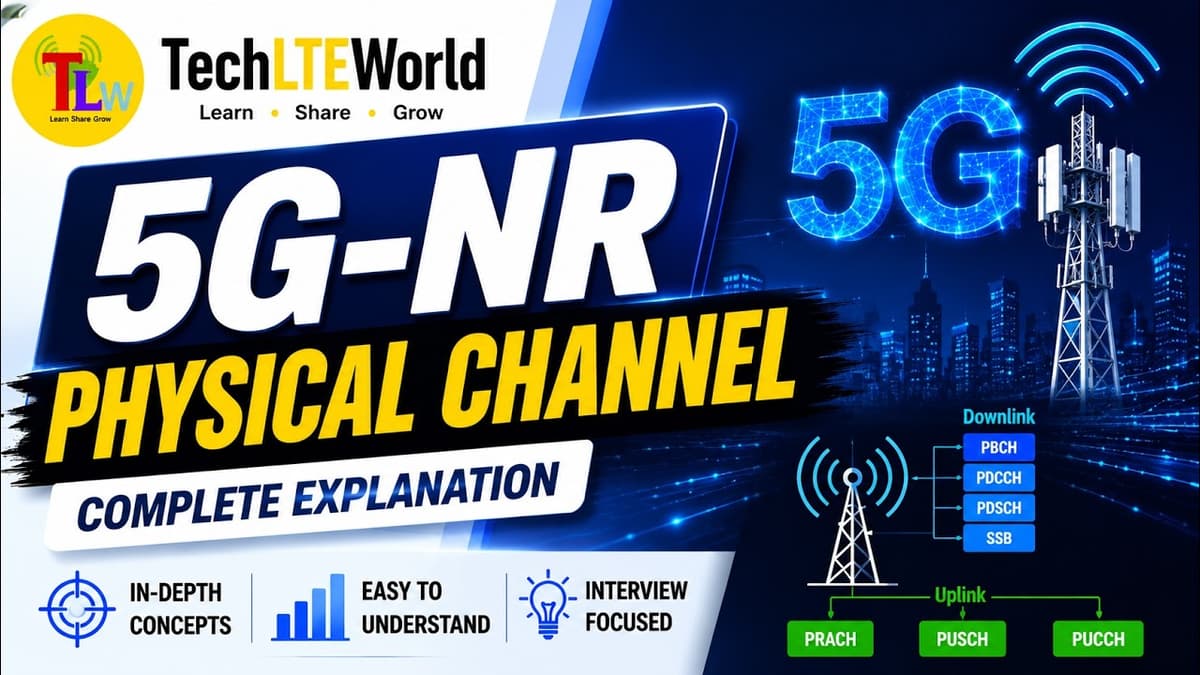
The video walks through the complete 5G‑NR physical channel layout, starting with the 10 ms radio frame that is divided into ten 1 ms subframes. Each subframe contains a variable number of slots depending on the chosen numerology, and the resource grid...
Simple Understanding of 3GPP Specification for 5G-NR
The video provides a systematic overview of the 3GPP specifications that constitute the 5G‑NR protocol stack, spanning from the physical layer up through control and signaling layers, and underscores their relevance for engineers, researchers, and implementers. Key PHY documents—38.201, 38.211, 38.212,...
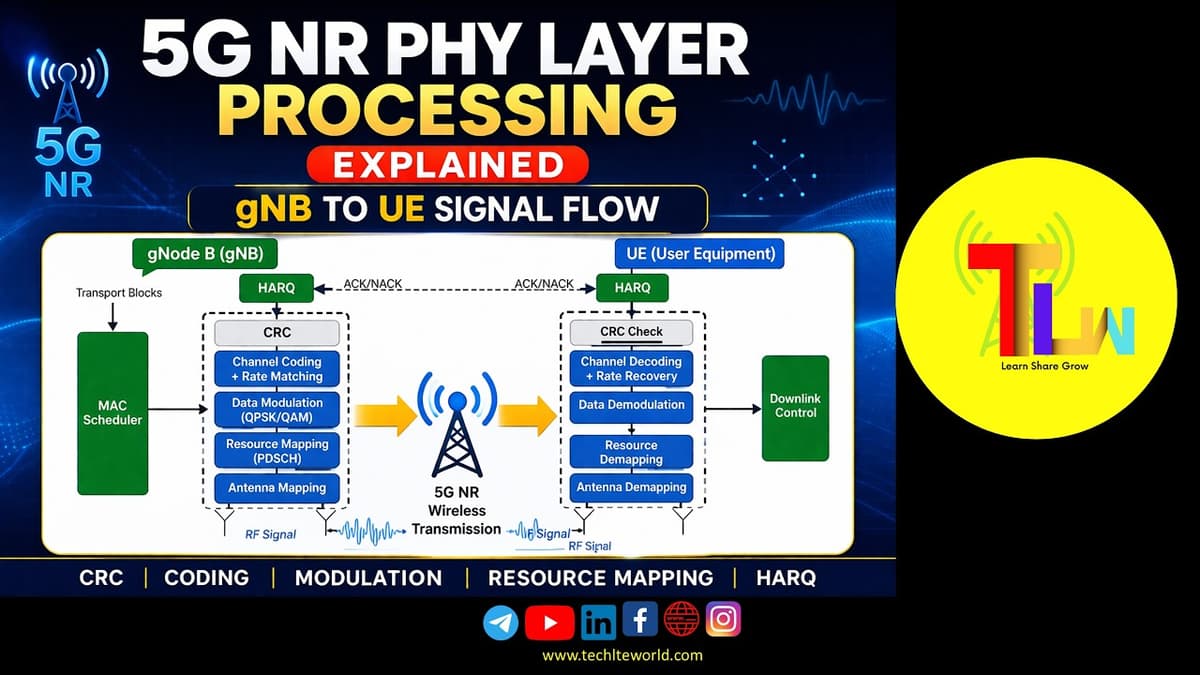
5G NR PHY Layer Processing Explained | gNB to UE Signal Flow
The video provides a detailed walkthrough of the 5G NR physical layer, tracing the signal flow from the gNB’s MAC scheduler through to the UE’s receiver chain. It outlines how the MAC scheduler assigns logical transport channels to specific time‑frequency...
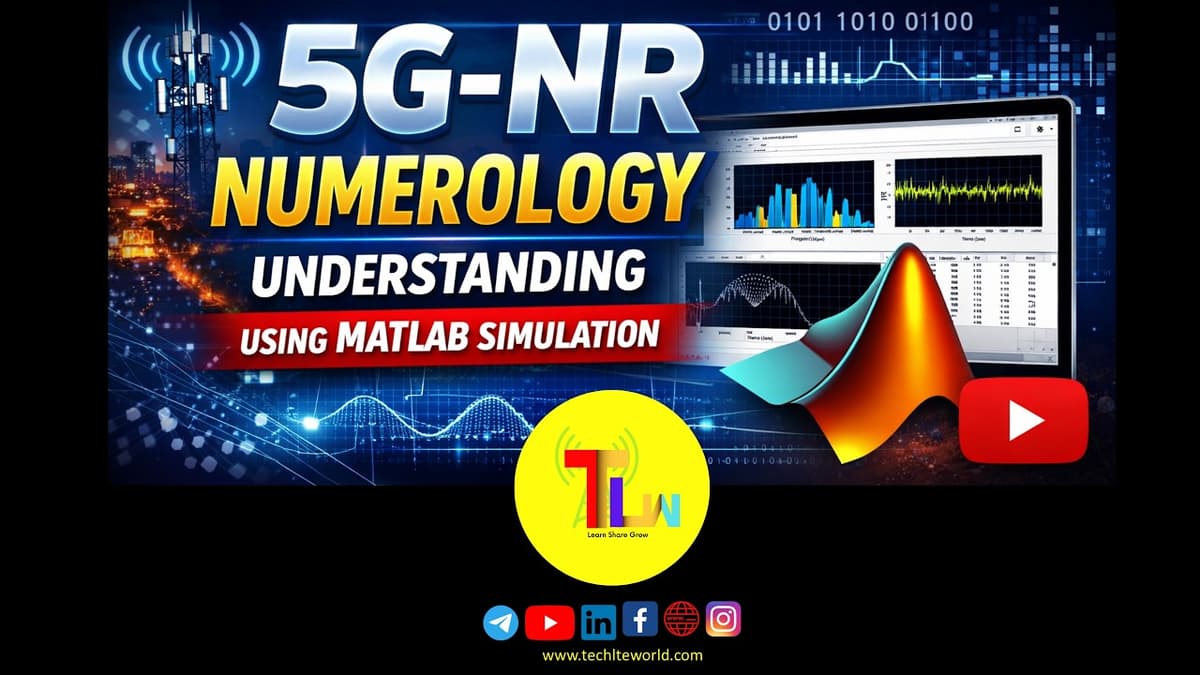
5G-NR Numerlogy Understanding Using MATLAB Simulation
The video walks through a MATLAB script that animates the 5G‑NR numerology, illustrating how the parameter μ (0‑4) determines subcarrier spacing and slot configuration. By defining an animate5GNRframeMu function, the code visualizes the transition from 15 kHz up to 240 kHz spacing,...
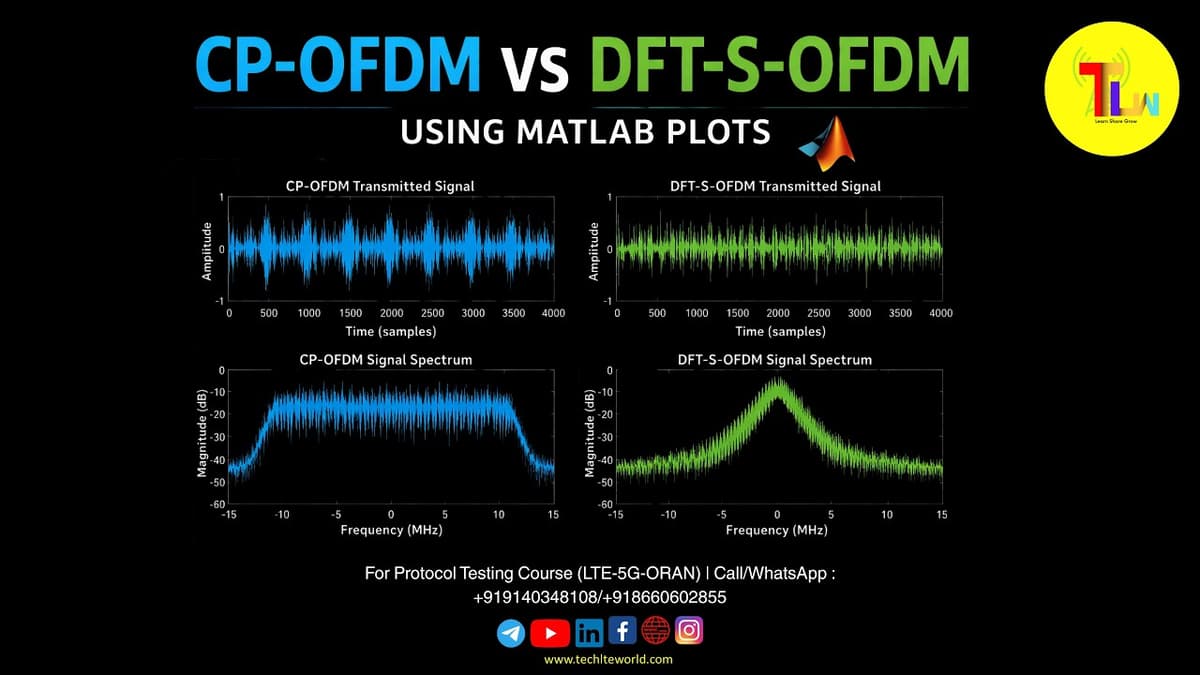
CP-OFDM vs DFT-S-OFDM Using MTALAB Plots
The video walks through a MATLAB‑based comparison of two orthogonal‑frequency‑division multiplexing (OFDM) variants used in 5G New Radio: cyclic‑prefix OFDM (CP‑OFDM) for the downlink and DFT‑spread OFDM (DFT‑S‑OFDM) for the uplink. It outlines each scheme’s processing chain, highlighting that CP‑OFDM...

TPC (Transmit Power Control) In-Depth Understanding
The video explains the Transmit Power Control (TPC) command, a 5G uplink mechanism that lets the gNodeB tell a UE how much transmission power to use, primarily to extend battery life. TPC operates within the broader uplink power‑control framework, which includes...