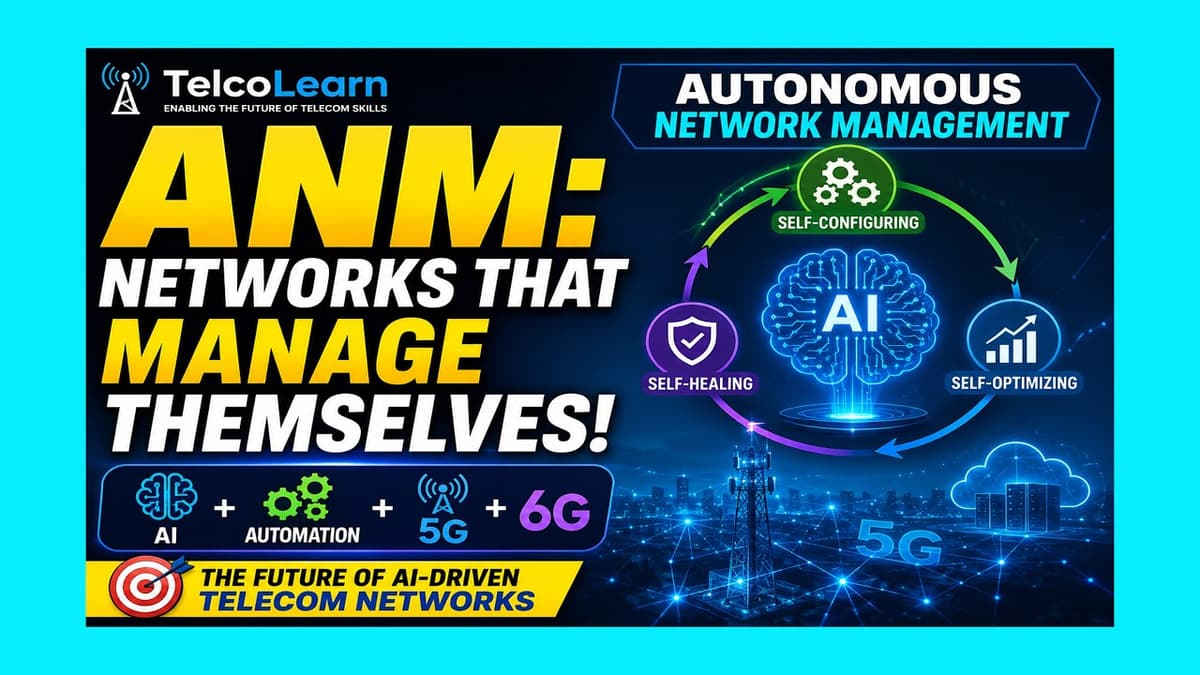
Autonomous Network Management (ANM) | The Future of AI-Driven Telecom Networks by TelcoLearn
TelcoLearn’s Autonomous Network Management (ANM) platform reimagines the traditional network operations center by embedding AI agents that continuously monitor the radio access network (RAN), core functions, and transport infrastructure. Instead of engineers manually sifting through thousands of alarms, the AI automatically correlates events, suppresses duplicates, and presents a concise incident view, turning raw alerts into actionable insights. The demo highlights several core capabilities: dynamic, per‑cell baselines that flag anomalies before static thresholds are breached; autosuppression that eliminates false‑positive noise; predictive maintenance that warns weeks ahead of fiber or microwave failures; and proactive scaling of cloud‑native functions such as UPF pods ahead of traffic spikes like a major sporting event. Configuration‑drift monitoring continuously compares live settings against a golden baseline, surfacing hidden issues that would otherwise escape alarm systems. Real‑time simulations illustrate the platform in action. A simulated fiber cut triggers the transport agent to locate the fault, correlate upstream/downstream alarms, and execute corrective steps, restoring service. In a core signaling‑storm scenario, the AI detects abnormal NAS signaling rates, throttles offending devices, and auto‑scales the AMF, stabilizing CPU utilization. Throughout, an activity log provides transparent, timestamped audit trails for every AI decision. For operators, the promise is a phased shift from reactive troubleshooting to proactive, autonomous remediation. By starting with monitoring and recommendation modes and gradually expanding to low‑risk automated actions, telcos can build trust while reducing mean‑time‑to‑resolve, operational expenditures, and customer churn. Those that adopt within the next 12‑18 months stand to gain a measurable competitive edge over peers still reliant on manual NOC processes.
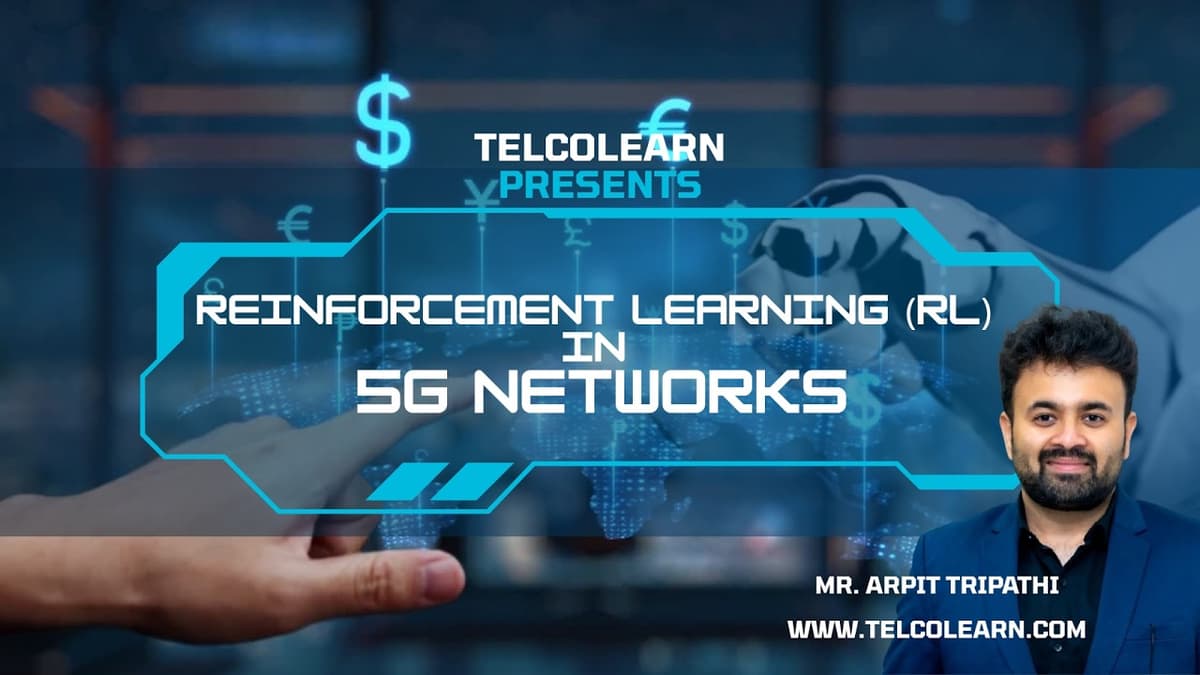
Reinforcement Learning for 5G: Resource Allocation & Handover Optimization Explained | TelcoLearn
The video showcases how reinforcement learning (RL) can tackle two core 5G challenges: dynamic radio‑resource allocation across the three service slices (eMBB, URLLC, mMTC) and intelligent handover decisions for mobile users. Using a Deep Q‑Network (DQN) to allocate PRBs and...

5G Network Slicing with K-Means Clustering | AI in Telecom | Telecom | Network Slicing
The video walks through a Python notebook that uses K‑means clustering to separate 5G network slices—enhanced mobile broadband (eMBB), ultra‑reliable low‑latency communications (URLLC) and massive machine‑type communications (mMTC)—from a 5,000‑sample dataset. After importing pandas, NumPy and scikit‑learn, the presenter cleans the...

Webinar: Security Analysis of Critical 5G Interface | 5G Security | Telecom Security | TelcoLearn
The webinar, hosted by Telan’s Sanjay Kumar and delivered by telecom researcher Arpit, examined why 5G interface security must move from an optional add‑on to a built‑in requirement. It traced the evolution of 5G’s service‑based architecture, highlighted the critical...
TelcoCloud Engineering – Free Live Demo | Learn 5G Core, Kubernetes & NFV Hands-On | TelcoLearn
TelcoLearn unveiled an eight‑week “Telco Cloud Engineering” bootcamp starting February 21, aimed at telecom professionals and aspiring engineers. The weekend program, taught by veteran telecom expert Sanjakumar and researcher Arpit, promises hands‑on experience with Linux, Python, Git, CI/CD, Kubernetes, Docker, and...

How AI Is Transforming Telecom Networks? | AI in Telecom Live Demo | TelcoLearn
TelcoLearn announced an eight‑week, cloud‑based AI and ML in Telecom course designed to equip engineers, managers, and students with practical skills for deploying artificial‑intelligence solutions across modern telecom networks. The syllabus begins with 5G fundamentals and KPI basics, then moves through...