
The Action Lab
Fun science experiment channel where the host tests science concepts with DIY setups. The channel has explored nano-related phenomena (such as superhydrophobic surfaces, ferrofluids, or other material tricks) in an entertaining way, while still explaining the science behind them.
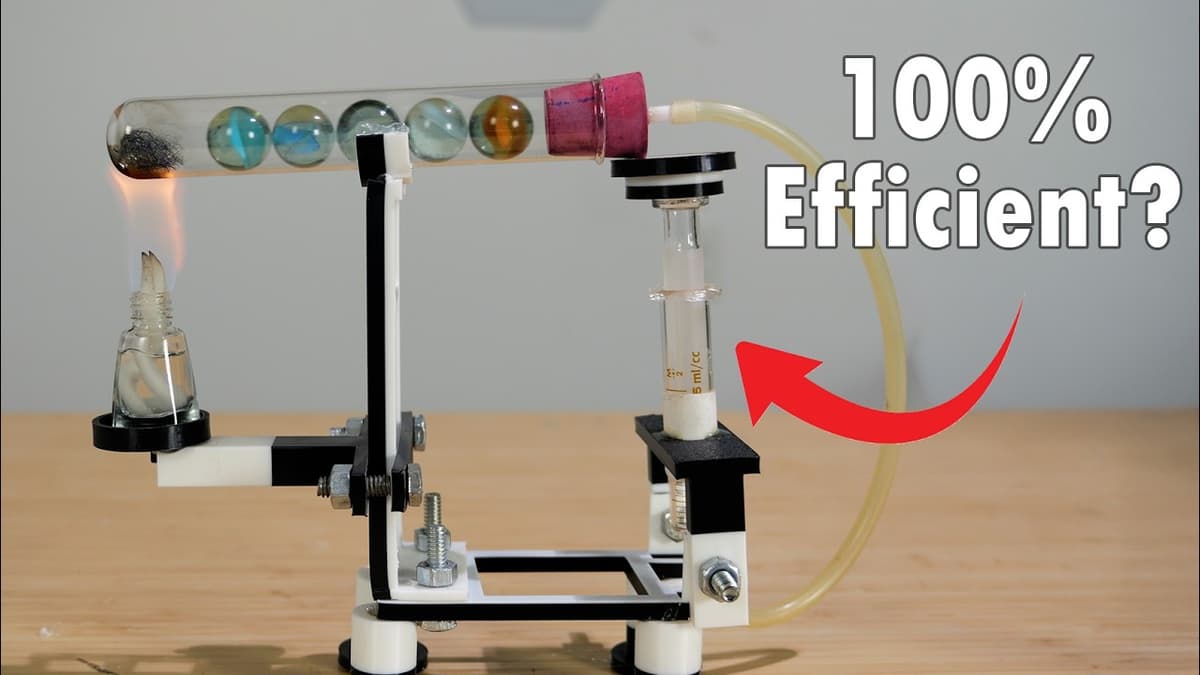
This Tiny Engine Explains Entropy
The video uses a marble‑filled test tube and a Stirling engine to illustrate how heat—an inherently disordered form of energy—can be turned into organized mechanical work. By heating one side of the tube, the air expands, pushes a piston, and the cycle repeats, demonstrating a simple heat engine. The narrator explains that the maximum work obtainable from a hot‑to‑cold heat flow is set by the Carnot efficiency, η = 1 − Tc/Th, not by friction or engineering flaws. A numerical example (573 K hot, 373 K cold) yields only 35 % of the input heat as useful work, underscoring that entropy creation fundamentally limits performance. Key quotes include “entropy is the enemy of work” and a description of Carnot’s idealized engine that creates zero entropy yet still obeys the same efficiency bound. The marble experiment, the Stirling engine’s reliance on temperature differentials, and the comparison to electric motors clarify why some devices appear near‑perfectly efficient while the underlying energy conversion remains constrained. For industry, the lesson is clear: improving temperature differentials or reducing entropy generation is the only path to higher conversion efficiency. This principle guides the design of power‑dense chargers, automotive engines, and thermoelectric systems, where incremental gains must respect the immutable Carnot ceiling.
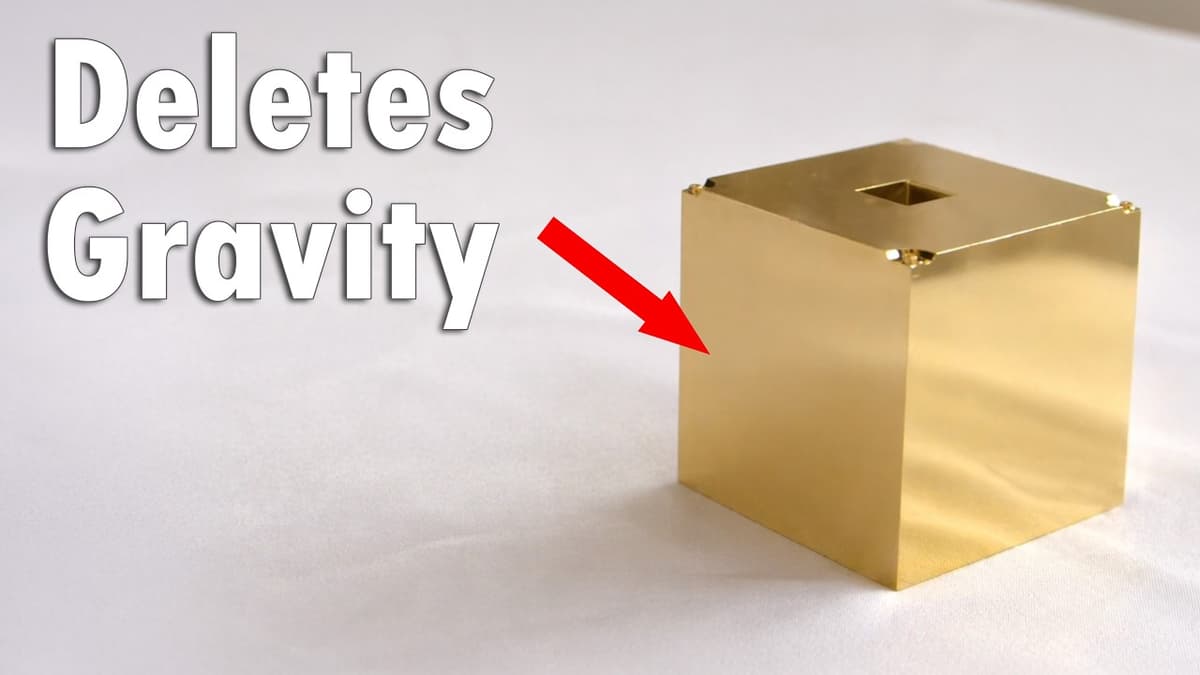
How To Eliminate Gravity
The video explores what true zero‑g really means, debunking the common notion that free‑fall alone creates weightlessness. Using a feather‑drop experiment and an accelerometer, the host shows that as soon as an object loses contact with a solid surface it...

The Hourglass Paradox Nobody Agrees On
The video tackles a long‑standing physics puzzle: does an hourglass’s weight change while sand is flowing? The presenter outlines three competing arguments—weight loss from sand in free fall, weight gain from impact forces, and a net increase from momentum change—and...

The Weird Physics of Surface Tension Shock Waves
The video explores how surface‑tension‑driven Marangoni waves can reproduce the physics of supersonic shock waves, a phenomenon recently visualized by NASA using background‑oriented imaging of a real‑time shock from a supersonic aircraft. By replacing air‑borne sound speed with the much...