
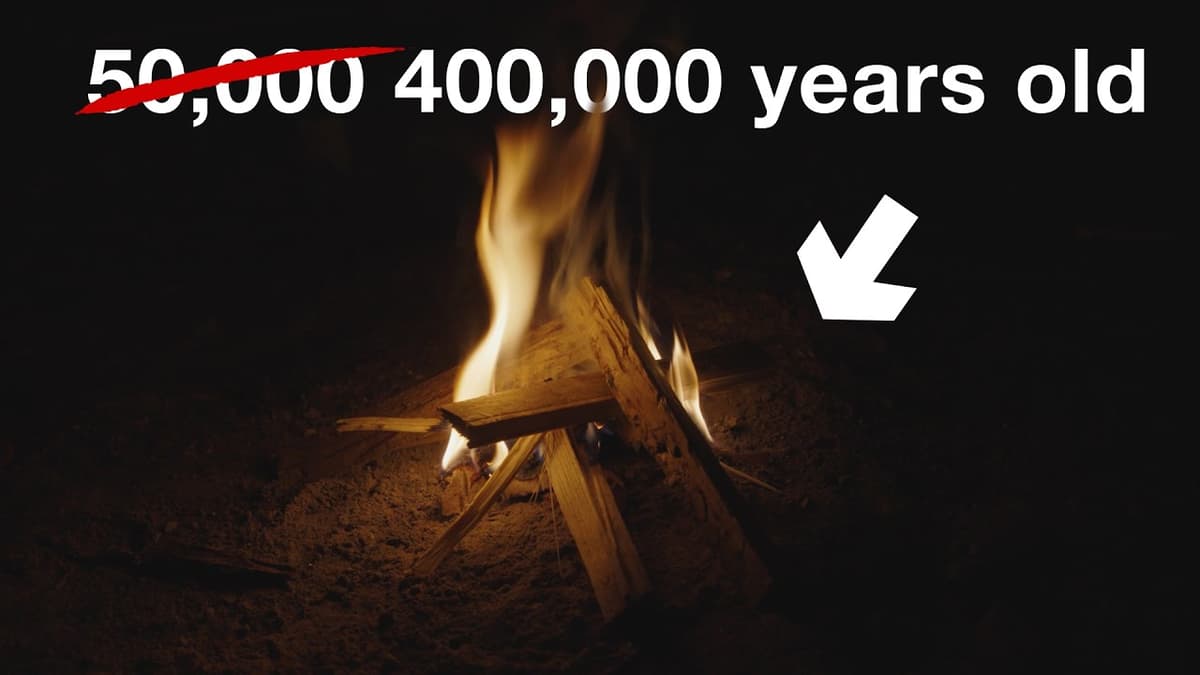
Discovering the Earliest Evidence of Human-Made Fire
Archaeologists led by researchers at the University of Liverpool have uncovered the earliest known evidence of controlled fire, pushing the timeline back to roughly 400,000 years ago—far earlier than the previous 50,000‑year benchmark. The discovery was made at a Middle Pleistocene site where burnt bone fragments, charcoal, heat‑altered sediments, magnetic signatures, and hydrocarbon residues collectively confirm human‑made hearths. Advanced magnetometry and chemical analyses were used to differentiate natural fires from deliberate combustion. This finding reshapes our understanding of when hominins first mastered fire and its role in cultural evolution.

The Side of Samurai You Haven't Seen | Curators' Tour of the Samurai Exhibition
The British Museum’s “Curators’ Tour of the Samurai” exhibition reframes the iconic warrior, showing that the popular image of sword‑wielding samurai is a later myth. It traces the class from its birth as mercenary mounted archers in the Heian period...

Curators' Tour of Hawai'i: A Kingdom Crossing Oceans | British Museum Exhibition
The British Museum has opened “Hawai‘i: a kingdom crossing oceans,” a landmark exhibition that traces the archipelago’s pre‑colonial societies, its 19th‑century diplomatic overtures to the United Kingdom, and the contemporary resurgence of Native Hawaiian art. Curated alongside Hawaiian knowledge‑bearers, the show...