

The IPO Process Favors Banks | Bill Gurley
Bill Gurley takes aim at the traditional IPO model, arguing that it is fundamentally skewed toward investment banks. He contends that banks dictate the offering price and hand‑pick the initial shareholder base, creating a closed system that benefits a narrow elite rather than the issuing company or the broader market. Gurley points to direct listings as a viable alternative that employs a pure auction mechanism. In such a format, supply and demand meet anonymously, allowing the market to set the price without banker interference. He suggests that Wall Street’s resistance stems from a desire to preserve lucrative underwriting fees and control over the capital‑raising process. Key excerpts from the talk include, “It is insanely unfair to the companies… they cherry‑pick your best customers and give them a sweetheart price,” and “Wall Street can’t let go of this greedy power grab.” These remarks underscore his view that the current system is an oligopoly designed to extract maximum profit. If the industry were to adopt auction‑based listings more broadly, startups could lower issuance costs, broaden investor participation, and achieve more accurate valuations. The shift would also pressure banks to reinvent their advisory roles, potentially reshaping the IPO landscape for the next generation of tech firms.

OpenAI's Greg Brockman: There Will Be Data Centers Everywhere
Greg Brockman, co‑founder of OpenAI, outlined a bold vision that data centers will become omnipresent – from remote deserts to orbit – to satisfy the exploding demand for artificial‑intelligence compute. He framed the expansion as a strategic advantage for both...

Harvey CEO: What I Wish I Knew Earlier
In a candid interview, Harvey’s chief executive distills the three biggest lessons he’s learned while scaling his company. First, a superior product cannot be compensated for by aggressive sales tactics; the CEO stresses that founders must devote the bulk of their...

Stop Trying to Be Disciplined. Do This Instead! | James Clear
The video argues that chasing discipline is misguided; lasting habit change stems from identity, not sheer willpower. Each tiny action serves as a "vote" toward the person you want to become, reinforcing self‑image and making habits easier to maintain. Clear stresses...
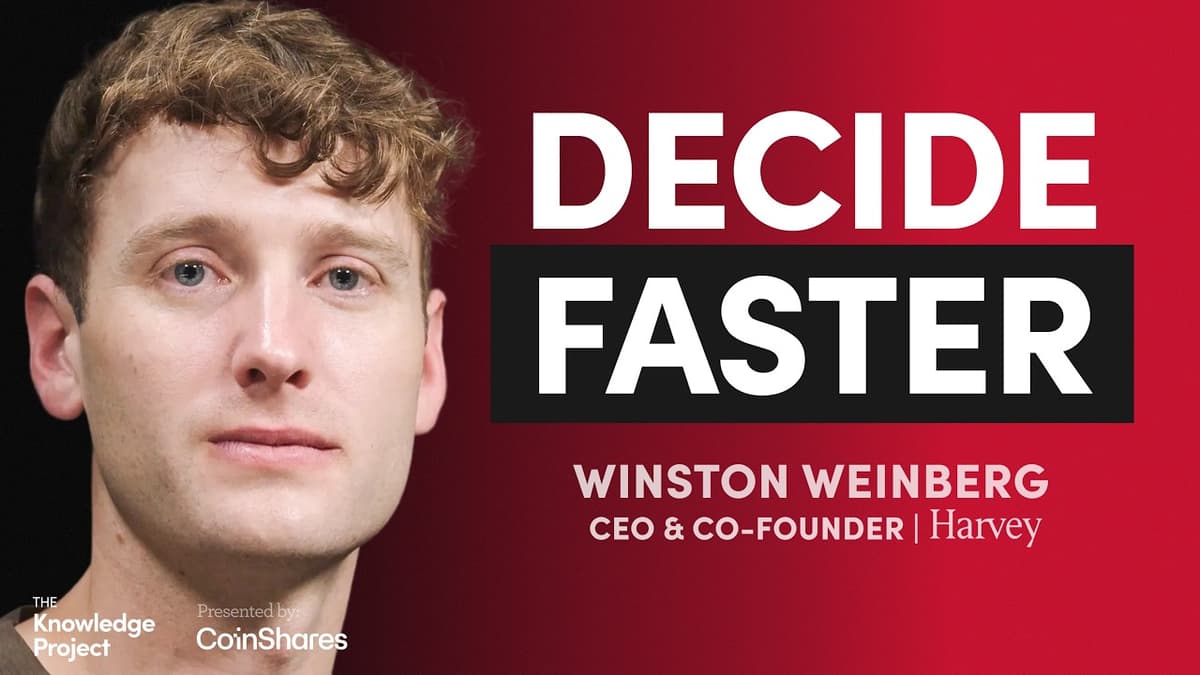
Harvey CEO: How a 31-Year Old Runs an $11B Company
The video features Harvey’s 31‑year‑old CEO outlining how he runs an $11 billion legal‑tech company. He emphasizes a hyper‑structured decision process: a master Google doc that lists motivational priorities, quarterly goals, and a daily task list that he re‑ranks multiple times...
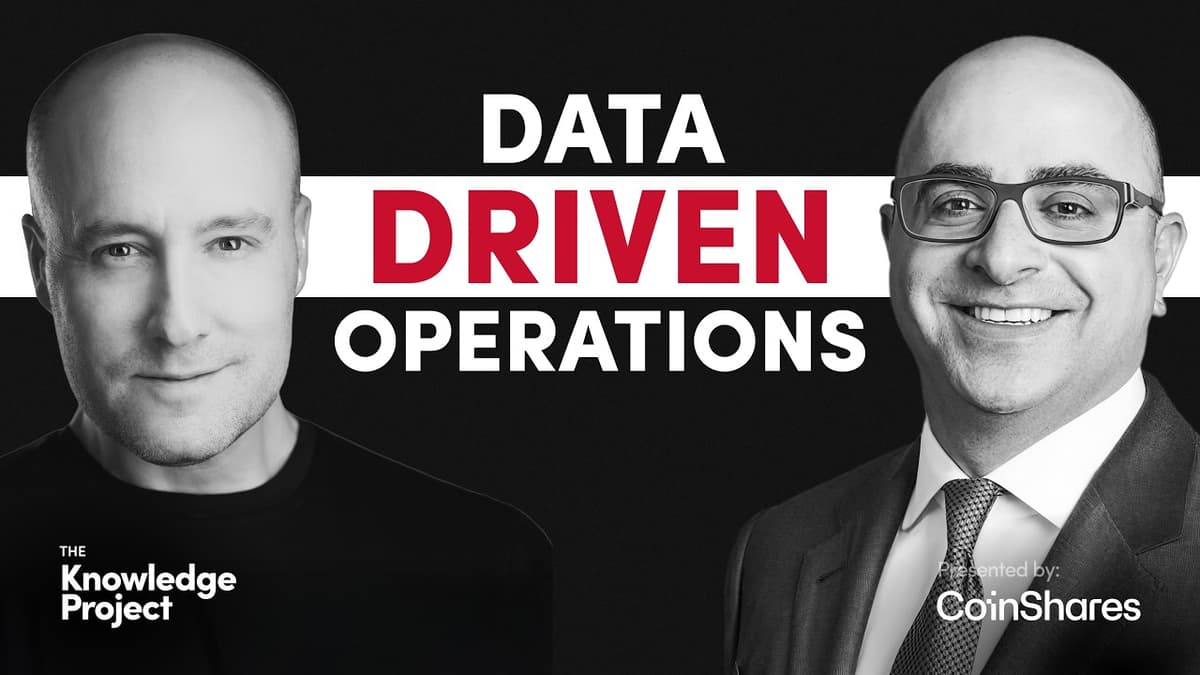
What Mario Harik Learns in Break Rooms That KPIs Miss
Mario Harik explains how his company blends a rigorous KPI framework with on‑the‑ground insights gathered in break rooms to steer daily operations and long‑term strategy. The firm tracks roughly ten core KPIs each day, analyzing both first‑order changes and second‑order slopes...

Alpha School Principal: We Waste 90% of Kids' Time in School | Joe Liemandt
In a candid interview, Alpha School principal Joe Liemandt argues that the conventional American school system wastes up to 90 % of children’s time and is ill‑equipped for an AI‑driven future. He points to declining test scores despite rising expenditures, a structure...

Liquidity Matters Most when You Think You Need It the Least
The video stresses that liquidity’s true value flips depending on timing, and Brookfield’s strategy centers on maintaining ample cash buffers even when markets appear flush. Management explains they finance operations prudently while deliberately holding excess capital. This reserve protects covenant compliance...

A Hidden Benefit to Hard Work
The video explores how a often‑overlooked aspect of hard work—being consistently available to teammates—can be as valuable as sheer output. The speaker argues that while hard work naturally increases one’s capacity to handle more projects, its hidden benefit lies in the...

Stop Hiding Your CEO Behind a Spokesperson
The video argues that successful startups should let their CEOs speak openly rather than shielding them behind polished spokespeople, likening the dynamic to a cult where the leader’s charisma fuels commitment. By presenting the founder’s vision in the first person,...

Inside Brookfield's Meritocracy, And the 38-Year-Old Running It
The video spotlights Brookfield’s culture of meritocracy, championed by its 38‑year‑old leader, who emphasizes that hiring decisions are based solely on the value an individual can add, not on background, religion, or personal identity. This philosophy underpins the firm’s aggressive...

Brookfield CEO: How They Think About Growth
Brookfield’s chief executive used the interview to articulate a growth philosophy that treats expansion as a question of magnitude rather than feasibility. He emphasized that the firm operates at the forefront of massive investment themes, allowing it to pursue opportunities...
The Most Underrated Skill in an AI World? Listening.
The video argues that listening, not just technical prowess, will be the most underrated yet essential skill in an AI‑infused workplace. While AI automates analysis and execution, human collaboration still hinges on the ability to hear, understand, and empathize with...

Who Actually Takes More Risk? | Nicolai Tangen
The video explores how risk tolerance varies across demographics and investment domains, questioning whether men, younger people, extroverts or Americans truly take more risks than their counterparts. Nicolai Tangen draws on social‑psychology research to illustrate that gender, age, personality traits...

Steve Jobs Understood What Engineers Still Get Wrong | Rory Sutherland
Rory Sutherland argues that Steve Jobs excelled where engineers typically fall short: understanding the broader market context and the emotional pull of design. While engineers obsess over speed, compatibility, and technical specifications, Jobs recognized that products must also serve as...