
Video•Mar 9, 2026
Why Netflix Bought Ben Affleck’s AI Company, and If Hollywood Should Worry
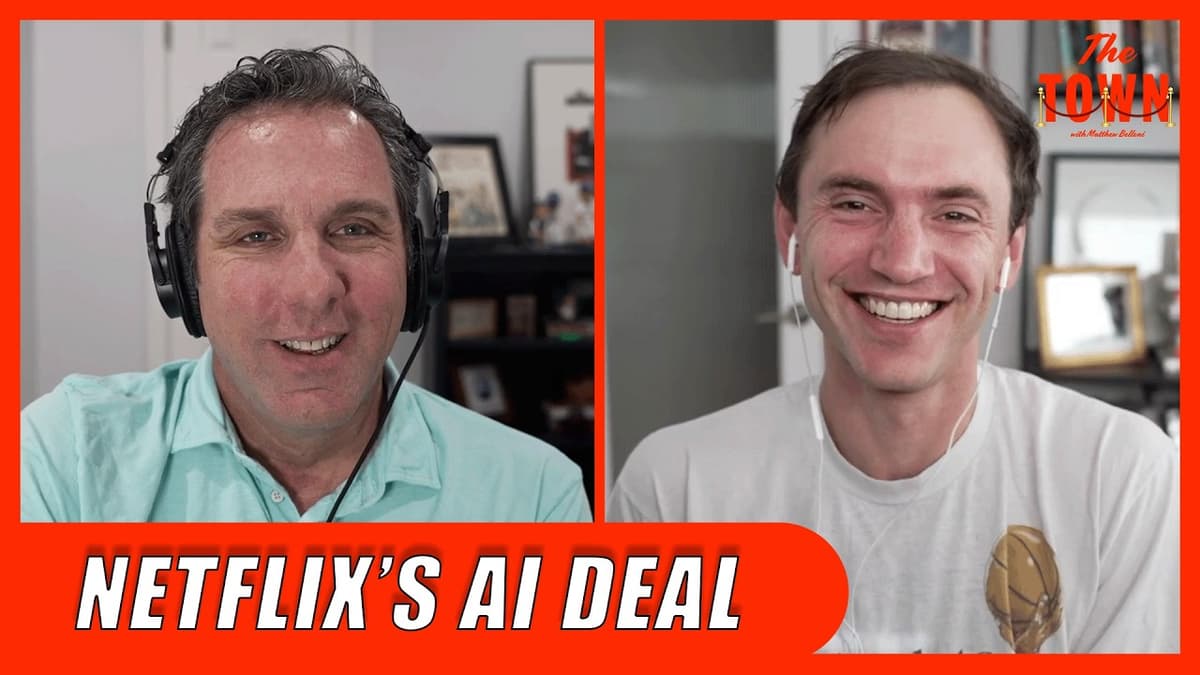
The episode of The Town focuses on Netflix’s recent purchase of Interpositive, the artificial‑intelligence startup founded by actor‑producer Ben Affleck. The acquisition is bundled with a separate agreement granting Netflix exclusive rights to movies produced by Affleck’s Artist Equity banner, signaling a strategic partnership that goes beyond a single technology purchase. Interpositive is not a text‑to‑video generator but a post‑production assistant that ingests dailies and other raw footage, then uses machine‑learning models to fill gaps, streamline visual‑effects work, adjust lighting, and even recreate missed reaction shots. Netflix touts the tool as a way to reduce the high cost of content creation while maintaining or improving quality, echoing similar AI experiments at Amazon, Disney, and Lionsgate. Lucas Shaw of Bloomberg notes that Netflix’s move is a “Trojan horse” – leveraging Affleck’s credibility to soften industry pushback. The studio released a promotional video featuring Affleck explaining how the system can eliminate stunt wires or fix sunset lighting, positioning the technology as a creative aid rather than a job‑killer. The discussion also references broader studio efforts, such as Amazon’s AI division and Disney’s partnership with OpenAI, underscoring a sector‑wide race for efficiency. The deal suggests Netflix is accelerating its AI roadmap, seeking a multi‑year head start on tools that could lower production budgets and increase output flexibility. By aligning with a high‑profile filmmaker, Netflix hopes to mitigate guild concerns and set a precedent for ethical AI adoption in Hollywood, potentially reshaping how studios balance cost, creativity, and labor dynamics.
By The Town with Matt Belloni
Video•Mar 7, 2026
Hollywood Hasn’t Been Quite as Fun for Milennials and Gen Z Compared to Older Generations..
The conversation centers on the turbulence reshaping Hollywood, from HBO’s looming sale to the specter of another industry strike. Participants note that these macro‑level shifts are not abstract headlines; they directly influence how creators negotiate contracts, plan releases, and even...
By The Town with Matt Belloni

Video•Mar 5, 2026
Will David Ellison Keep or Sell the Paramount and Warner Bros. Studio Lots?
David Ellison, chief executive of the Proforma‑owned studio conglomerate, addressed persistent rumors by unequivocally stating that neither the Paramount lot in Hollywood nor the Warner Bros. lot in Burbank will be sold. He emphasized that the companies will retain full...
By The Town with Matt Belloni

Video•Mar 5, 2026
Paramount Board Member Gerry Cardinale on Middle East’s Financial Involvement in the Par-WBD Merger
The video captures Paramount board member Gerry Cardinale fielding questions about the role of Middle‑East sovereign investors in the $24 billion Paramount‑Warner Bros. Discovery merger. Reporters probe whether Saudi, Qatari and Abu Dhabi funds, hinted at in December, remain part of the financing structure...
By The Town with Matt Belloni

Video•Mar 3, 2026
How David Ellison Plans to Mash Two Major Studios Into One
The Town episode examines David Ellison’s blueprint for merging Paramount Global with Warner Bros. Discovery in a proposed $111 billion transaction. Ellison’s leadership team outlined how the combined entity would operate, sparking debate over whether the deal will survive regulatory scrutiny...
By The Town with Matt Belloni

Video•Feb 26, 2026
The Retro Innovation of ‘The Pitt,’ With Lead Producer John Wells
The interview with veteran producer John Wells explores the “retro” business model behind HBO Max’s hit medical drama The Pit. By adopting a 15‑episode, broadcast‑style schedule—unusual for a streaming platform—the series aims to recreate the deep audience connection of 80s‑90s...
By The Town with Matt Belloni
Video•Feb 25, 2026
Should Movie Stars Avoid Making Movies for Streaming?
The video debates whether high‑profile actors should shun streaming‑first movies, questioning the impact on their brand equity. Participants argue that streaming alone does not create stardom and that frequent releases on ubiquitous platforms can dilute a star’s cachet. Key points include...
By The Town with Matt Belloni

Video•Feb 24, 2026
Part 2: Sony Pictures CEO on Marvel’s Decline and Hollywood’s Originality Crisis
In part two of The Town, Sony Pictures chief Tom Rothman talks about the franchise’s future, Marvel’s recent slump and what he calls Hollywood’s originality crisis. Rothman credits the Sony‑Marvel alliance for turning Spider‑Man into a $1.9 billion juggernaut, even after the...
By The Town with Matt Belloni

Video•Feb 24, 2026
Why Sony Passed on Making ‘Sinners’
The video explains why Sony chose not to produce the film “Sinners,” emphasizing the studio’s strategic focus on preserving and expanding its long‑term content library rather than chasing a single, potentially risky release. Executives argue that a studio’s enduring profitability...
By The Town with Matt Belloni