
100 Doors. 35% Returns. Why He's Walking Away.
This episode follows Ray Smith’s dramatic pivot from a 100‑door single‑family portfolio yielding 35% annual returns to a strategic exit and shift into commercial real‑estate. After bankrupting ten properties in 2009, he leveraged a $500 private‑money course, convinced a friend to invest $50,000, and scaled that seed capital into a hundred homes, eventually deciding the residential model’s tenant‑maintenance headaches outweighed its cash flow. Key insights include the power of personal networks for financing, the importance of buying ultra‑cheap post‑crisis assets, and the realization that passive income requires a different financial structure. Ray’s first commercial purchase—a $30,000 office building with attached liens—was rescued by a city program that wiped the debt in exchange for code upgrades, illustrating how creative financing can unlock new asset classes. He also turned a vacant space into a turnkey restaurant, discovering a market gap for ready‑to‑operate venues. Notable moments feature Ray’s candid admission that Section 8 tenants increasingly damaged properties, prompting frustration despite high yields, and his comparison of residential “no‑money‑down” deals to commercial transactions that demand skin‑in‑the‑game and rigorous all‑in‑cost modeling. The discussion of triple‑net (NNN) leases highlights how commercial tenants assume maintenance, reducing landlord headaches and enabling longer, more stable cash flows. For investors, the takeaway is clear: high residential returns can mask scalability limits, while commercial properties—though requiring personal equity and deeper financial analysis—offer more predictable, lower‑maintenance income streams and greater growth potential. Transitioning wisely demands disciplined cash‑flow projections, willingness to invest personal capital, and an understanding of lease structures that shift operational risk to tenants.

Graham Stephan Just Made the Case for Commercial Real Estate
The video opens with a critique of Graham Stephan’s announcement that he will list every Los Angeles rental property he owns, effectively exiting the residential market he built his brand on. Host Tyler Kbble frames the discussion as a deeper look...
Why This Investor Stopped Buying Airbnbs and Built a $20M Hotel Portfolio
The episode follows Michael Russell, co‑founder of Malama Capital, who explains why he moved away from buying individual Airbnbs and instead assembled a $20 million hotel and hostel portfolio. Russell began investing in distressed single‑family homes after the 2008‑09 recession, using hard‑money...

The Beginner's Guide to Commercial Real Estate Investing (Course Trailer)
The video introduces a new online course titled “The Beginner’s Guide to Commercial Real Estate Investing,” presented by veteran investor Tyler Cobble. It positions commercial real‑estate (CRE) investing as a viable wealth‑building path for novices, emphasizing that the right knowledge...
Why I'd Rather Buy an Empty Building Than a Full One Right Now. (Office Hours)
Tyler Cauble argues that the current commercial real‑estate climate makes vacant office buildings a superior investment to fully‑leased properties. With many owners motivated to offload empty assets, buyers can negotiate below‑replacement‑cost prices and secure terms that a leased building cannot...
Underwriting an Auto Garage Conversion (Office Hours)
Tyler Cauble promotes a free online training that teaches investors how to transition from residential to commercial real estate, focusing on underwriting auto‑garage conversions. The session is part of a broader offering called the CRE Accelerator, a paid, step‑by‑step program...
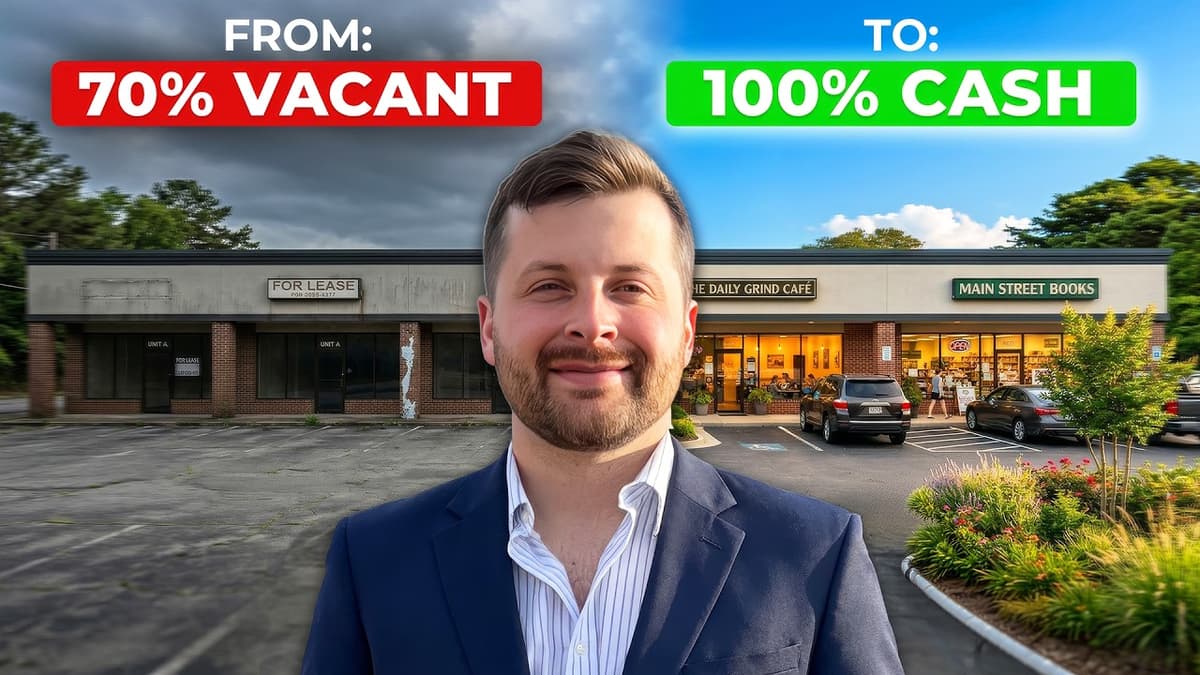
Nobody Wanted This Vacant Warehouse. He Bought It With $0 Down in 45 Days.
The episode chronicles how Matt Barbaccia, a novice commercial real‑estate investor, closed his first deal—a vacant warehouse—in just 45 days with no cash outlay, thanks to 100% seller financing and guidance from Tyler’s CRE Accelerator mastermind. Matt leveraged the...
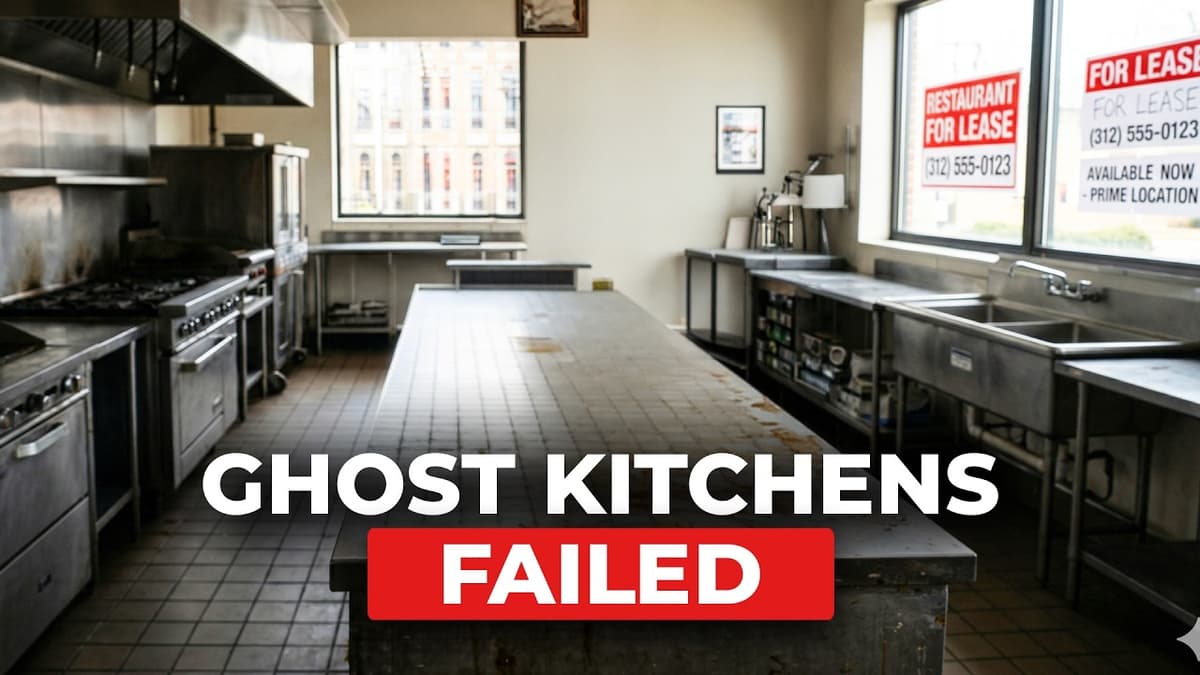
Why Ghost Kitchens Failed
Ghost kitchens, once hailed as a savior for vacant retail space, collapsed after a wave of high‑profile failures. The video examines RXRY’s $40 million bet on Kitchen United, the subsequent closures, and the broader lesson for commercial‑real‑estate investors. Key insights reveal a...
How Elite CRE Brokers Stop Hunting and Start Capturing Demand
In this live‑stream, Logan Freeman and Tyler Kbble explain how elite commercial‑real‑estate brokers are abandoning the traditional "hunt" model and instead capturing demand by following where capital is already moving. Sponsored by the Brokerage Mastermind, the session blends market data,...

90% of Her Warehouse Deals Come From Social Media (Not Cold Calling)
The episode spotlights Aviva Sonen Reich, a Denver‑based industrial broker who has turned social media into a primary deal‑sourcing engine. By leveraging TikTok and other platforms, she built a pipeline where roughly ninety percent of warehouse transactions, including a $9.5 million...
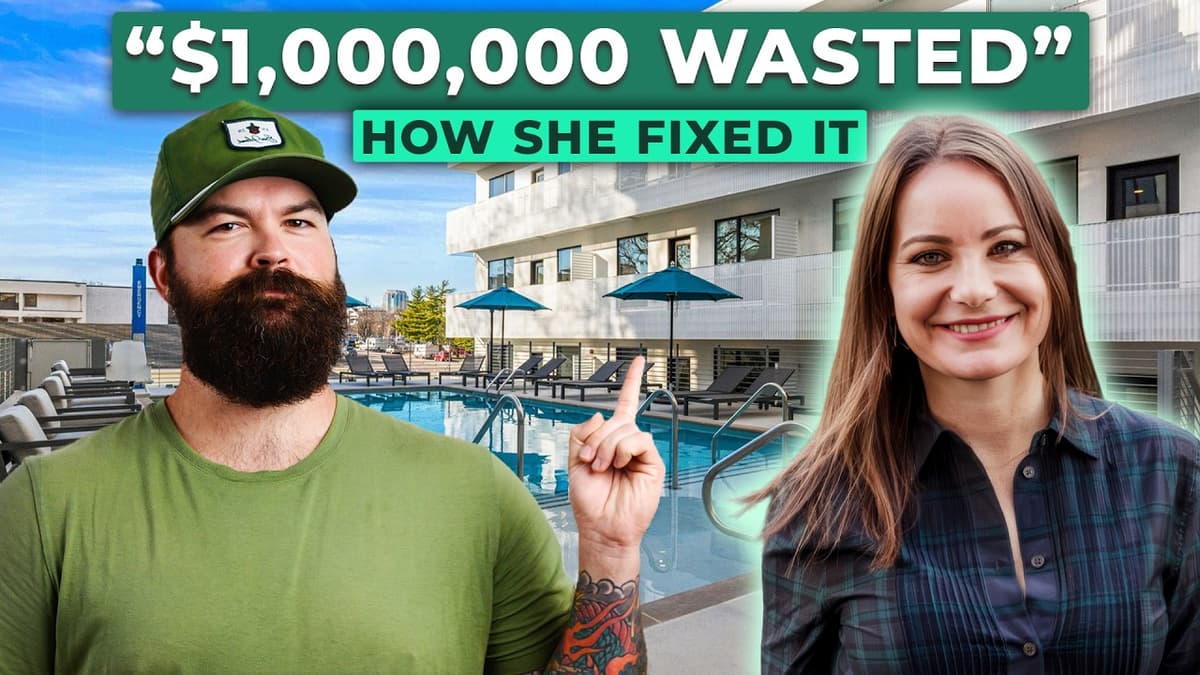
Most Developers Go Broke Before They Ever Break Ground with Meg Epstein
Meg Epstein recounts how a personal crisis and a failed Nashville development forced her to reinvent herself from project manager to full‑time developer. She describes growing up in Sacramento, surviving a severe car accident that taught her early financial discipline,...
Research Doesn’t Need to Be Expensive
The video challenges the notion that commercial‑real‑estate research must be expensive, urging investors to rely on low‑cost, on‑the‑ground “gorilla” research. By simply walking into malls, retail boutiques, or office suites and asking tenants about their experiences, investors can gather rich,...