

The Swiss Army Knife of Renewable Energy
The video introduces a groundbreaking battery that merges three functions—energy storage, seawater desalination, and carbon capture—into a single system. Developed by Professor Kim Young‑sik at Ulsan National Institute of Science and Technology, the device uses incoming seawater as its electrolyte, extracting sodium and chloride ions through specialized membranes while simultaneously charging the cell. Key technical insights include a ceramic membrane that selectively allows sodium ions to pass, where they plate as pure metallic sodium on an electrode. This ion‑separation process doubles as the charge‑separation mechanism, meaning desalination occurs without extra energy input. Laboratory results demonstrate a consumption of only 2.5 Wh to remove a kilogram of NaCl, a 40% improvement over the 4 Wh required by leading reverse‑osmosis systems. Professor Kim likens the operation to “hitting three Whac‑A‑Moles with one hammer,” emphasizing the integrated nature of the processes. When the battery discharges, the stored sodium reacts with CO₂, precipitating solid calcium carbonate—essentially turning captured carbon into chalk—while releasing the stored electrical energy. If scaled, this technology could provide coastal regions with a compact solution for renewable power, fresh water production, and carbon sequestration, potentially lowering operational costs and enhancing energy‑water‑climate resilience.

Should Your Water Heater Really Be a Battery Too?
The video examines a common flaw in heat‑pump water heaters: the factory‑installed “energy‑saver” mode that actually raises electricity consumption. The presenter’s own testing shows the mode triggers resistance heating elements after hot‑water use, negating the heat‑pump’s efficiency advantage. Resistance heating is...

How To Deal With The Ocean Plastic Problem
The video highlights a new upstream approach to the ocean‑plastic crisis: floating barriers installed in polluted rivers to intercept waste before it reaches the sea. The Ocean Cleanup, known for tackling the Great Pacific Garbage Patch, has deployed its first...

My One Solar Regret
The video’s host, a homeowner with a 17.2 kW grid‑tied solar array, reveals a lingering regret: he failed to install a simple conduit during construction that would have allowed easy expansion of his system. He explains that adding more panels now requires...

Silicon Now Or Perovskite Later?
The video argues that homeowners should install silicon solar panels today rather than wait for perovskite tandem technology, which promises higher efficiency but remains years away. It outlines cost and savings: a 6 kW silicon array costs about $15,900 and delivers roughly...
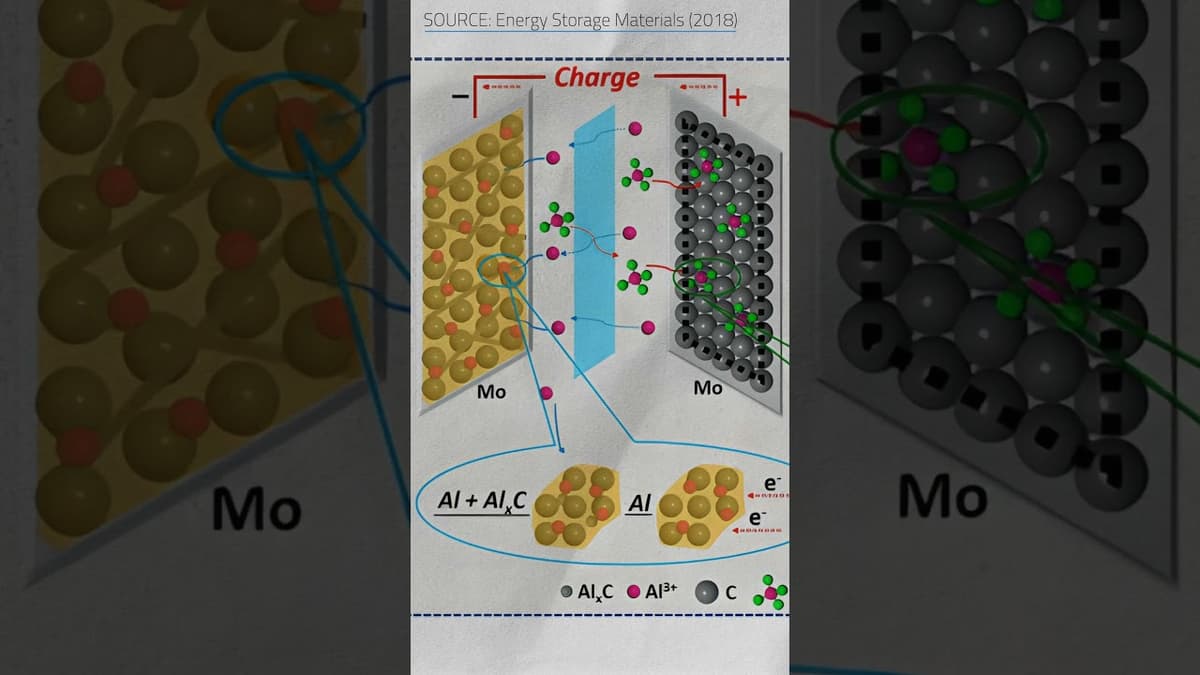
Are Abundant Aluminum Batteries Beating Lithium?
The video introduces a new aluminum‑graphite dual‑ion battery developed by Germany’s Fraunhofer Institute, positioned as a high‑power alternative to conventional lithium‑ion cells. In laboratory tests the cells achieved power densities exceeding 9 kW per kilogram—three to nine times that of typical lithium‑ion...

The Kesterite Solution to the Perovskite Problem
The video spotlights kesterite, a low‑cost mineral poised to replace perovskite in next‑generation solar panels. While silicon remains affordable and perovskite delivers high performance, both suffer from durability challenges and, in perovskite’s case, toxic lead. Kesterite promises the best of...